The engagement lift is real, and it’s large.
HomeJab, a national US real-estate photography network, has run internal A/B tests comparing identical listings with a daytime vs a twilight hero image. Their published finding: twilight hero photos generate roughly 3× the clicks of daytime hero photoson portal listings. This is the most-cited number in the industry, and to our knowledge it is the only data point that comes from a production photographer network rather than a vendor’s marketing page.
We cite it with the caveat HomeJab themselves attach: the effect size depends on listing type (luxury and waterfront benefit more than starter-home inventory), on the time of year (longer-dusk regions get more benefit), and on the quality of the dusk edit itself. The 3× number is a working heuristic, not a universal law.
Independent of the exact multiplier, everystudy we can find — HomeJab’s, NAR’s styled-staged- sold analyses, and Zillow’s listing-image research — agrees on direction: a warm, contrasty twilight hero meaningfully outperforms a midday exterior. The rest of this guide is about why, and how to produce one that won’t look like a filter.
Why the brain reads dusk as “home.”
There are three reasons twilight exteriors outperform midday ones, and they compound.
Contrast ratio
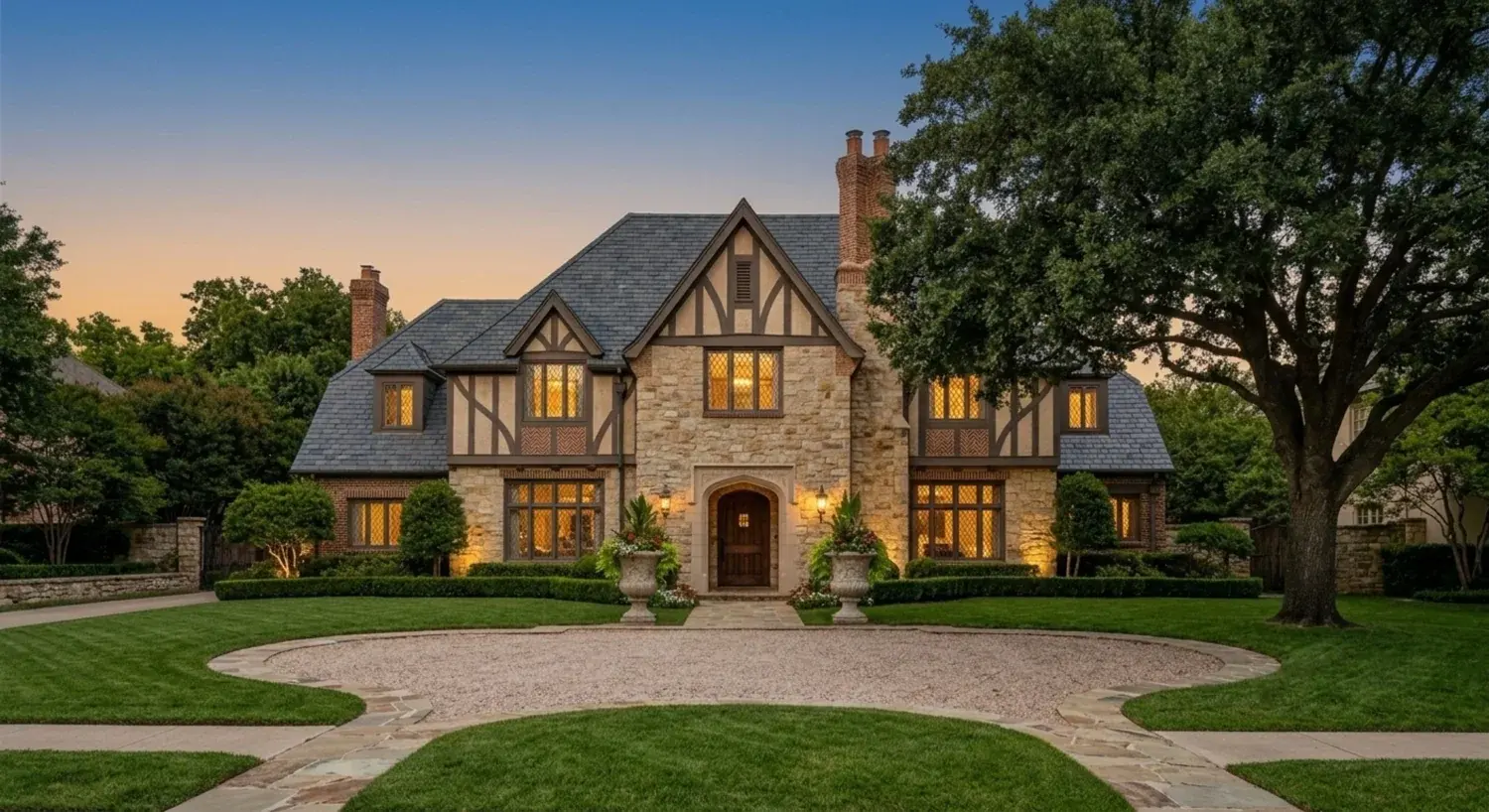
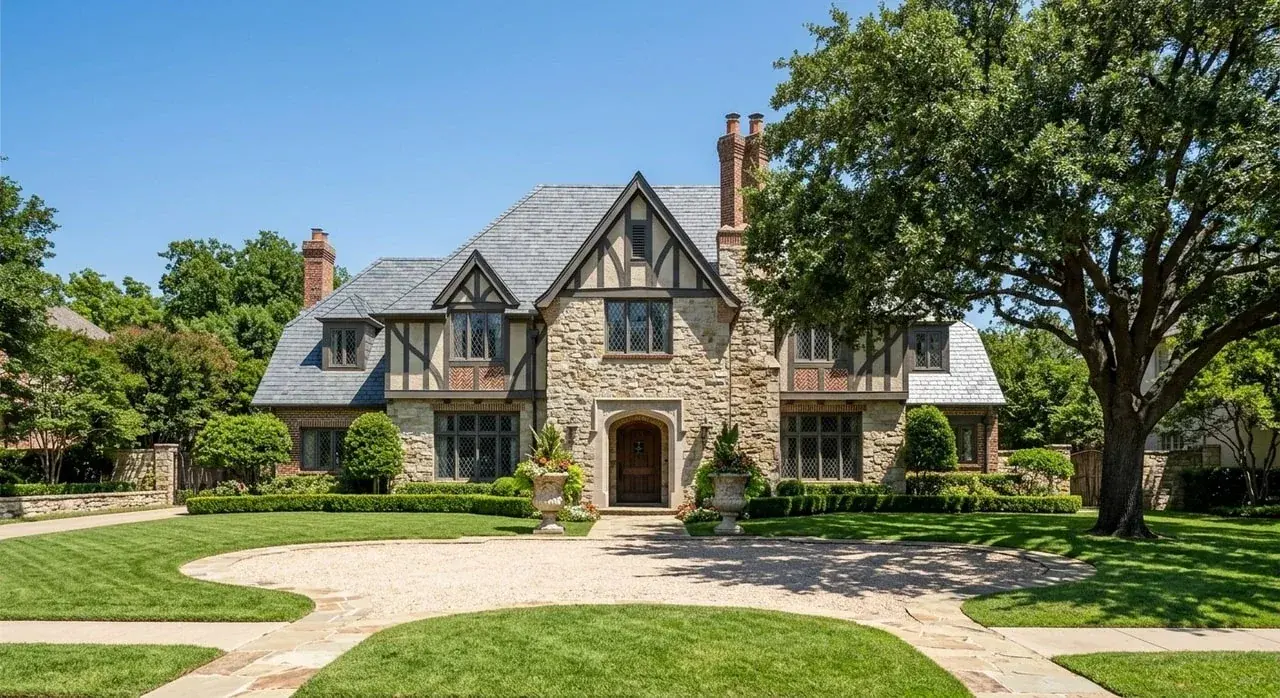
At noon, a façade is lit by a single overhead sun. Windows photograph as blown highlights or black voids; roof lines flatten; the house reads as a cardboard cut-out. At dusk, the sun has dropped below the horizon line and the sky is the key light — softer, directional, and roughly three stops dimmer than midday. That means interior lights can competewith the sky for exposure, and that creates the classic “glow from within” that reads as home.
Color-temperature contrast
The dusk sky is cool — 7,000–10,000 K. Interior tungsten and warm LED light is 2,700–3,200 K. That 4,000 K delta produces the single strongest color contrast available in architectural photography: golden window squares set against a cobalt sky. The eye reads that contrast as luxury, even when it can’t articulate why.
Narrative projection
Buyers shopping listings in bed at 9pm are imagining themselves coming home to this house, not arriving at 2pm on a Tuesday. A dusk shot matches the mental scene the buyer is already running. A midday shot asks them to do the translation work. The frictionless one wins.
See it.
The same frame, shot in flat midday light and converted to a golden-hour twilight. Note the cool sky, the warm window spill, the deepened foreground shadow, and the specular highlight on the wet driveway. Every one of those is a signal the brain uses to place the photograph in time.
What makes a convincing dusk conversion.
Four rules separate a dusk edit that holds up from one that screams “filter.”
- Sky-to-horizon gradient. The dusk sky is never one color. It transitions from cobalt directly overhead to magenta near the horizon, then a thin band of amber where the sun just set. A flat blue sky plate reads as fake within half a second. The correct gradient reads as real without the viewer ever noticing.
- Interior warmth that comes from inside. The classic mistake is pasting a warm glow onto the window surface. The correct result shows the room glowing — shadows of interior furniture silhouetted against the window, a slight directional spill of warm light onto the nearest exterior surface. If the windows read as flat yellow rectangles, the edit is broken.
- Façade re-lit to match the new sun direction. A midday shot has short overhead shadows. A dusk shot has long, horizontal shadows cast by a sun just below the horizon. The conversion has to move shadow length and angle, not just tint the sky. Shadows that still run straight down off the eaves are the single clearest tell.
- Specular highlights respected.Wet pavement, pool water, windshields, and metal trim should pick up the new sky color. A car that’s still reflecting a midday sky in a golden-hour scene breaks the image. Good tools relight specular highlights; bad ones don’t.
When to shoot the real thing vs AI-edit.
An on-site twilight session is still the gold standard — real light, real interior glow, real atmospherics. Here’s when it’s worth it, and when AI is the right call.
- — Listing is $3M+ and will be marketed for three months or more.
- — Waterfront, pool, or landscape lighting is a feature you need to show working.
- — Architect / developer portfolio use is anticipated beyond this one listing.
- — You’re shooting a video walkthrough and can amortize the twilight trip across both.
- — Turnaround is < 48 hours and you can’t get back on-site.
- — Listing is sub-$1.5M and a $300 twilight add-on blows the marketing budget.
- — Weather ruined the real shoot and reshoot isn’t an option.
- — You need multiple angle variants (front, rear, street) in the same session.
In practice, we see working REPs use AI dusk for 90% of their listings and reserve real on-site twilight sessions for a shortlist of luxury-tier clients. At a $100–$200 twilight add-on on the photographer’s menu, a flat $79/mo Plotpane subscription pays for itself on the second listing.
Warm dusk vs cool twilight: pick by architecture.
Not every house wants a golden-hour sky. Traditional and transitional architecture — Colonial, Craftsman, Federal, Georgian, Tudor — reads best under warm golden dusk, where the tungsten window spill echoes the era’s interior lighting. Modern, contemporary, and coastal architecture reads better under cool twilight — a deep-blue sky, a hint of residual magenta at the horizon, and cool LED interior spill.
The wrong choice is almost always a warm golden edit applied to a minimalist glass-box modern: it reads as “fake movie set” rather than “architectural photograph.” Plotpane ships both — the warm “Day to Dusk” preset and the cool “Cool Twilight” preset — for this reason.
Rules of use: honesty and MLS disclosure.
Day-to-dusk conversion is re-lighting, not fabrication. It doesn’t add, remove, or restructure anything. Every MLS we’ve reviewed treats dusk conversion as an enhancement rather than a material alteration — it does not require the “Virtually Staged” watermark that virtual staging does. That said, some agents still add a single-line disclosure (“Hero image digitally converted to dusk”) as belt-and-suspenders, and California’s 2026 statute may eventually push that to standard practice.
The hard rule: the house in the photo has to be the same house a buyer finds on arrival. If the landscape lighting in your dusk shot doesn’t exist in real life, that’s a problem. If the windows glow warmly but the property is actually sold dark-interior, that’s a problem. Convert what’s there — don’t invent what isn’t.
Related reading.
Plotpane runs day-to-dusk conversion at about 2.4K, window-glow and shadow-angle aware, in about two minutes a frame. One credit, like every other tool.