Hotel Photography: The Complete Guide for 2026
By the Plotpane Editorial Team · Last updated June 2, 2026
A traveler decides whether to book your hotel in the time it takes to swipe past a thumbnail. Before they read a single review, compare a rate, or check the cancellation policy, they look at your photos — and those photos either earn the tap or lose the booking.
That makes hotel photography the highest-leverage marketing you will ever commission. A great gallery sells rooms at full rate on your own website and ranks you higher on the channels where most travelers actually shop. A weak one quietly bleeds bookings to the property next door.
Whether you're commissioning professional hotel photography for a flagship property, refreshing a luxury resort's gallery, or shooting your own boutique inn, the fundamentals are the same. This guide covers the shots that drive reservations, the technical specs each booking channel demands, the notorious "big-bed" framing problem, how to keep an entire property's gallery consistent, and where AI-assisted post-production fits — without ever crossing the line into misleading guests.
Quick Summary: Strong hotel photography starts with a complete shot list — hero exterior, every room type, lobby, food and beverage, and amenities — captured to brand standard and exported to each channel's resolution spec. The biggest wins come from a striking twilight cover shot and a consistent grade across the whole property. AI tools like Plotpane handle the post-shoot pipeline (enhancement, sky swap, day-to-dusk, clutter removal, and batch grading) in about two minutes per image, at around 2400 px on the long edge, as long as the editing stays structure-preserving and never invents rooms.
Why hotel photography is your highest-ROI marketing asset
The data on this is not subtle. In TripAdvisor's analysis of its property pages, listings with at least one photo saw a 138% lift in traveler engagement and were 225% more likely to receive a booking inquiry than listings with none. Properties with more than 100 photos pushed that to +151% engagement and +238% booking inquiries, and pages with 1,000+ photos reached +203% engagement. Across every factor TripAdvisor measured, the number of photos was the single biggest driver of engagement — ahead of review count and management responses.
That instinct holds across channels. Expedia Group reports that more than 90% of travelers say a hotel's "vibe" is important when booking, and the average shopper studies roughly 35 photos before deciding. Expedia even folds a "Photo Score" into the content score that influences where you sort in results — so image quality is not just persuasion, it's distribution.
Here's the mindset shift that separates good hotel photography from generic real estate work: a listing photo sells a property, but a hotel photo sells an experience. A buyer looking at an MLS listing wants to assess an asset. A traveler wants to feel the stay — the light across the bed at 8 a.m., the first drink on the rooftop, the quiet of the spa. Your images have to deliver that feeling in a fraction of a second.
The payoff shows up on both sides of your channel mix. Direct bookings through a hotel's own website averaged $516 per reservation in 2025, versus $312 on OTAs, according to SiteMinder's hotel booking data — and the gallery is doing the convincing in both places.
The 6 hotel shots that drive bookings
A booking-ready gallery is not a random pile of pretty pictures. It's an intentional set that answers every question a guest has before they commit. Capture every room type and every bookable space, and lean toward more images rather than fewer — engagement climbs with photo count.
Here's a working shot count to build your list around:
| Space | Photos to capture |
|---|---|
| Hero exterior | 2–3 (include one twilight) |
| Each guest-room type | 4+ plus the bathroom |
| Lobby & reception | 2–3 |
| Restaurant / bar | 2–3 of the space, plus plated details |
| Pool / spa / gym | 2–3 each |
| Meeting / event space | 2–3 each, fully dressed |
1. The hero exterior (your cover shot)
This is the single most important image you will produce. It's the OTA thumbnail, the homepage banner, the first frame on every metasearch result. If the hero doesn't stop the scroll, nothing behind it gets seen.
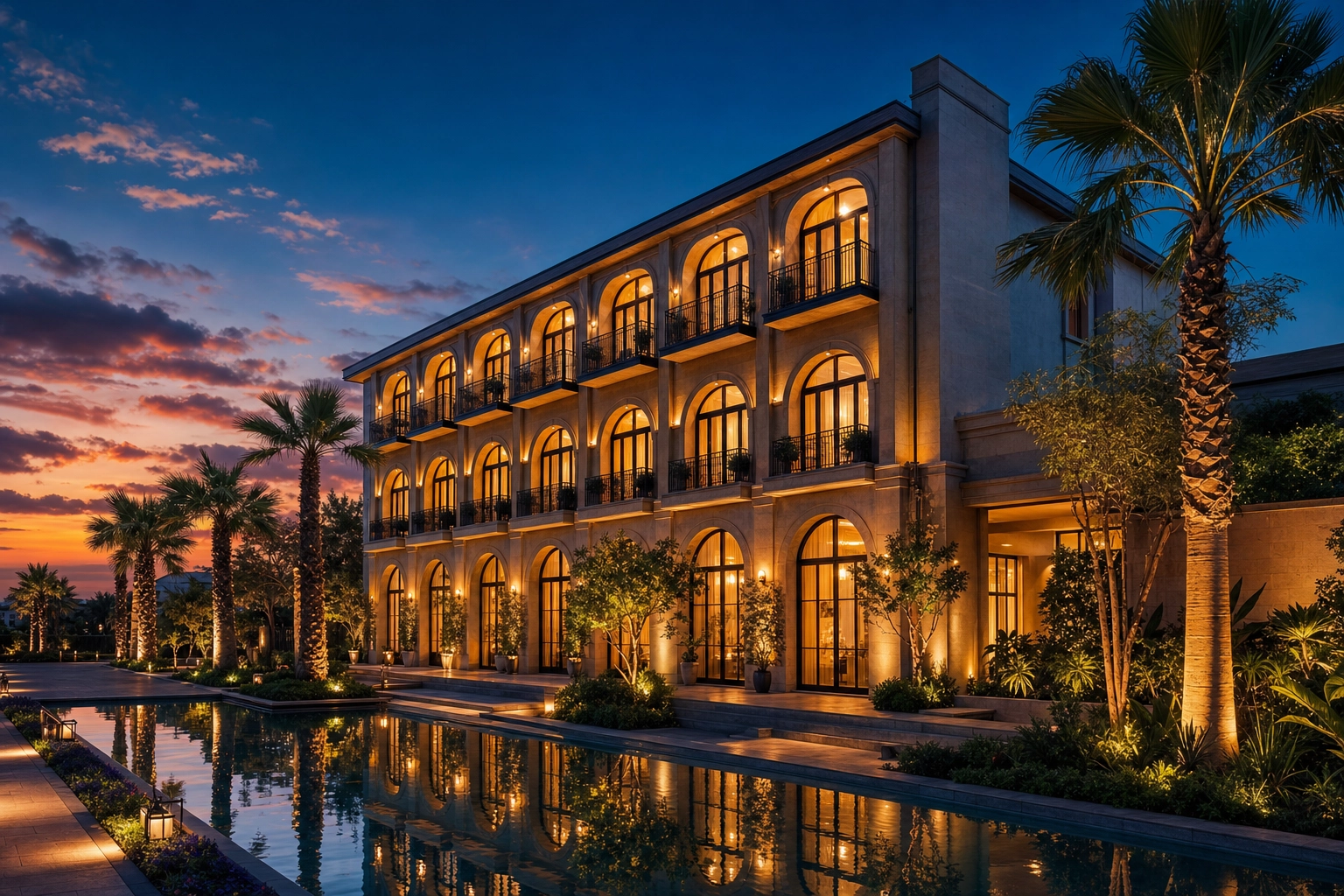
Shoot the exterior at golden hour or, better, at twilight. A day-to-dusk treatment — deep blue sky overhead, warm glow spilling from the windows — consistently outperforms a flat midday shot because it reads as aspirational rather than informational. There's real science behind why twilight shots convert, and it applies to hotels even more than homes.
Two technical things make or break a hero: the sky and the verticals. A blown-out gray sky deflates the whole frame, which is why a clean replacement or sky swap in post is one of the highest-impact edits available. And the building edges must stand perfectly straight — a leaning façade instantly signals amateur work.
2. Guest rooms and suites
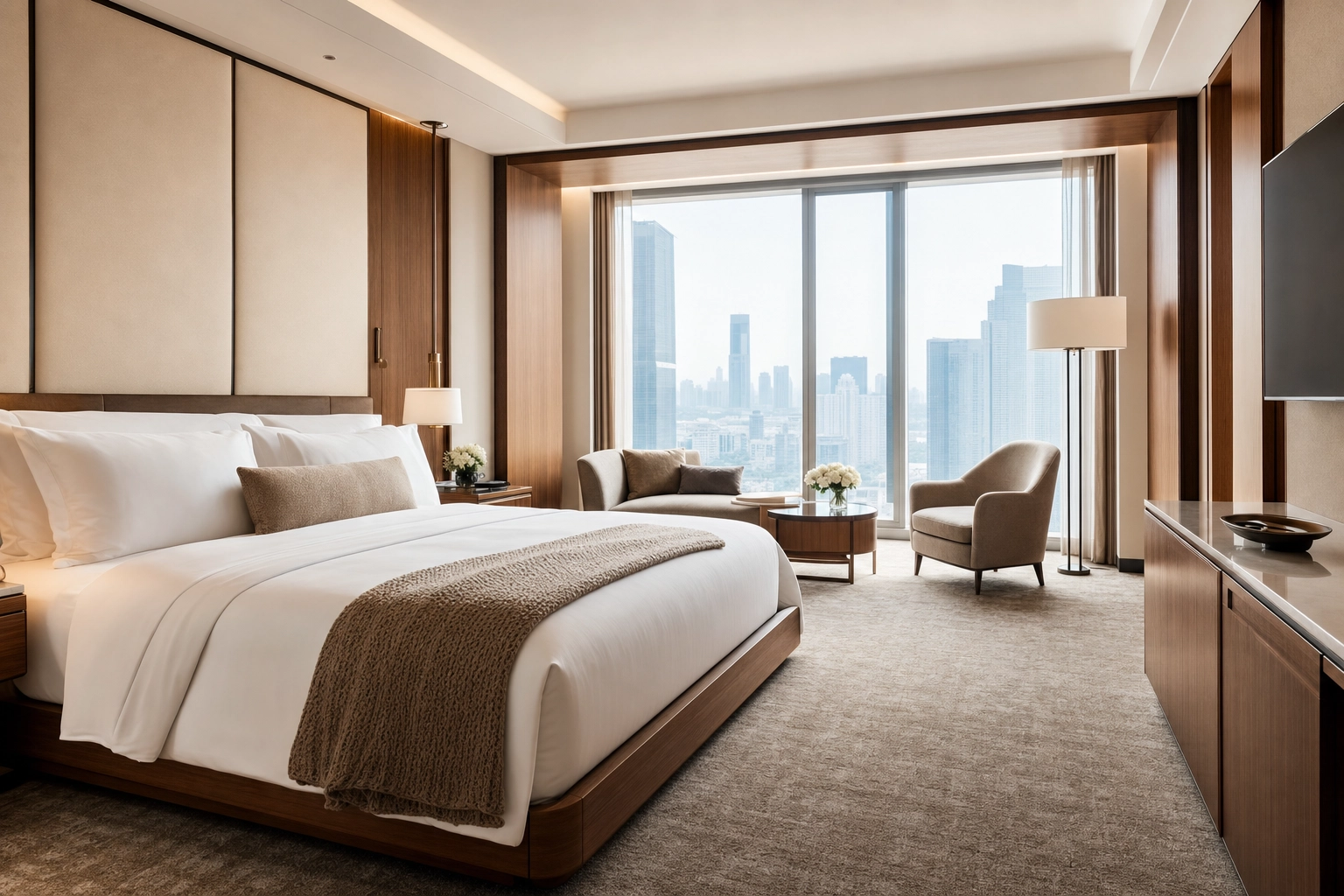
Guest rooms are the heart of hotel room photography — they're literally what the guest is buying. Photograph every room type, aim for four or more angles each, and never skip the bathroom (a clean, well-lit bathroom builds enormous confidence). Show comfort, show space, and show the view if there is one.
Styling matters as much as the camera: wrinkle-free linens, fluffed pillows, fresh towels, and not a single visible remote or charging cable. The recurring challenge here — the great big bed sitting in the middle of every frame — is common enough that it deserves its own playbook, below.
3. The lobby and arrival experience
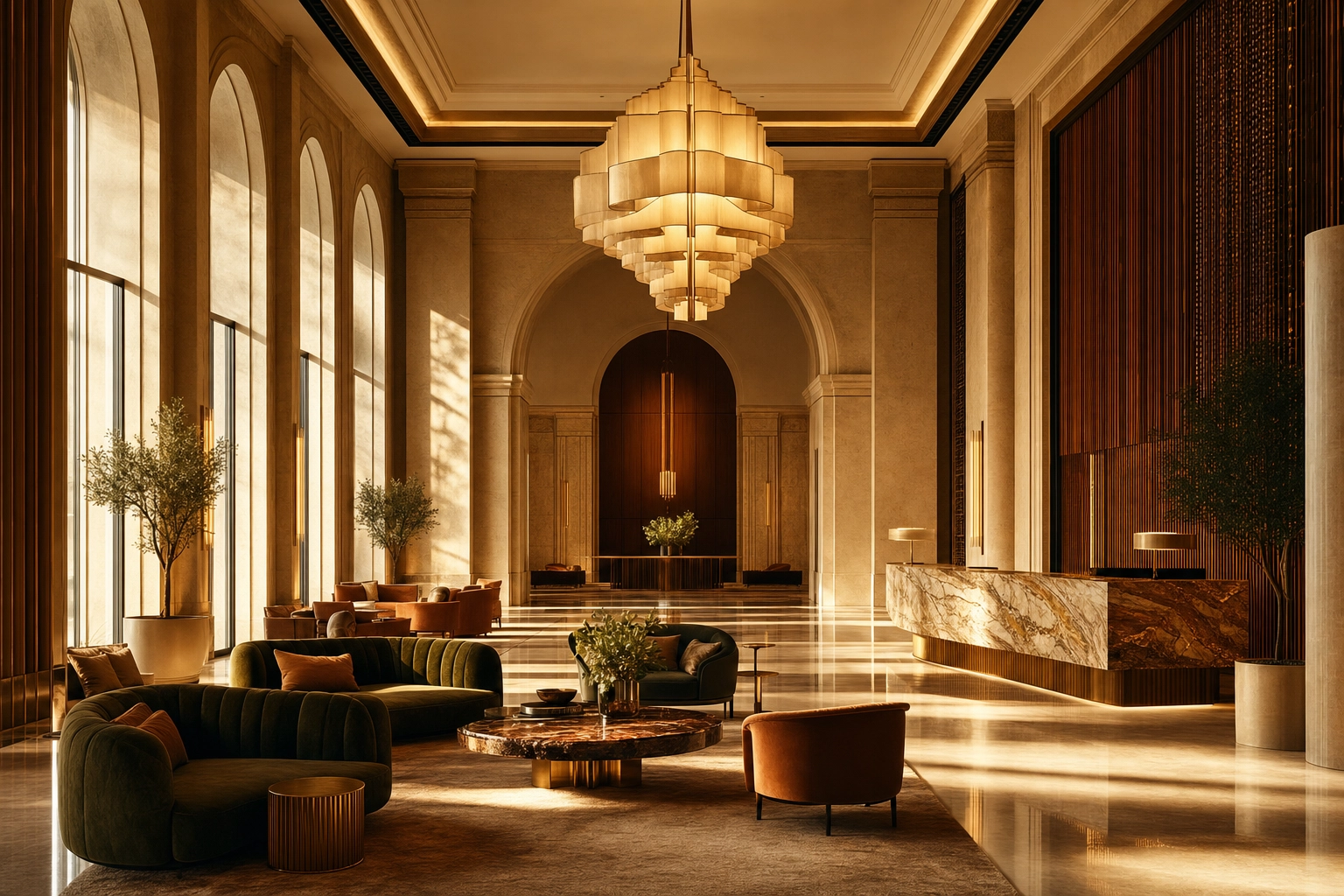
The lobby sets the tone and reveals the hotel's personality before a guest reaches their floor. Treat it as the hero of your interior set. Shoot public spaces early in the morning, before foot traffic builds, so the frame is clean and the light is even.
Pair a wide architectural shot that establishes the scale and flow of the space with a few tighter detail shots — the reception desk, a signature light fixture, a styled seating vignette — so the gallery has rhythm instead of one repeated wide angle.
4. Food and beverage
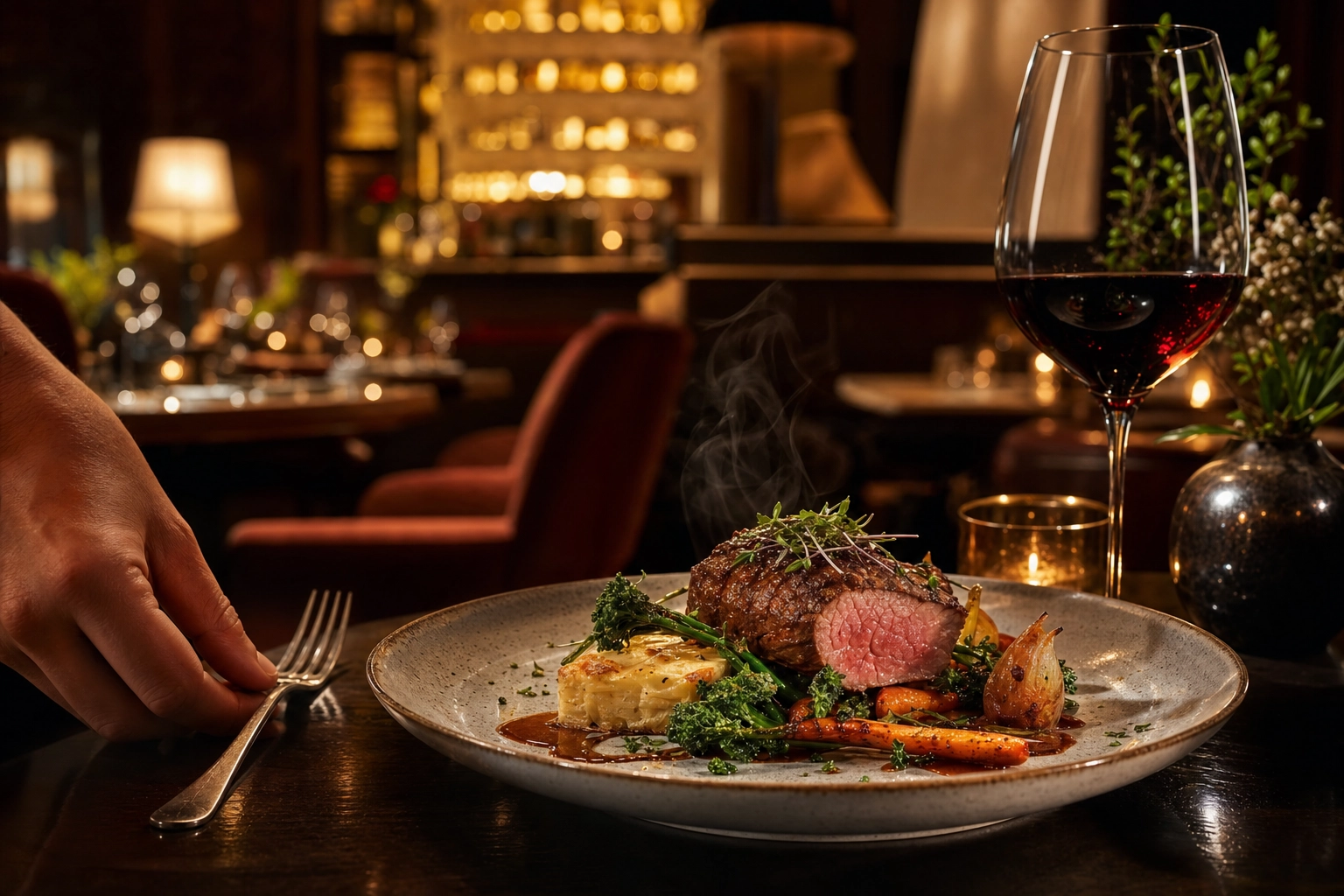
Food and beverage works in two layers. First, the space: the restaurant or bar as an environment, shot with the same architectural care as the lobby. Second, the plated detail: individual dishes and drinks that make a menu look irresistible.
Fresh food has a short photogenic window before it dulls, so pre-select the dishes with the chef, shoot fast, and imply action — a fork mid-bite, steam rising, a cocktail being poured. Be honest about scope here: plated food styling is a specialist discipline, distinct from architectural shooting, and often calls for a dedicated food photographer.
5. Amenities: pool, spa, gym and event spaces
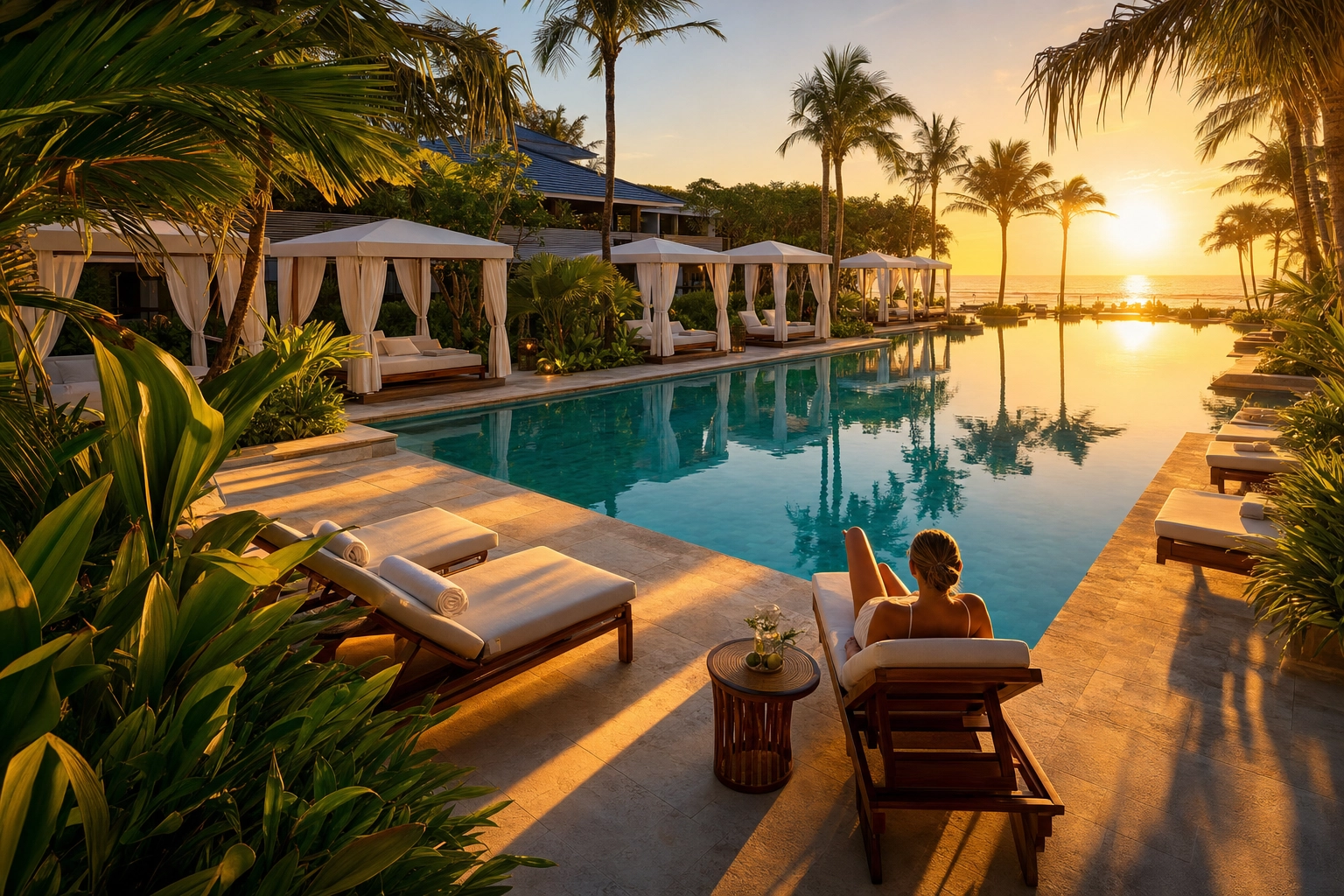
Amenities are where aspiration lives, especially for resorts and hospitality properties. Skim the pool until the water is glass, turn on every light, and choose angles that emphasize scale and openness. For a spa or gym, clean lines and warm, even light do the heavy lifting.
Event and meeting spaces should be fully dressed and picture-ready — set a table, stage a layout, and shoot the room in more than one configuration to show flexibility, since meeting planners book on adaptability. Outdoor amenities like rooftops, cabanas, and pool decks carry serious weight; the same care that goes into a beach club photography workflow applies to any resort's signature outdoor space.
6. The OTA cover and gallery sequence
The order you present images is its own conversion lever. Lead with your strongest hero, then guest rooms, then amenities, then food and beverage — front-load the frames that close the booking. Upload at least 20 images per property; remember the average shopper looks at around 35, so depth pays.
Each channel enforces its own technical minimums, and falling short hurts both quality and ranking:
| Platform | Minimum resolution | Recommended | Orientation |
|---|---|---|---|
| Booking.com | 2,048 × 1,080 px | 4,000 × 3,000 px | Landscape only |
| Expedia Group | 2,880 px (long edge) | Higher, ≤ 15 MB | Landscape preferred |
| Airbnb | 1,024 × 683 px | 1,920 × 1,080 px+ | Landscape |
Sources: Booking.com partner help and Expedia Group image guidelines, which also recommends four or more photos per room type plus a bathroom shot.
How to photograph a hotel room, step by step
Now to that big bed. As professional hotel photographers will tell you, the challenge with shooting bedrooms is obvious once you say it out loud: there's a great big bed in the way, and it takes up most of the room. Get the camera wrong and the bed balloons in the foreground while the rest of the space shrinks behind it. Here's the sequence that fixes it.
- Prep and style the room first. Declutter completely — remotes, cables, laundry, branded signage all disappear. Then style: wrinkle-free linens, a crisp pillow arrangement, open curtains, and every light switched on.
- Lower the camera. Drop to roughly chest height or below. A wide-angle lens fired from standing height distorts the bed and exaggerates its size; a lower vantage keeps it proportional and lets the room breathe.
- Shoot from a corner at about 45 degrees. A straight-on, head-on shot flattens the room. An angled composition from a corner reveals depth and shows two walls, which reads as more spacious.
- Keep the verticals dead straight. Door frames, window edges, and wall lines must run true. If they lean, correct the verticals in post — converging lines are the fastest tell of an amateur shot.
- Layer the frame. Build foreground (the styled bed), midground (a seating nook or desk), and background (the window and its view) so the eye travels through the room instead of stopping at the bed.
- Switch lenses for the details. After the main wide shot, change to a longer lens for vignettes — the turndown detail, the coffee setup, the textile and texture shots that signal quality.
- Enhance and grade consistently in post. Correct exposure, white balance, and color, then apply the same grade you're using across the property so this room matches every other.
Brand-standard consistency across the whole property
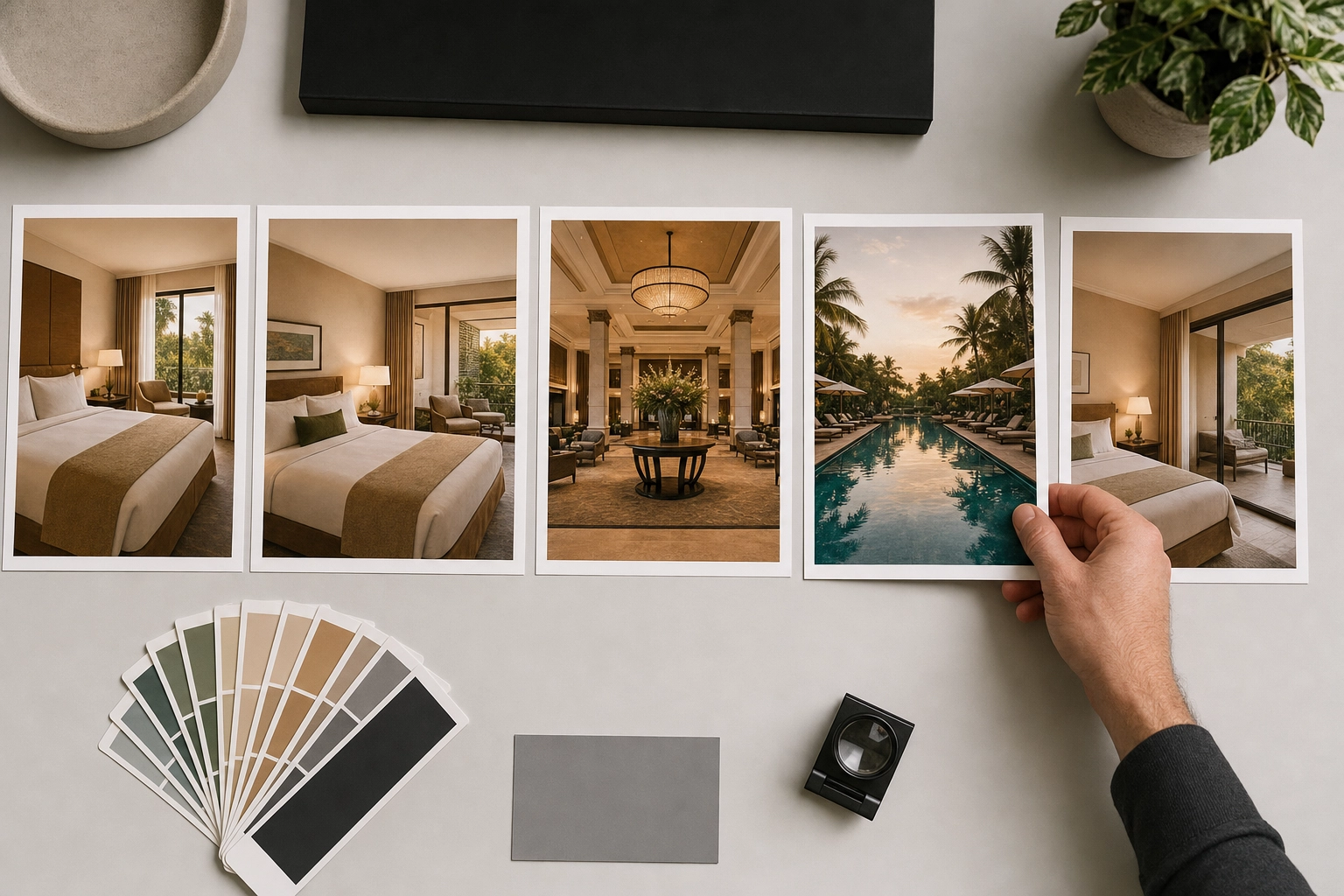
Walk through any major chain's image library and you'll notice every property looks like it belongs to the same family. That's not an accident — brand programs such as the Marriott Approved Photographer network dictate angle, camera height, white balance, and styling so the portfolio stays uniform. Even if you're an independent, consistency is what makes a gallery feel premium. Luxury hotel photography, in particular, lives and dies on it.
The enemy is drift. Shoot a property over two or three days, across rooms with different window exposures and mixed artificial lighting, and your gallery starts to wander — one room runs warm and golden, the next cools to blue, the lobby picks up a green cast from fluorescent tubes. Individually each frame might be fine. Side by side, the inconsistency reads as low quality and quietly undermines trust.
You fight drift in two places. On the shoot: lock your white balance instead of leaving it on auto, shoot each room type at a consistent time of day, and keep the same lens, height, and angle conventions throughout. In post: use a single editor and a single preset, then apply a grade lock so every image in the set shares the same tone, contrast, and color.
That last step is exactly where a structure-preserving pipeline earns its keep. Plotpane's AI photography for hotels runs one tool across a whole batch — up to 150 photos at a time on the Agency plan — so 60 rooms, the lobby, and the pool deck all get the same correction without a retoucher hand-tuning each frame. It's the same workflow hospitality and real estate photographers lean on to keep edit-night consistent at volume.
Shooting for direct bookings vs OTA channels
Your photos have two very different jobs depending on where they live, and the smartest hotels shoot with both in mind.
On OTA channels (Booking.com, Expedia, Airbnb), the experience is thumbnail-first and increasingly mobile-first — more than half of OTA bookings now happen on a phone. Travelers scan a wall of competing properties, so the cover photo and your Photo Score decide whether you're even seen. That environment rewards a crisp, instantly legible hero and a complete, spec-compliant gallery. It's also where independents live or die: OTAs accounted for 63.4% of independent-hotel bookings in 2025, according to Cloudbeds' 2026 State of Independent Hotels report, climbing toward 80% in some markets.
On your own website, you control the canvas. Direct-booking pages can go bigger and more immersive — full-bleed heroes, lifestyle sequences, and a brand story that an OTA template would never allow. Since direct reservations are worth materially more per booking, it's worth investing in the imagery that makes guests choose you over the platform. The same gallery discipline scales down to vacation rentals and Airbnb at scale, where a consistent, high-resolution set is the entire pitch.
One risk spans both channels: the catfish effect. Over-edited photos that don't match the real room generate angry reviews and OTA penalties — there are entire forum threads of travelers who felt "catfished" by listings. The fix is a hard rule: enhance, don't deceive. Fix the light, swap a gray sky, remove a stray cart — but never fabricate a view, enlarge a room, or invent features that aren't there.
The post-shoot pipeline: turning good photos into a booking-ready gallery
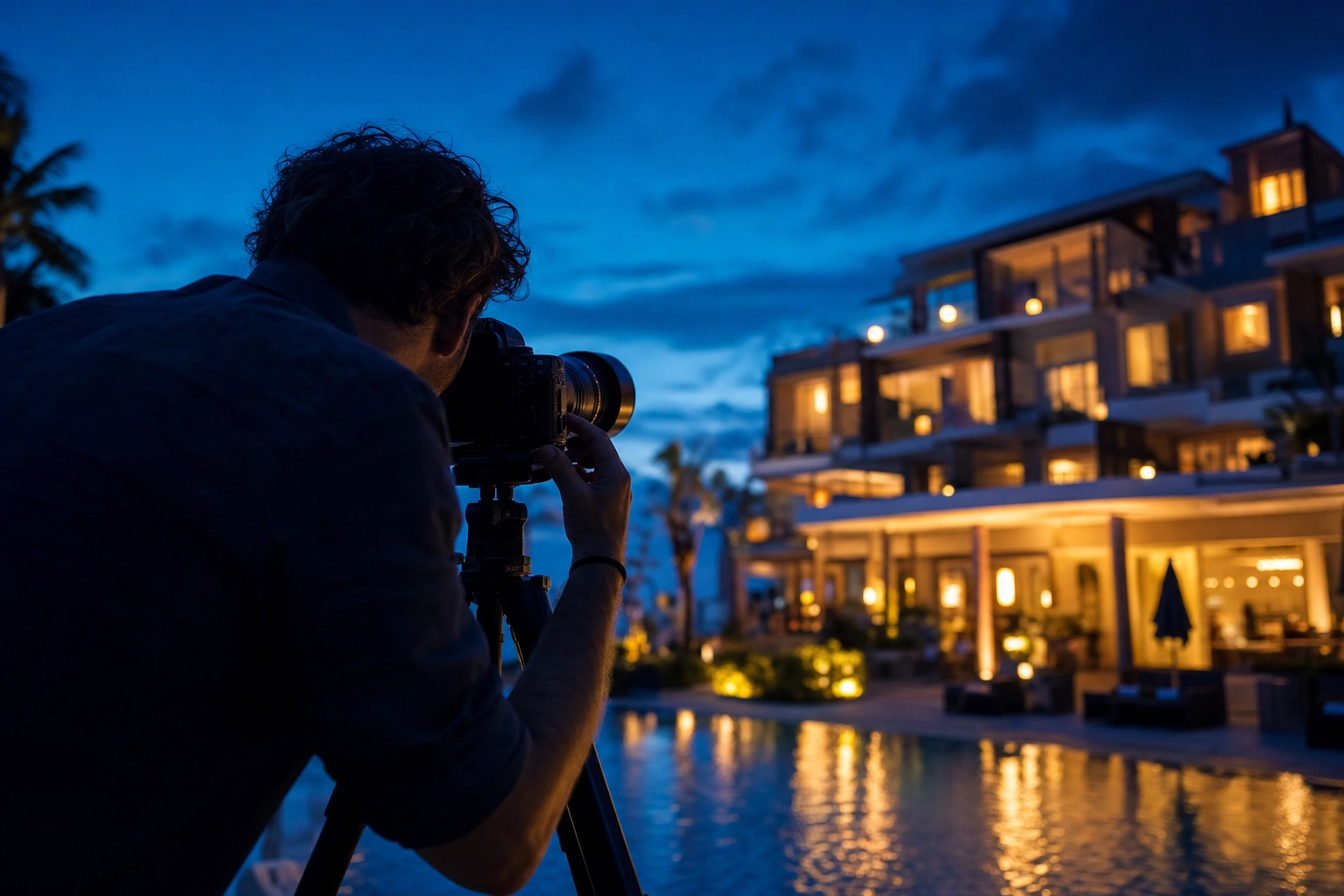
Even a flawless shoot is only raw material. The gallery that actually converts is built in post-production, where five things get fixed on nearly every hotel image: exposure and white balance, perspective, the sky, clutter, and the time of day.
For years the only options were slow ones. You could hand the set to a retouching service in the BoxBrownie or Styldod mold and wait hours or days for per-image edits to come back — workable for a handful of frames, painful for a 200-image property gallery on a deadline. Or you could grind through it yourself in desktop software, room by room.
Structure-preserving AI changes the math. Plotpane gives you a tool for each job — auto enhance for exposure, white balance, colour and clarity; perspective correction; sky swap; day-to-dusk twilight conversion; clutter removal for carts, cones, cables and bins — one running per image, in about two minutes per image at around 2400 px on the long edge — or roughly 4700 px on the optional high-resolution pass — batched across the whole gallery with the grade locked. For a pre-opening property with bare rooms, virtual staging can furnish the space before the gallery goes live.
Two guardrails matter enormously in hospitality, and they're built into how a responsible tool should work:
- It's image-only. Plotpane edits stills; it does not generate video walkthroughs, and it isn't a text-to-image art generator that dreams up scenes. Video is a separate discipline with its own crew and budget.
- It's structure-preserving. The AI corrects light, replaces skies, and removes objects, but it never reinvents rooms, moves walls, or fabricates views — and it embeds invisible disclosure metadata on edited output. That's the difference between honest enhancement and the catfish problem that earns one-star reviews.
You can see the approach in action in Plotpane's boutique hotel photography tool, which keeps a small property's whole gallery consistent, and the beach club workflow built for cabanas and pool decks at dusk. Output is JPEG at about 2400px on the long edge, or about 4700px for a second credit, with no visible watermark on any plan — which clears every OTA's minimum with room to spare. Plotpane pricing starts at $39/mo billed yearly; Pro takes 50 photos in a batch and Agency 150, which is the tier most properties shooting a full gallery will want.
Your pre-shoot prep checklist
The best hotel photography tips all begin before the camera comes out. Run this list before your photographer arrives:
- Deep clean and declutter every space — cords, remotes, bins, cleaning supplies, and stray signage out of frame.
- Style for the camera — wrinkle-free linens, fluffed pillows, fresh towels and flowers, polished surfaces.
- Control the light — turn on every fixture and open curtains to let natural light do the work.
- Prep amenities — skim the pool, clean all glass, and set out fresh, photo-ready food and beverage props.
- Time it right — shoot busy public areas early in the morning, and save the hero exterior for golden hour or twilight.
- Confirm the plan — share brand guidelines and a written shot list so nothing gets missed on the day.
Frequently Asked Questions
How many photos does a hotel need for its listing?
Aim for at least 20 images per property, and more wherever you can justify it — engagement and booking inquiries climb steadily with photo count. As a baseline, capture four or more photos of each room type plus the bathroom, two to three of the lobby, two to three of each amenity, and a small set of food and beverage shots. The average OTA shopper views around 35 photos, so depth genuinely helps.
How do you photograph a hotel room with a big bed?
Lower your camera to roughly chest height or below so a wide-angle lens doesn't distort and enlarge the bed, then shoot from a corner at about a 45-degree angle to reveal the room's depth. Keep all verticals perfectly straight, layer the frame from the bed in the foreground to the window in the background, and style every surface before you shoot. Finish with a longer lens for detail and vignette shots — that combination is the core of good hotel room photography.
What image resolution do Booking.com, Expedia and Airbnb require?
Booking.com requires a minimum of 2,048 × 1,080 px and prefers around 4,000 × 3,000 px, landscape only. Expedia Group considers images "high resolution" at 2,880 px or more on the longest edge, up to a 15 MB file. Airbnb accepts a minimum of 1,024 × 683 px but recommends 1,920 × 1,080 px or higher. Shooting and exporting at full resolution satisfies all three with margin to spare.
How much does professional hotel photography cost?
It varies widely by market, scope, and property size. A focused half-day shoot of a small boutique can run a few hundred dollars, while a full multi-day shoot of a large resort with lifestyle and food and beverage coverage can reach several thousand. The capture and the editing are separate line items — AI post-production handles the editing side from $39/mo, which is why many properties pair a single strong shoot with a software pipeline for ongoing seasonal refreshes.
Can you use AI to edit hotel photos without misleading guests?
Yes — as long as the editing is structure-preserving. Correcting exposure and white balance, swapping a gray sky for a clear one, converting a daytime exterior to twilight, and removing clutter all enhance reality without changing it. The line you must not cross is fabrication: never invent rooms, enlarge spaces, or add views and features that don't exist, because that produces the "catfish" reviews and OTA penalties that cost far more than the edit saved. Tools like Plotpane are built to preserve the property's true structure and embed invisible disclosure metadata on edited images.
How do I keep a whole property's photos looking consistent?
Lock your white balance on the shoot, shoot each room type at a consistent time of day, and standardize your lens, height, and angle conventions. In post, use a single preset and apply a grade lock so every frame shares the same tone and color. A batch pipeline that applies one shared grade across the entire gallery is the most reliable way to make 60 rooms, the lobby, and the pool deck look like one cohesive set.
Should hotels shoot video as well as photos?
Video is a powerful complement for social and your website, but it's a separate discipline with its own crew, gear, and budget — and it doesn't replace a strong still gallery, which is still what OTAs index and what most travelers scan first. This guide and Plotpane focus on stills; Plotpane is image-only and does not produce video walkthroughs. If you invest in both, shoot them as distinct productions rather than expecting one to cover the other.
Your hotel's photos are working 24/7 across a dozen channels, making the first — and often the only — impression that matters. Build a complete, brand-consistent gallery, hold every edit to a structure-preserving standard, and you turn that first impression into booked rooms. When you're ready to make the post-shoot step fast and consistent, see AI photography for hotels or compare Plotpane pricing.