Is Virtual Staging Worth It? Cost, ROI & Buyer Reactions

By the Plotpane editorial team · Last updated June 2026
Open any Reddit thread about virtual staging and you'll see the same fight. Agents who swear it sells homes. Buyers who call it "basically lying." And one complaint that shows up more than any other: it looks fake.
So is virtual staging worth it? That complaint makes it sound like a coin flip — but "some virtual staging looks fake" and "virtual staging isn't worth it" are two very different statements. This guide separates them with current NAR and RESA data, real buyer reactions, and a clear look at when it pays off — and when to reach for real furniture instead.
Quick Summary: Virtual staging is worth it for vacant, dated, and online-first listings — it helps buyers visualize the space, lifts online engagement, and shortens days on market for a fraction of physical staging's cost. The catch: it only works when furniture is rendered at realistic scale and lighting, the room's real structure is preserved, and you disclose it. Cheap, reinvented-room staging that ignores those rules backfires.
Is virtual staging worth it? The short answer
Yes — for most vacant or visually weak listings, virtual staging earns back its cost many times over. It turns an empty, forgettable room into a scroll-stopping photo and gets more buyers to book a showing. At a few dollars per image versus several thousand for physical staging, the math rarely needs a calculator.
But it isn't automatic. Virtual staging helps only when two conditions are met. First, the result has to look real — correct scale, matched lighting, and a room whose actual walls, windows, and proportions stay untouched. Second, you have to disclose it. Get either wrong and you manufacture the exact "I felt duped" reaction that kills interest in your listing.
So the real answer is "yes, if it's done right" — which is what the rest of this guide covers.
Does virtual staging actually help sell a house?
Start with where buyers actually are: online. About 97% of buyers use the internet to search for homes, according to the National Association of Realtors. Your listing photos aren't marketing for the showing — they are the first showing. An empty room reads as cold, small, or unfinished on a phone screen, and buyers keep scrolling.
Staging changes that, and the data is consistent. In NAR's 2025 Profile of Home Staging, 83% of buyers' agents said staging made it easier for a buyer to visualize a property as their future home. On price and speed, NAR's survey of about 1,200 agents found that 29% reported staging produced a 1%–10% increase in the dollar value offered, and 49% of sellers' agents said staging reduced a home's time on the market.
Industry numbers agree. The Real Estate Staging Association (RESA) reported that homes in its 2025 sold-over-list tracking closed at about 109% of list — roughly 9% over asking — and earlier RESA data found staged homes spend 33%–50% less time on the market than unstaged ones.
One honest caveat: that research measures staging broadly, and physical staging earns part of the price lift because the furniture is actually there at the showing. Virtual staging's payoff lands earlier — more clicks, saves, and faster days on market — which is still a real return. Our full break-even math on a $750K listing runs the cost against carrying costs and days saved.

"It looks fake": the objection that actually matters
The truth most virtual staging vendors won't tell you: plenty of it genuinely looks fake, and buyers notice instantly.
Spend ten minutes in real-estate forums and the pattern is clear. One agent in a widely read r/realtors thread described early AI staging as "floating furniture, weird shadows, and rooms that felt more like a video game than a real home." Another buyer: the staged bed "made the master room look huge, but when we went in person, the room was so small." When the render is wrong, trust evaporates before the showing.
Why cheap virtual staging fails
Bad virtual staging almost always breaks one of four rules:
- Wrong scale. Oversized sofas and beds make rooms look bigger than they are, so buyers feel misled when the real room can't fit the furniture they saw online.
- Mismatched lighting and shadows. Furniture lit from a different angle than the room — or casting no shadow — registers as "off" even to people who can't say why.
- Reinvented rooms. The worst tools alter walls, windows, or proportions. Now the photo isn't a preview of the home; it's a different home.
- Furniture that doesn't fit the buyer. A formal "socialite in her 60s" living set dropped into a starter home tells young buyers this place isn't for them.
What structure-preserving staging looks like
The line between staging that builds trust and staging that destroys it is whether the tool respects the real room. Structure-preserving staging keeps the architecture exactly as photographed — same walls, windows, dimensions, and perspective — and adds furniture at believable scale with lighting and shadows matched to the room's real light. Nothing about the property itself is invented.
That's the entire design philosophy behind Plotpane's virtual staging: it furnishes the space without reinventing it, rendering shadows and reflections that sit correctly on the real floor and walls. When the structure is honest, the result reads as a helpful preview — the version buyers say they don't mind.

The empty-home letdown (and how to avoid it)
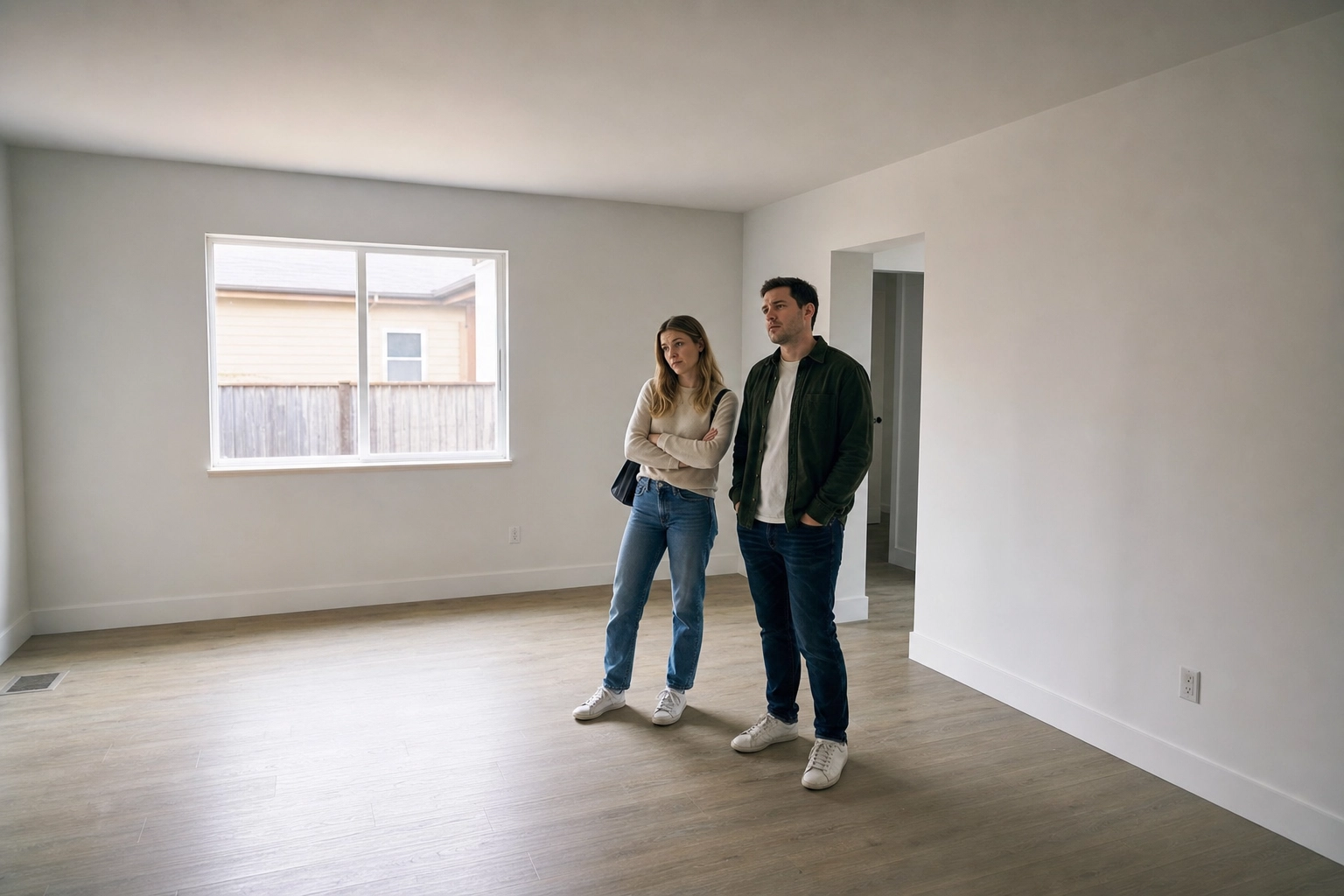
Even flawless staging carries one risk: the gap between the photos and an empty house at the showing. As one agent put it, "It's such a bummer for people to come in after seeing the virtual photos and then in person the place is empty." Buyers feel duped — not because the furniture's gone, but because nobody told them it was never there.
The fix is simple, and the best agents already do it:
- Publish the unstaged original beside the staged version — a plain before-and-after so buyers see the real room.
- Add a floor plan so scale is never a surprise.
- Match the furniture to the likely buyer for the price point and area.
- Never hide condition. Don't paint over water stains or "clean" a green pool — staging shows potential, it shouldn't erase problems.
Virtual staging pros and cons
The honest balance sheet most pros-and-cons articles soften:
The pros
- Cost. Virtual staging runs roughly $1–$75 per image versus several thousand dollars to stage a home physically — often a 90%+ saving.
- Speed. Renders take minutes, not the days of scheduling movers, deliveries, and a designer. (Even premium human-edit services like BoxBrownie or Styldod typically need hours to a day.)
- Flexibility. Show the same room in modern, coastal, or traditional decor, and restyle for another credit if feedback runs cold.
- It works on empty rooms. Vacant homes are where physical staging is priciest and least practical — exactly where virtual staging shines.
- Online pull. Furnished photos earn more clicks and saves than bare rooms, widening your buyer funnel.
The cons
- No in-person reinforcement. The furniture isn't there at the showing, so the payoff of walking into a styled room is missing.
- It can look fake. Low-quality tools reintroduce every problem above and can cost you the listing.
- You must disclose it. That isn't optional (more below), and sloppy disclosure invites complaints.
- It doesn't fix the home. As neutral explainers like PNC's guide note, it influences perception, not the property — it can't fix a cramped layout or deferred maintenance.
When virtual staging is worth it
Virtual staging earns its keep most clearly here:
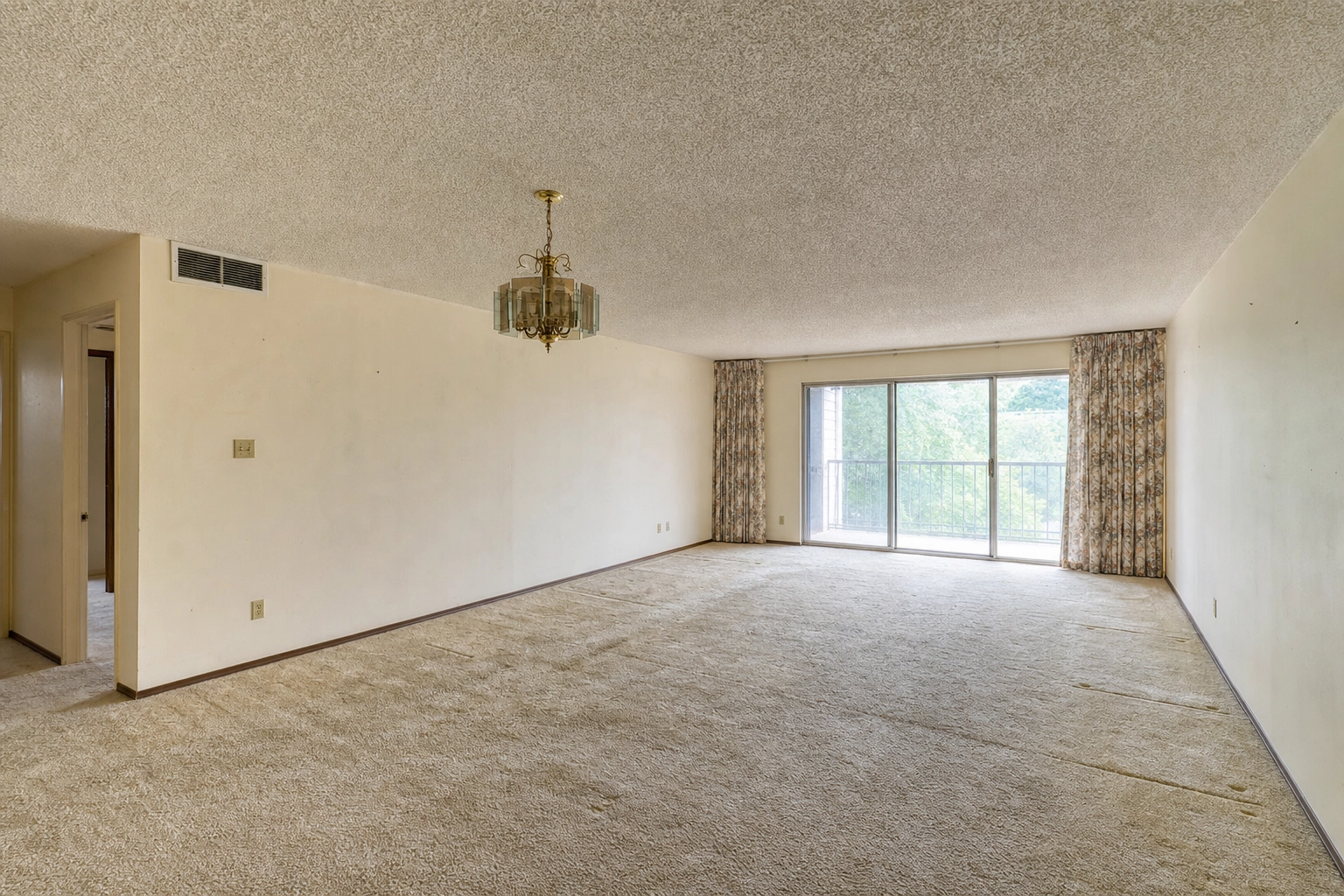
- Vacant listings. The strongest case. Empty rooms photograph poorly and confuse buyers about scale; staging gives them a reference point.
- Dated or awkward interiors. Outdated finishes drag down perceived value, and staging will not hide them: Plotpane furnishes a room, it does not repaint or re-floor one, and there is no renovation preview tool. What helps is clutter removal on the surfaces that read as busy, and honest photography of the rest.
- Online-first and out-of-area buyers. When most of your audience shops from a phone two states away, the photos do all the persuading.
- Tight budgets and timelines. A listing that needs to go live this week can't wait on a staging crew.
- Pre-construction, developer units, and rentals. Marketing an unbuilt or never-occupied space is virtual staging's home turf — a workflow we see daily among real estate photographers, property developers, and brokerages and teams.
When real or partial staging still wins
Virtual staging isn't always the right call. Reach for physical — or a hybrid — when:
- It's a luxury or design-forward home. At the top of the market, the in-person experience is the product. Buyers expect a fully realized space, and real furniture plus a professional stager's eye deliver an emotional hit photos can't.
- The listing will get heavy foot traffic. If open houses drive your buyers, an empty house undercuts the momentum your photos built.
- The home is occupied. Often the best move is removing furniture, not adding it. Decluttering — physically, or digitally with clutter removal — plus a few real styling touches beats fully virtual staging in a lived-in home.
The smartest play is often a hybrid: virtual staging for the online hook, partial physical staging for the rooms that close the deal in person. For the full comparison, see virtual staging vs real staging.

What it costs and when it pays back
Cost is where the decision usually tips. Traditional, physical staging commonly runs $1,500+ per month and several thousand dollars over a listing. Virtual staging is a rounding error — a few dollars per image, or a flat monthly subscription if you stage in volume.
Plotpane is subscription-based: plans start at $49/mo, and every tier outputs the same size — about 2.4K on the long edge — with no visible watermark, in about two minutes each. Every new account gets 3 free renders, no card, to try it on a real listing first. For most agents the break-even is almost immediate — shaving even a few days off one listing's time on market typically covers months of subscription cost. We dig deeper in what virtual staging costs, and you can compare tiers on the pricing page.
Disclosure: stay compliant and keep buyer trust
This is non-negotiable, and in 2026 it's increasingly the law. MLS rules have long required you to disclose virtual staging, and California's Assembly Bill 723 — the "Altered Image Law" — took effect January 1, 2026. As reported by the San Francisco Chronicle and Inman, it requires a clear, conspicuous disclosure whenever a listing image is digitally altered, plus access to the unaltered original via link, URL, or QR code — across the MLS, your site, portals, and social.
The law doesn't ban editing. Basic corrections — exposure, color, cropping, straightening — aren't "alterations," so an auto enhance pass needs no label. But anything that adds or changes elements — virtual staging, sky swaps, clutter removal, day-to-dusk, renovation — needs disclosure.
Plotpane helps on the technical side by writing invisible XMP disclosure metadata into every staged export — a machine-readable "AI-staged" flag that travels with the file. That's a backstop, not a substitute: you still need to label the photo and add the disclosure to your listing remarks. Our MLS virtual staging disclosure guide covers the rules state by state.
How to make virtual staging that doesn't look fake
A quick checklist to keep your staging on the trustworthy side of the line:
- Start with a straight, well-lit photo. Fix perspective and exposure first; even great staging can't rescue a dark, fisheye shot. (Our listing photo guide covers the basics.)
- Preserve the room's real structure — no moved walls, invented windows, or stretched proportions.
- Match scale to reality so the furniture fits the room a buyer will actually walk into.
- Keep lighting and shadows consistent with the room's real light source.
- Style for the likely buyer, not a magazine spread that misses the price point.
- Publish the original next to the staged image, and add a floor plan.
- Disclose everywhere — caption, remarks, and metadata.
The bottom line: is virtual staging a good idea?
For vacant, dated, or online-first listings, virtual staging is one of the highest-ROI moves in real estate marketing — provided it's realistic and disclosed. For luxury homes and listings that live or die at the open house, lean physical or hybrid. The technology isn't what decides whether it helps or hurts; quality and honesty are.
If you stage vacant rooms regularly and want results that preserve the real room instead of reinventing it, see plans and pricing — every plan includes the same ~2.4K output and no mark on the image, and you get 3 free renders before you decide.
Frequently Asked Questions
Does virtual staging help sell a house faster?
Generally, yes. Staged listings draw more online engagement, and NAR's 2025 data found 49% of sellers' agents saw staging reduce time on the market. Virtual staging delivers that at the photo stage — where about 97% of buyers form their first impression — for a fraction of the cost of physical staging.
Does virtual staging look fake?
Low-quality virtual staging can — telltale signs are oversized furniture, mismatched lighting, and shadows that don't line up. Structure-preserving staging that keeps the room's real scale, light, and architecture is far harder to spot and reads as a believable preview rather than a fake.
Do you legally have to disclose virtual staging?
Yes. Most MLSs require it, and as of January 1, 2026, California's AB 723 mandates a conspicuous "digitally altered" or "virtually staged" disclosure plus access to the unaltered original. Beyond the law, disclosing protects you from misrepresentation complaints and keeps buyer trust intact.
Is virtual staging worth it for a vacant house?
This is its strongest use case. Empty rooms photograph as cold and make scale hard to judge, so buyers struggle to connect. Virtual staging gives them a reference for how the space lives — and with no furniture to move in, it's cheaper and faster than real staging.
How much does virtual staging cost compared to real staging?
Virtual staging typically runs about $1–$75 per image, or a flat monthly subscription. Physical staging commonly costs $1,500+ per month and several thousand dollars over a listing — so virtual staging is usually a 90%+ saving, with the trade-off that the furniture isn't physically present at showings.
Can buyers tell when a photo has been virtually staged?
With cheap tools, often yes — and they'll say so. With structure-preserving staging at correct scale and lighting, it's much harder to detect. Either way, tell them: disclosing and posting the original removes the guessing game and the disappointment of a surprise empty room.
Is virtual staging a good idea for occupied homes?
Usually the bigger win in an occupied home is removing clutter and depersonalizing, not adding virtual furniture. Decluttering — physically or digitally — plus light real styling tends to outperform fully virtual staging when buyers will see the actual rooms at the showing.