Commercial Real Estate Photography: Costs, Types & Tips
By the Plotpane Editorial Team · Updated June 2026
Commercial real estate photography pricing usually lands between $300 and $1,500 per shoot for a standard package — but that headline range hides a 50x spread. A single-tenant retail storefront and a 500,000-square-foot logistics campus are both "commercial," and they don't cost anywhere near the same to photograph, license, or budget for.
This guide breaks down what you'll actually pay: rate ranges by property type, the four ways commercial real estate photographers structure their fees, the levers that move a quote (square footage, property class, drone aerials, licensing, turnaround), and how to prep an office, retail, industrial, or multifamily asset so the set lands clean on CoStar, LoopNet, and Crexi. We'll finish with the line item most budgets underestimate — post-production — and how to compress it.
Quick Summary: Standard commercial real estate photography runs $300–$1,500 per shoot, scaling to $3,000–$5,000+ for multi-deliverable campaigns and $15,000+ for large campuses. Price is driven by property type and size, image licensing and usage rights (the big CRE-only multiplier), drone aerials, and turnaround — not square footage alone.
How much does commercial real estate photography cost?
Commercial real estate photography pricing for a standard package falls between $300 and $1,500 per shoot. Bundles that stack ground photos, drone aerials, a floor plan, and a marketing video climb to $3,000–$5,000+, and full-scale campus or resort productions can exceed $15,000.
Here's how typical pricing breaks down by asset class:
| Property type | Typical price range | What's usually included |
|---|---|---|
| Retail & restaurant | $300–$1,500 | Storefront, signage, a few interiors, parking and visibility |
| Industrial & warehouse | $300–$1,200 | Exterior, yard and dock, clear-span interior |
| Office building | $500–$3,000 | Lobby, common areas, suites, amenities |
| Multifamily & apartments | $500–$2,500 | Model units, amenities, elevations, drone |
| Mixed-use development | $1,500–$6,000 | Multiple asset classes plus aerial |
| Hospitality & hotels | $1,000–$5,000 | Rooms, F&B, public areas (luxury resorts $5,000–$15,000) |
The detail that surprises most first-time buyers: commercial work is priced around the marketing purpose of the images, not just square footage. And that marketing carries weight. In the residential market, Redfin's analysis of more than 100,000 listings found professionally photographed homes sold for anywhere from $934 to $116,076 more than amateur-shot comparables, and the National Association of Realtors reports photos are buyers' single most useful listing feature. The same first-impression psychology drives commercial leasing and investment decisions.
For comparison, residential real estate photography typically runs $150–$500 a shoot. Commercial commands more because the properties are larger, the lighting is more complex, the deliverable set is broader, and — crucially — the licensing extends far beyond a 30-day MLS window. We break down the residential side in our residential real estate photography pricing guide.
The four ways commercial real estate photographers charge
Commercial real estate photography rates vary as much by how the fee is structured as by the property itself. Before you compare quotes, identify which model each commercial real estate photographer is using — otherwise you're not comparing apples to apples.
Flat rate per project
A fixed fee for a defined scope: number of photos, spaces covered, and licensing terms. It's the most common model because it gives you a predictable budget. Flat projects run from about $300 for a basic single-building shoot to $5,000+ for a comprehensive campus. The one risk is scope creep — if spaces aren't prepped or you add areas on shoot day, expect change-order fees.
Hourly and day rates
Billed by time on site. Commercial photographers typically charge $85–$200 per hour, with half-days at $400–$800 and full days from $800 to $2,000+ for experienced specialists. This model fits large, complex assets where the number of spaces — and the hours needed — are genuinely hard to estimate up front.
Per-image pricing
Some photographers charge $50–$150 per finished, edited commercial image (residential per-image work runs far lower, often $13–$15). It's the right call when you need a handful of high-impact hero shots for a brochure or investor deck rather than wall-to-wall coverage.
Package pricing
Tiered bundles combine ground photography, drone aerials, a floor plan, and a short video at a discount versus buying each separately. Packages simplify vendor selection and usually deliver the best value for assets that need several deliverable types.
What drives commercial real estate photography pricing
Beyond the headline package, four levers move almost every commercial real estate photography quote.
Property size, class, and architectural complexity
Bigger means more time on site, more lighting setups, and more editing. A single-tenant retail space might need 2–3 hours and 15–20 images; a multi-tenant Class A office with a grand lobby, multiple floor plans, and rooftop amenities can take a full day and deliver 40–60 images. Reflective glass facades, irregular geometry, and vast interior volumes all add skill and time — and push the quote higher. As a rule, Class A assets command more than comparable Class B or C space.
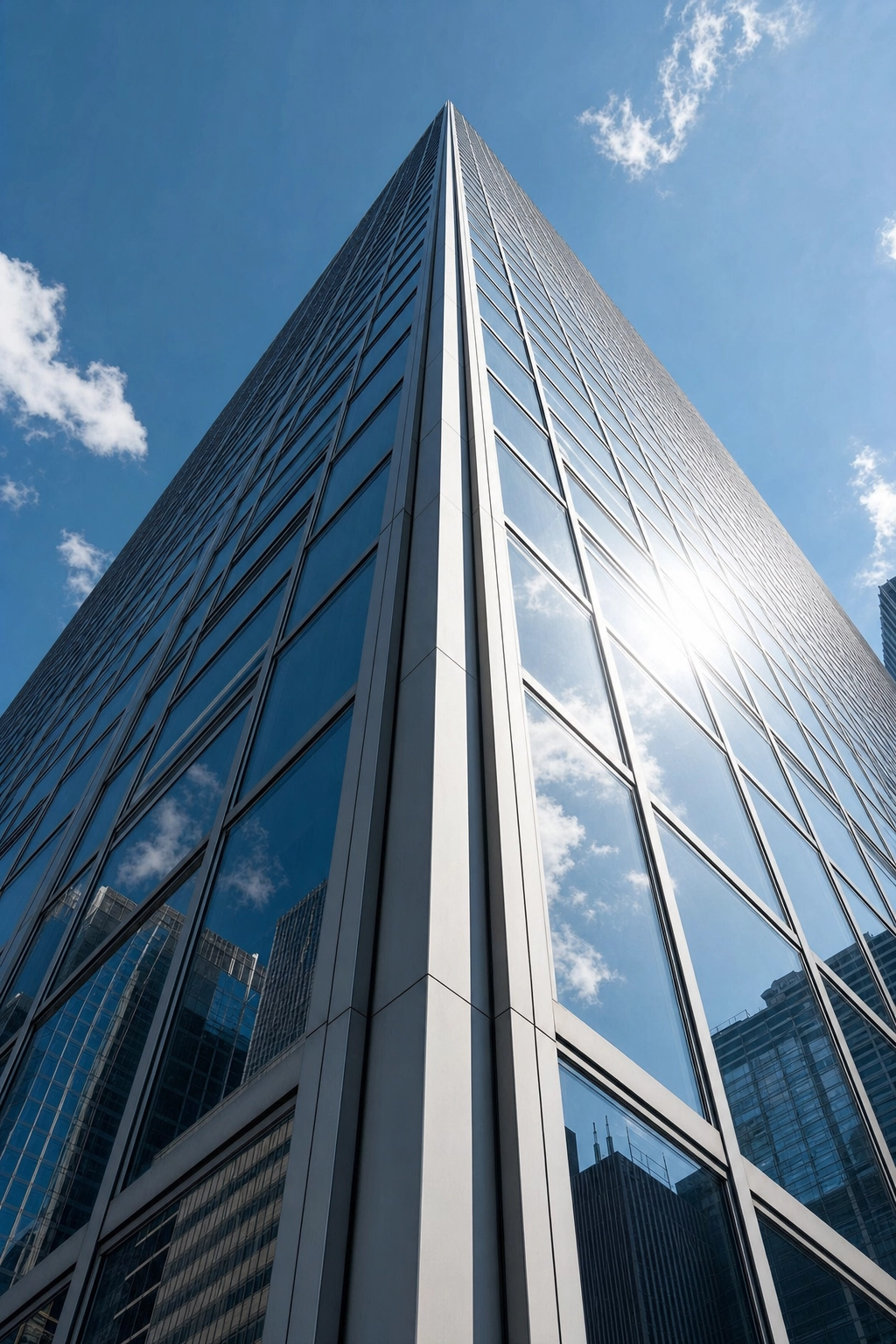
Image licensing and usage rights — the CRE-only multiplier
This is the biggest difference from residential, and the line owners most often miss. In commercial work you're licensing the images for a defined marketing use, and that licensing fee is frequently quoted separately from the creative fee — sometimes exceeding it.
The same building photographed for a for-sale listing, an investor offering memorandum, and a national leasing campaign can carry three very different price tags, because the usage scope and duration differ. Residential photos live on the MLS for a few weeks; commercial images can market an asset for months or years across a property website, printed collateral, and CoStar, LoopNet, and Crexi. Always confirm exactly what usage your quote covers before the shutter clicks.
Drone aerials and FAA Part 107
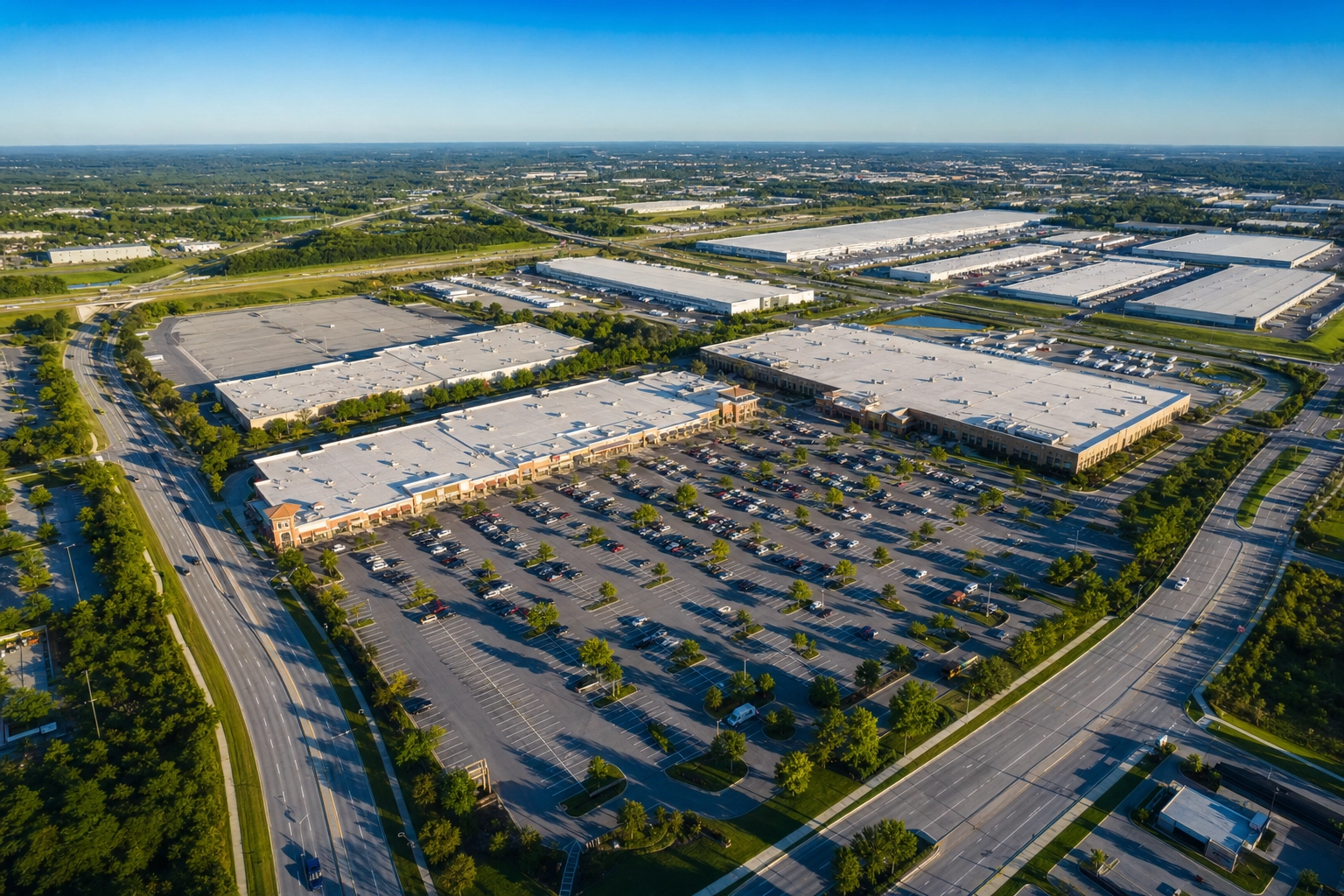
Aerials are close to mandatory for industrial, multifamily, retail, and mixed-use assets, where site context — parking ratios, access, dock configuration, the surrounding trade area — is part of the pitch. Budget roughly $100–$500 for aerial coverage on top of ground photography, depending on the deliverables.
One non-negotiable: any drone flight flown for compensation is a commercial operation, so the pilot must hold an FAA Part 107 Remote Pilot Certificate. Drones over 0.55 lb (250 g) must be registered with the FAA, and Remote ID broadcasting has been required since 2023. Remote pilots also pass an aeronautical knowledge test and re-certify every 24 months. Ask any photographer for their Part 107 credentials before adding aerials.
Location, travel, turnaround, and rush fees
Photography in major metros — New York, San Francisco, Los Angeles, Boston, Seattle, Miami — runs 20–40% above the national average, and remote sites can add $50–$500 in travel. Standard turnaround is 24–48 hours for proofs and 48–72 hours for final edited images; need it faster and you'll pay a rush fee. Cinematic video walkthroughs and 3D tours are separate add-ons (commonly +$300–$2,000). Worth flagging for budgeting: AI editing tools such as Plotpane are image-only and don't produce video — more on the editing line below.
Pricing and shot prep by property type
Commercial real estate photography pricing isn't one number — each asset class has its own price band and its own shot list. Here's how to budget, and how to shoot and prep each type so the images read correctly on CoStar, LoopNet, and Crexi.
Office buildings ($500–$3,000)
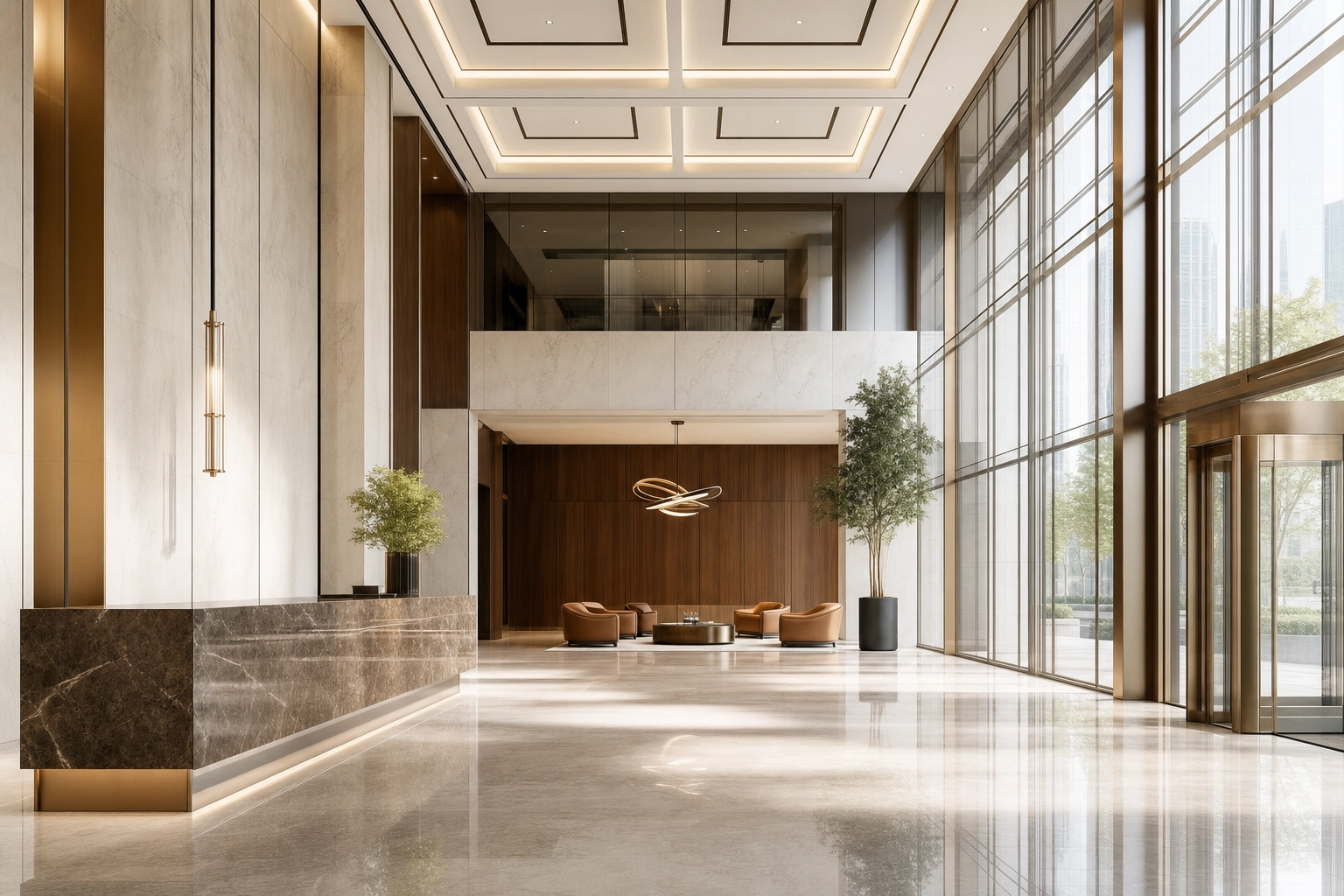
Tenants and investors want to read the lobby, common areas, a representative tenant suite, and amenities like conference rooms, fitness centers, and rooftop terraces. Class A towers with abundant amenities often justify a full day on site.
Prep tips: straighten the verticals on tall glass facades so the building doesn't appear to lean — that's exactly what Perspective Fix is for — clear desks and cable clutter from occupied suites, and lock white balance across floors so the set looks like one building, not ten. Wide interiors shot with a tilt-shift lens (or corrected in post) keep ceilings and window mullions true. For a dated suite you're marketing as redevelopable, note that Plotpane will not change finishes — no repainting, no re-tiling, no new ceiling — so a build-out preview is still a job for a rendering studio.
Retail and restaurant spaces ($300–$1,500)
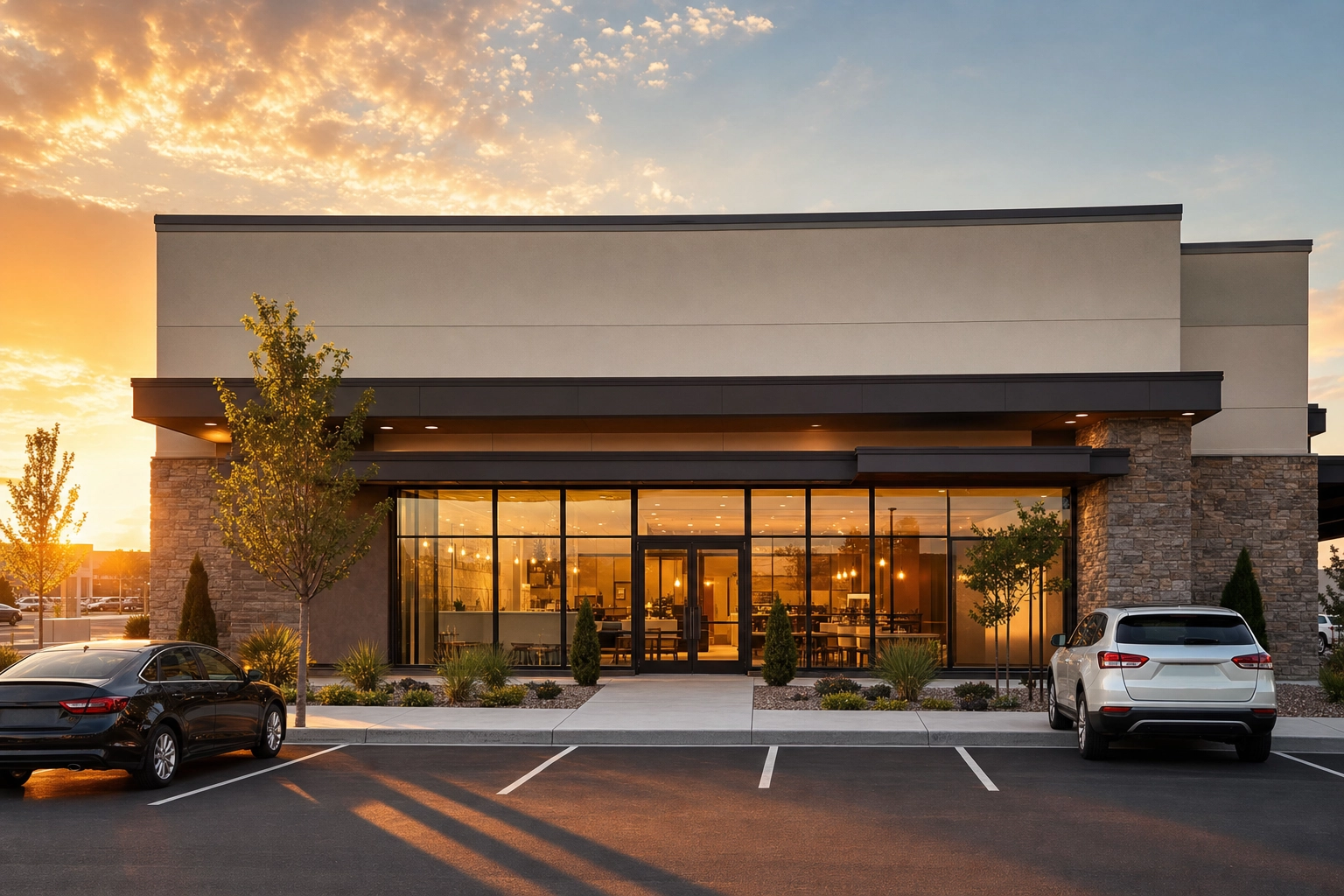
A single storefront sits at the low end; anchor centers and plazas need wider coverage. The whole job of office and retail photography is to sell visibility and access — show the signage, the frontage, the parking, and the approach from the main road.
Prep tips: shoot the exterior during peak light, pull cones, bins, and stray vehicles out of the frontage, and add an aerial to convey the site's position in the trade area. Clean, bright interiors help a prospective tenant picture their own fit-out. When a reshoot isn't practical, clutter and vehicle removal clears the lot in post.
Industrial and warehouse ($300–$1,200)
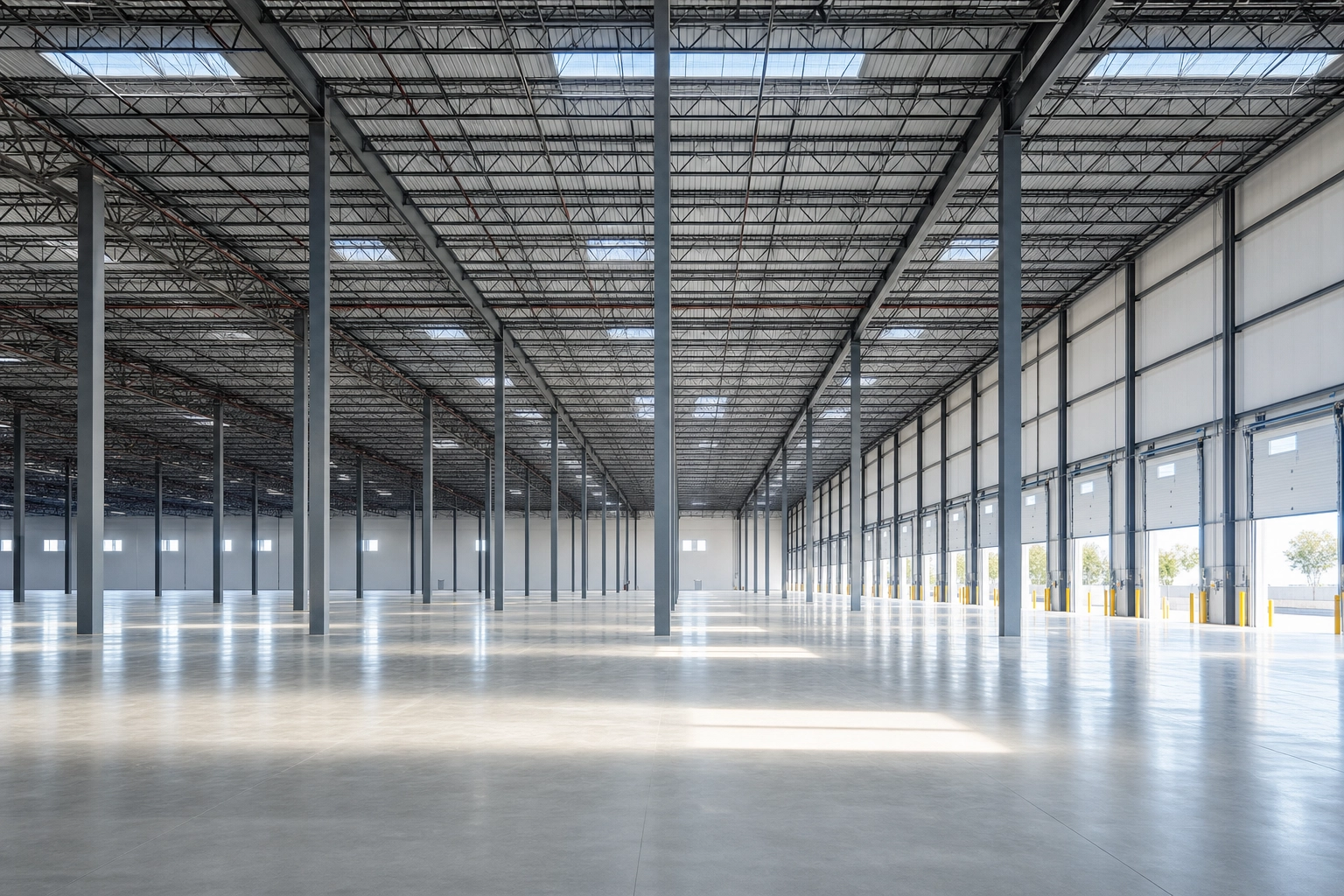
Logistics tenants read specs, so the photos have to communicate them: clear-span height, column spacing, dock-door count, and truck-court depth. Vast, dim interiors are the main challenge.
Prep tips: shoot wide with corrected perspective so racking and columns stay vertical, expose for the interior volume, and capture the loading and yard areas clearly. A clean exterior sky helps a utilitarian box read as a premium facility — a quick sky swap rescues a flat, overcast shoot day. High-volume teams batch the whole set with marketing software built for CoStar, LoopNet and Crexi.
Multifamily and apartment communities ($500–$2,500)
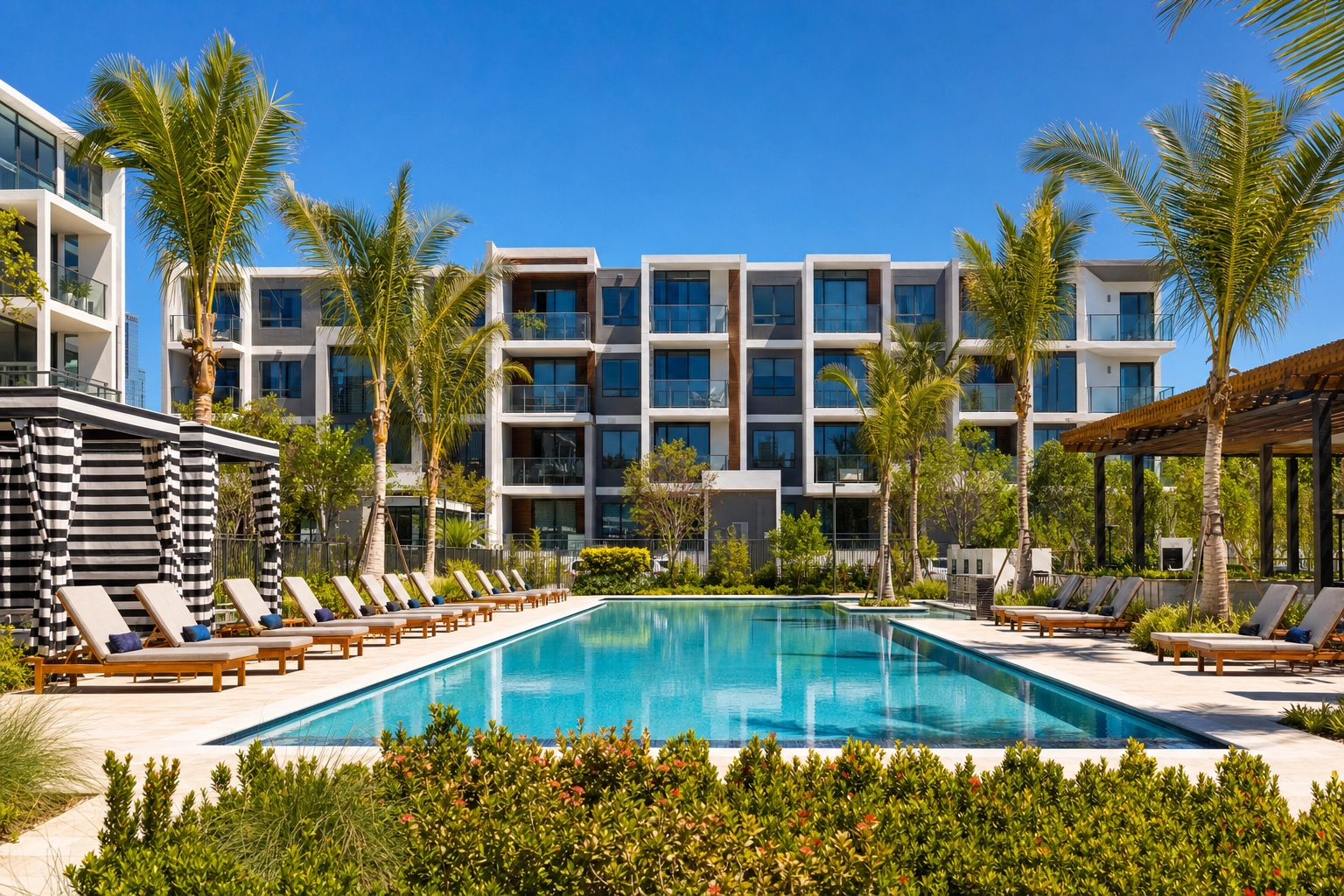
Multifamily needs the widest shot list of any asset class: a model unit in each floor-plan type, amenities (pool, fitness center, clubhouse, coworking lounge), exterior elevations, and a drone frame showing the community in its neighborhood.
Prep tips: keep grade and white balance consistent across dozens of near-identical units, make sure lawns read green and pool water runs clear — lawn and pool revive handles off-season shoots — and declutter or virtually stage model units (the virtual staging ROI math holds up at scale). Mixed-use developments ($1,500–$6,000) and hospitality ($1,000–$5,000, luxury resorts higher) follow the same logic at greater scale and almost always need aerials; for ground-up portfolios, see Plotpane for property developers.
Where the edit fits — and how CRE teams cut post-production cost and turnaround
Here's the line item most budgets underestimate: the shoot is one cost, but the edit is a separate cost and a separate clock. Perspective correction, exposure blending, sky replacement, and clutter removal across a 40–60 image office set take hours — and on a leasing deadline, those hours are the bottleneck.
This is where AI photography built for commercial real estate changes the math. Plotpane is a structure-preserving photo editor — not a shoot service, and not a video tool. You upload the set, pick one of the seven tools, and get listing-ready JPEGs back with no visible watermark in about two minutes each, at one credit an image whichever tool you picked:
- Auto enhance corrects exposure, white balance, and clarity, so a run-and-gun or phone-shot set looks deliberate.
- Perspective Fix straightens the verticals on tall facades and squares off wide retail and warehouse interiors.
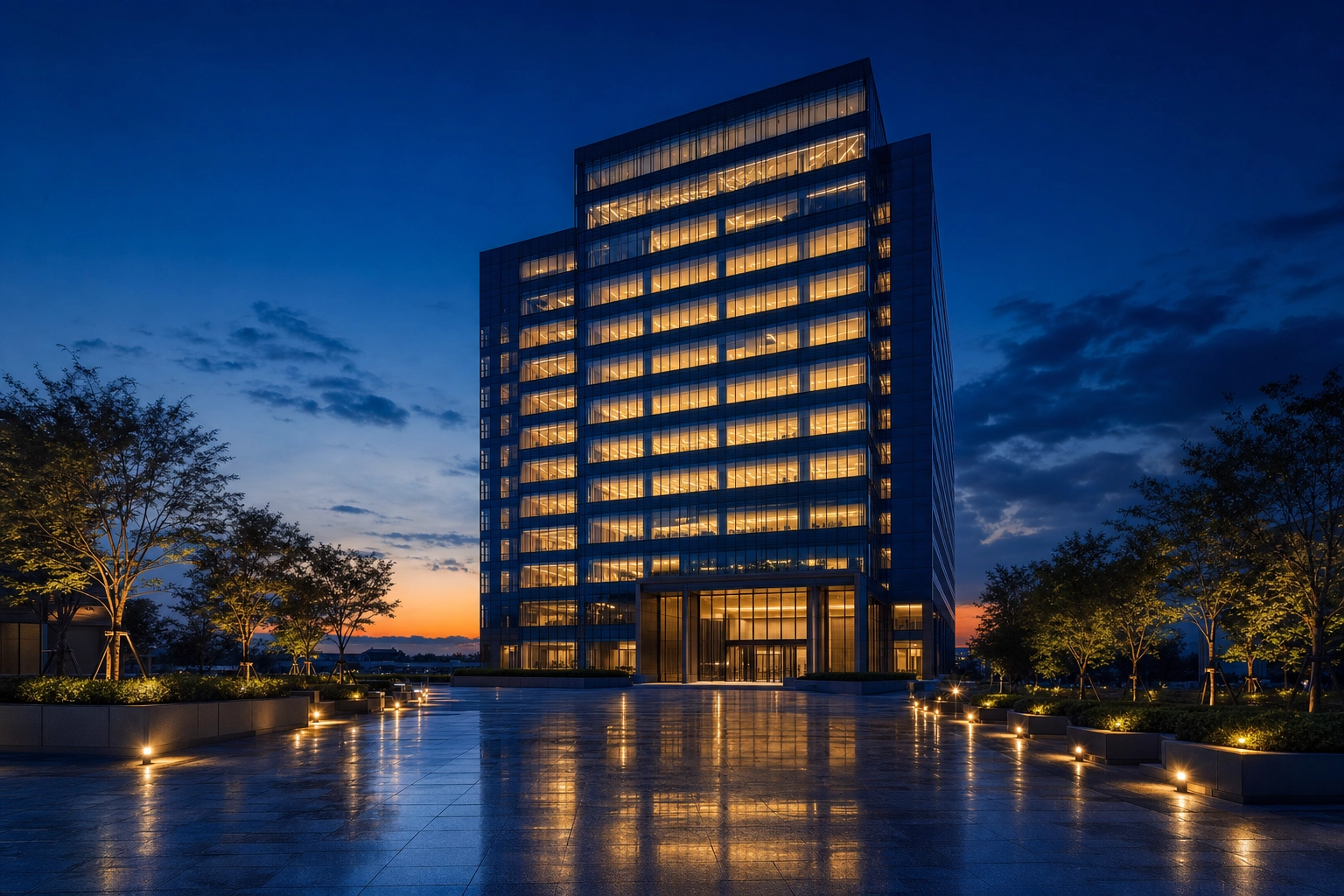
- Sky swap replaces a flat gray sky on a warehouse or office exterior with matched color grading.
- Clutter and vehicle removal clears cars, cones, dumpsters, and power lines from frontage and parking lots.
- Day-to-dusk conversion turns a midday office tower into a twilight hero shot without a second visit.
The differentiator for CRE is consistency at volume. Batch mode runs one tool across an entire leasing-tour set — the same instruction and the same preserve list on every frame — so a 12-floor office or a 300-unit community reads as one cohesive package on CoStar, LoopNet, and Crexi rather than a patchwork of edits. And because the pipeline is structure-preserving, it never invents walls, windows, or floor plans — what you shot is what you list, which matters when the images back an offering memorandum. (You still write your own listing and disclosure remarks; the tool tags staged output with invisible disclosure metadata, but the language is yours.)
For the deeper editing workflow and submission specs, see the commercial real estate photo editing page. Plotpane pricing starts at $49/month for 100 images, with Pro at $99/month (220 images) and Agency at $249/month (600 images, batches of 150 photos at a time) — the same output size on every plan — around 2400 px on the long edge — with no visible watermark, and 3 free renders to try it first. It fits whether you're a brokerage marketing team, a developer, or one of the real estate photographers clearing a high-volume edit night.
Frequently Asked Questions
How much does commercial real estate photography cost on average?
Commercial real estate photography pricing for a standard package runs $300–$1,500 per shoot. Retail and industrial sit at the lower end ($300–$1,200), offices and multifamily in the middle ($500–$3,000), and multi-deliverable campaigns that bundle drone, video, and floor plans climb to $3,000–$5,000+. Large campuses and luxury resorts can exceed $15,000.
Why is commercial real estate photography more expensive than residential?
Three reasons: commercial properties are larger and more complex to light and shoot; the deliverable set is broader (more spaces, aerials, floor plans); and the image licensing covers a longer, wider marketing use. A residential listing lives on the MLS for weeks, while commercial images can market an asset for months or years across multiple channels.
What's the difference between per-image and day-rate pricing?
Per-image pricing ($50–$150 per finished commercial photo) makes sense when you need a few hero shots. Day rates ($800–$2,000+) cover full coverage of a large, complex asset where the photographer can't predict the exact image count in advance. Flat project pricing sits between the two for a clearly defined scope.
Do commercial drone photos require a licensed pilot?
Yes. Any drone flight flown for compensation is a commercial operation, so the pilot must hold an FAA Part 107 Remote Pilot Certificate, fly a registered aircraft, and comply with Remote ID rules. Ask for the pilot's Part 107 credentials before adding aerials to your shoot.
How long does commercial real estate photography turnaround take?
Most photographers deliver proofs in 24–48 hours and final edited images in 48–72 hours. Rush delivery is usually available for an added fee. AI editing can compress the post-production step to roughly a minute and a half per image when the deadline is tight.
Can AI editing reduce commercial real estate photography costs?
It reduces the post-production line, not the shoot itself. A structure-preserving editor like Plotpane handles enhancement, perspective correction, sky swap, and clutter and vehicle removal — one tool per render, about two minutes each, batches of up to 150 on Agency — so a leasing set can ship same-day. It's image-only (no video), and you still need a photographer on site to capture the property.
Sources: Pricing ranges reflect 2026 U.S. commercial real estate photography market data. Drone operating requirements per the U.S. Federal Aviation Administration (Part 107). Listing-photo impact figures from Redfin and the National Association of Realtors.