21 Home Builder Marketing Ideas That Sell Spec Homes
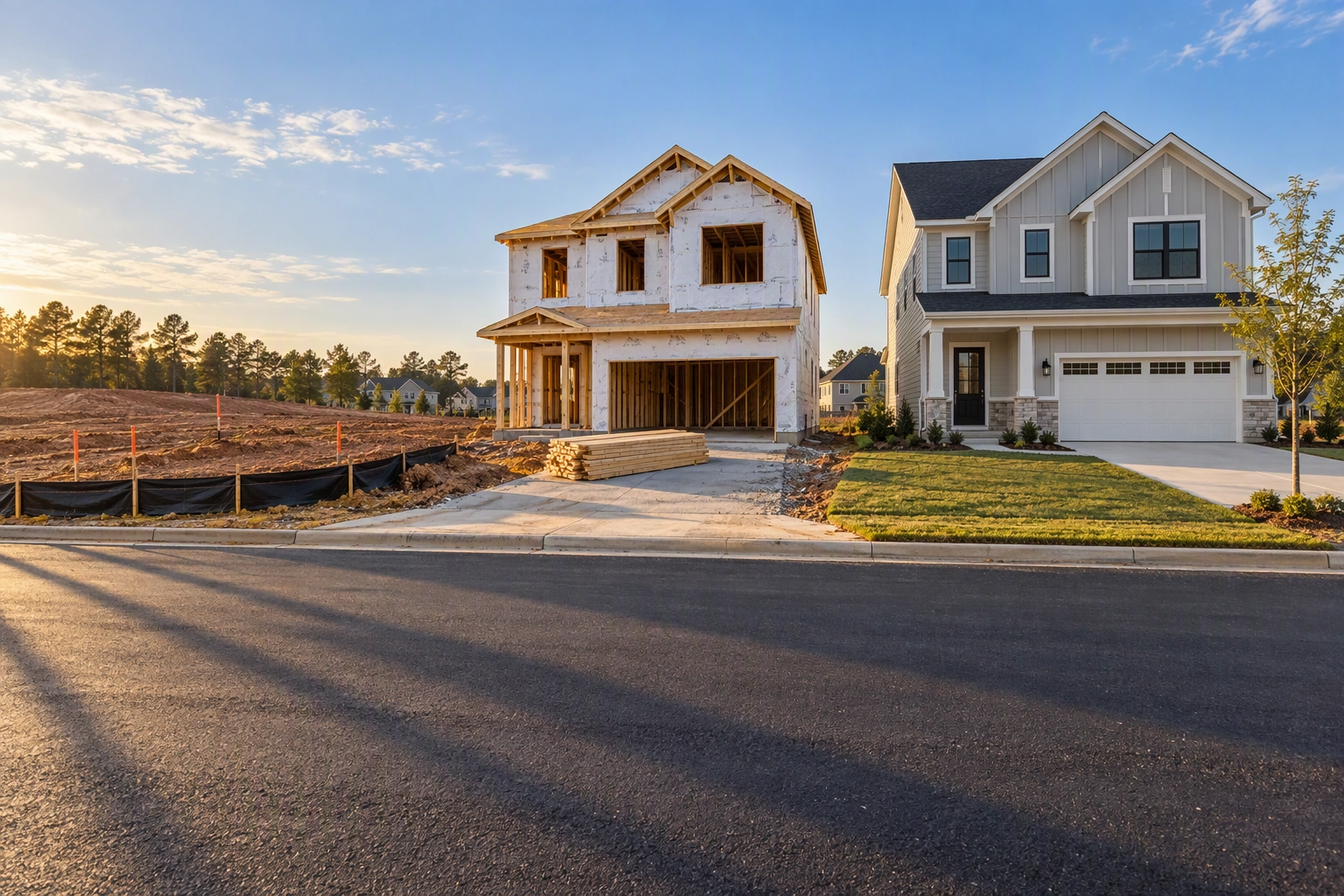
Home builder marketing in late 2026 has one urgent job: sell the homes that are already built. At the end of August, 112,000 finished new homes were unsold. In October, 43% of builders cut prices.
The 21 ideas below are grouped by what they move. First come the spec homes standing today, then the pictures at each build stage, then demand for the next phase. The second group shows where photo editing for home builders fits, and where it doesn't.
Quick Summary: Home builder marketing for standing inventory comes down to three levers. Offer an incentive that beats a price cut (a 2-1 buydown costs about $9,100 on a $400,000 loan; a 6% cut costs $24,000). Match the photos to each build stage. Answer leads within the hour.
Why spec homes need their own home builder marketing plan
Spec and quick move-in homes need their own plan because they cost money every month they sit, and the market is long on them. The Census Bureau's August 2026 new residential sales report counted 483,000 new homes for sale. That is an 8.5-month supply, at a median price of $393,700.
NAHB's read of the same data found 112,000 of those homes completed and ready to occupy. The pressure shows in pricing. In the NAHB/Wells Fargo Housing Market Index for October 2026, 43% of home builders cut prices, the highest share since 2020. The average cut was 6%, and 65% used sales incentives.
A finished spec sells on what buyers see online before they drive out: the MLS card, the Zillow tile, the builder's website. That makes the photo set a home builder marketing decision, because listing photos decide the sale before anyone tours.
A home builder marketing photo plan for each build stage
Each build stage needs a different image. Unbuilt lots need renderings. Framing needs honest progress photos. Finished specs need a full photo set with staged rooms and a twilight exterior. Model homes need a professional shoot, and aging quick move-ins need a refresh. Costs run from $0 to roughly $45,000.
| Stage | Image asset that works | Typical cost | Where it's published | Plotpane's role |
|---|---|---|---|---|
| Pre-sale lot | CGI rendering, site plan, drone shots of the land | Renders about $500–$1,500 per exterior, $300–$1,000 per interior. Drone add-on $150–$350 | "Coming soon" page, VIP-list landing page, Zillow community page, paid social | None for the house. It does not render or invent unbuilt homes. A real drone photo of the site can take a Sky Swap |
| Framing | Dated progress photos from fixed spots | $0 on the superintendent's phone | Progress gallery, VIP and contract-buyer email, social media | Perspective Fix, Auto Enhance, Sky Swap on grey days. The site stays a site |
| Completed spec, unfurnished | Full photo set, staged main rooms, twilight front exterior | Shoot $250–$500. Physical staging median $1,500. Human virtual staging $16–$75+ per image. Plotpane: one credit per image | MLS (feeds Zillow through Listing Connect), quick move-in page, ads | Virtual Staging (disclosed), Day to Dusk, Clutter Removal for named objects |
| Model home | Pro interior shoot, twilight exterior, video walkthrough | Merchandising from about $18 per sq ft (~$45,000 for 2,500 sq ft). Shoot $500–$800. Twilight session $300–$450 | Website hero, Zillow community page, sales-office Google profile, brochures | Auto Enhance, Perspective Fix, Day to Dusk from the midday shoot. No staging needed |
| Quick move-in, 60+ days | Refreshed exterior for the season, incentive creative | Re-shoot $250–$500, or re-edit existing frames at one credit each | Quick move-in page, MLS photo update, email alerts, retargeting | Sky Swap, a fresh Day to Dusk, Lawn & Pool Revive on existing dormant turf only |
Sources: published 2026 rendering-studio price guides, our real estate photographer pricing guide, NAR's 2025 Profile of Home Staging, and one Columbus, Ohio, merchandiser's entry package.
The right-hand column has hard limits. Plotpane edits photographs, not renderings, so it can't show a home that isn't built. It won't add a lawn or landscaping to bare dirt, and it doesn't do virtual renovation: cabinets, floors and paint stay as built. Lawn & Pool Revive greens grass that exists, so shoot a lot after the sod goes in. Each edit is one credit an image and about two minutes.
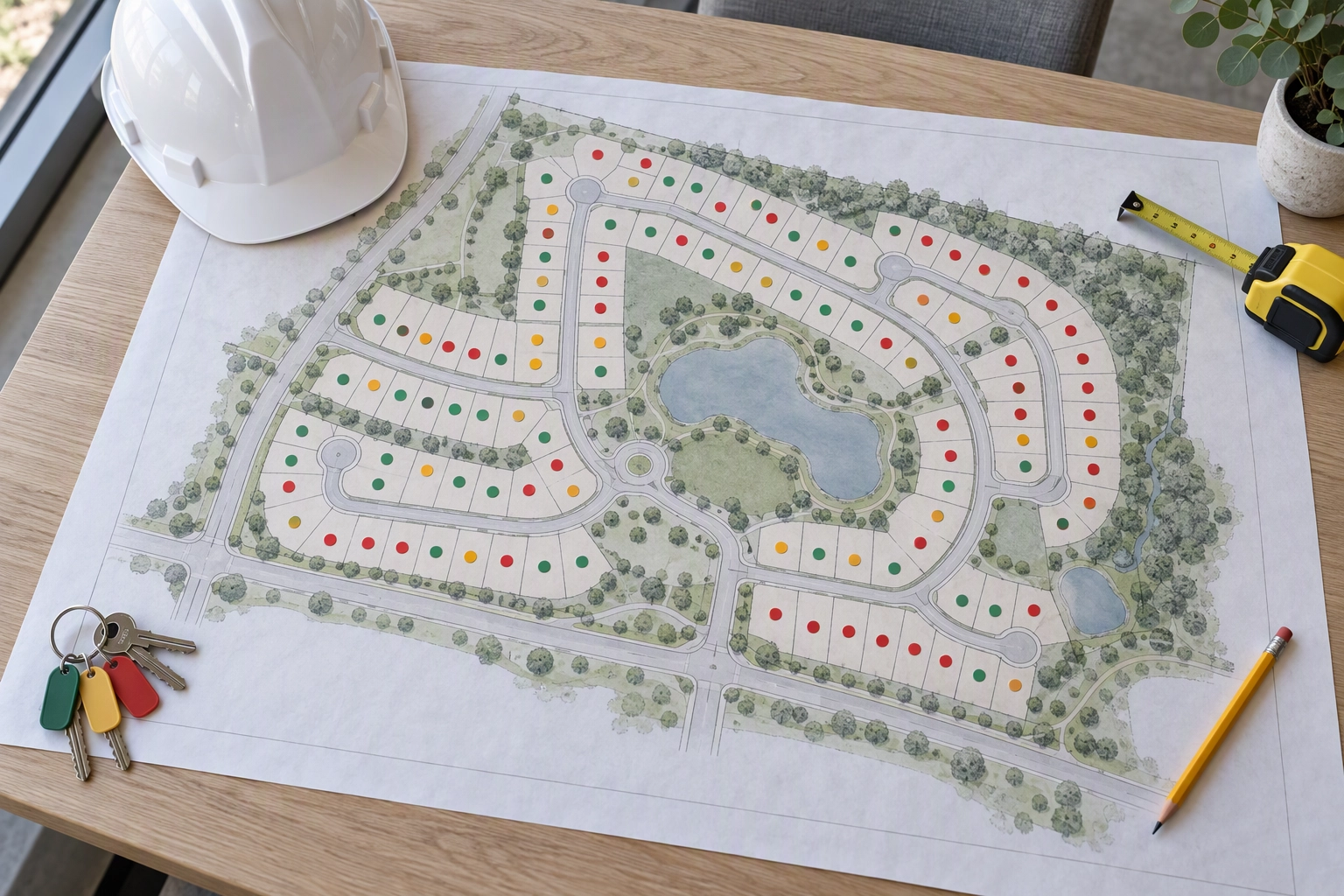
Home builder marketing ideas 1–6: Move the homes you already built
1. Price the incentive, not the house
As a pricing strategy, a rate buydown usually moves a payment-shopping buyer for less money than a price cut. On a $400,000 loan at 6.5%, a 2-1 buydown costs the builder about $9,100. It lowers the first-year payment by $502 a month. A 6% price cut costs $24,000 and lowers it by $152.
| Move | Builder's cost | Payment, year 1 | Year 2 | Year 3 on |
|---|---|---|---|---|
| No incentive | $0 | $2,528 | $2,528 | $2,528 |
| 6% price cut | $24,000 | $2,377 | $2,377 | $2,377 |
| 2-1 buydown | about $9,100 | $2,027 | $2,271 | $2,528 |
Principal and interest on a 30-year fixed loan, by our calculation. The cut wins from year three, so it suits a buyer who stays and never refinances, but it also resets the comparable sales for every home that follows. Check the loan program's cap on seller contributions (FHA allows up to 6%) before you advertise.
2. Give quick move-in homes their own page
A quick move-in page sorted by move-in date answers the one question these buyers have: what can I close on by June? Show the address, plan, price, incentive, move-in date and photos of that exact home, not the model.
Keep the page one click from the homepage and update it the day a home goes under contract. A stale "available" listing burns trust faster than any ad builds it.
3. Put every spec on the MLS, then connect it to Zillow
Zillow's builder resource center says spec homes in Promoted Communities must be listed on an MLS to display alongside agent listings. Builders tie each MLS listing to its community with Zillow's Listing Connect tool, or send it through a direct feed.
The MLS is also where buyer agents search. Meet each portal's photo specs once: our Zillow listing photo guide and MLS photo size requirements cover the numbers.
4. Run a co-op program agents can actually find
NAR's 2025 Profile of Home Buyers and Sellers found that 88% of buyers worked with an agent. For most builders, agents are still the largest home builder marketing channel. Since NAR's practice changes took effect on August 17, 2024, offers of buyer-agent compensation no longer appear on the MLS.
So publish your co-op terms, registration rule and current bonuses on a broker page. Email agents monthly with new quick move-ins. If agents must attend the first visit, let them register clients online so the rule doesn't cost you a sale.
5. Host a broker preview in a finished spec
A two-hour lunch inside the home you most need to sell puts agents in rooms they will describe to clients next week. Hand every agent the content they need to sell it: a ZIP of the listing photos, the incentive sheet and the lot plan. If the spec is empty, show the virtually staged photos next to the real rooms. Agents trust staging they've seen disclosed.

6. Retarget everyone who viewed a quick move-in home
Housing ads on Facebook and Instagram run under Meta's Special Ad Category. Age is fixed at 18 to 65+, all genders are included, ZIP code targeting is off, and any location needs at least a 15-mile radius.
What still works is your own data: website visitors, video viewers and your email list. For example, retarget everyone who opened a quick move-in page with that exact home's photos and incentive. Cap frequency so the campaign doesn't follow people for months.
Ideas 7–12: Fix the pictures at every build stage
7. Match the image to the stage
The cheapest home builder marketing fix is timing. Use the photo plan above as a production calendar. Order the rendering before the lot is cleared, and shoot progress photos every two weeks from the same spots. Book the finished-home shoot for the week of the final clean, so each stage hands the next one usable images instead of a gap.
8. Virtually stage finished specs that sit empty
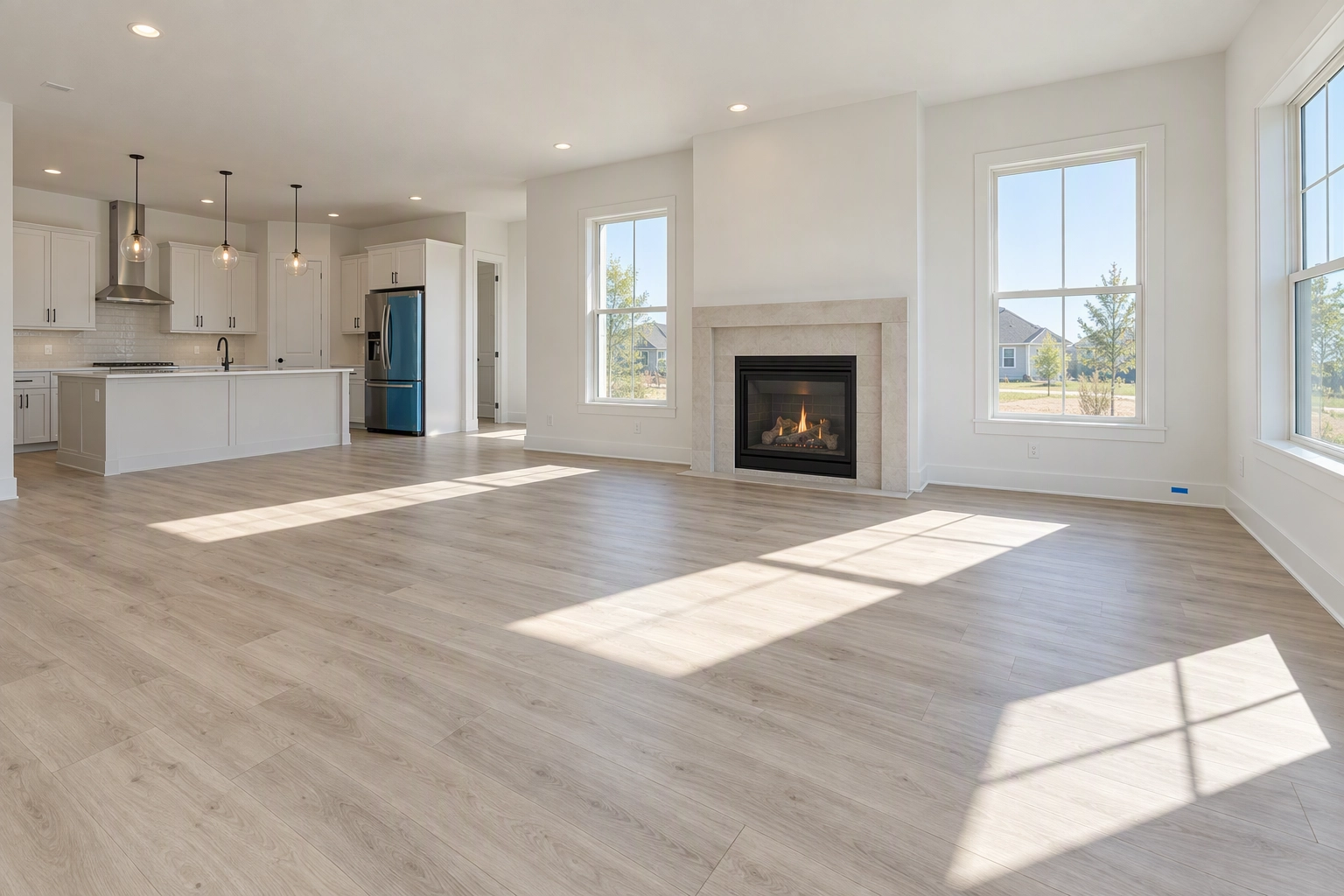
Virtual staging is the cheapest way to make an empty spec read as a home. In NAR's 2025 Profile of Home Staging, 83% of buyers' agents said staging makes it easier for buyers to picture the property as their future home. The median professional staging service cost $1,500.
Plotpane's Virtual Staging furnishes the living room, primary bedroom and dining room in one of 10 design styles, one credit an image. It never changes the finishes, so the photos match what the buyer walks into.
Disclose it. Every export carries invisible XMP disclosure metadata and can carry a visible "Virtually Staged" label, but the MLS remarks disclosure is yours to write. Our MLS virtual staging disclosure guide lists the rules, and virtual vs physical staging compares costs.
9. Shoot exteriors at midday, publish them at twilight
A standalone twilight session runs $300–$450 because the photographer drives back at sunset. Day to Dusk turns the midday front elevation into a twilight exterior with warm window glow. See twilight photos for spec homes for the builder workflow.
Use it on the hero image, the first photo on the MLS card and the Zillow tile. It lights the house you built; it doesn't finish the yard. Our twilight photography guide covers the technique.
10. Clean up grey site days and leaning progress shots
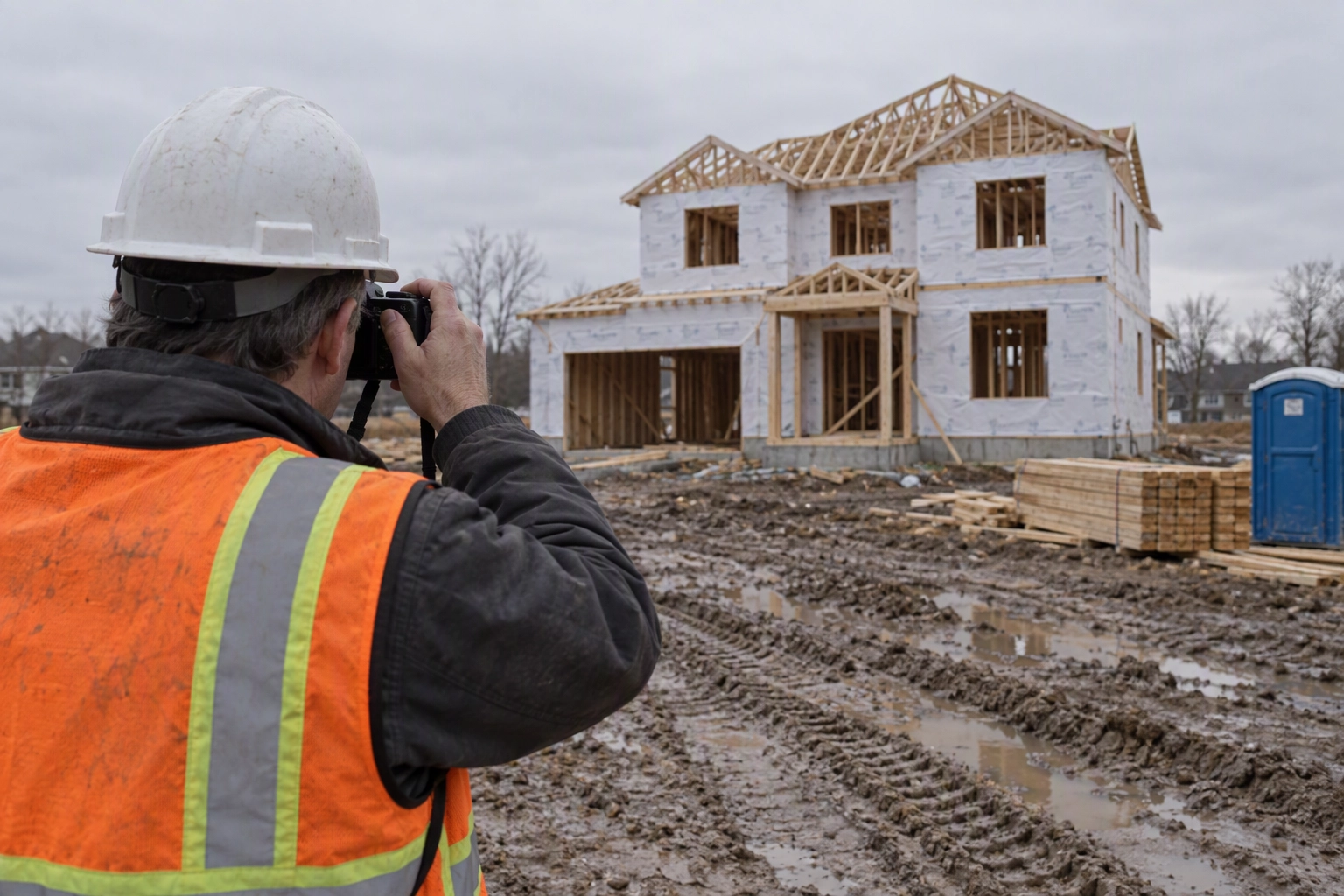
Progress photos get shot fast, handheld and under whatever sky the day brings. Sky Swap replaces a flat grey sky. Perspective Fix straightens walls that lean back in a wide shot, and Auto Enhance evens out the exposure.
On a finished home, Clutter Removal takes out the objects you name, like a dumpster at the curb. Keep the framing, the house wrap and the mud in progress shots. They are proof of progress, and buyers can tell when a site has been polished into something else.
11. Send construction progress to contract buyers and the VIP list
Buyers under contract on a to-be-built home want proof their home is moving. A monthly email with three to five dated photos of their lot (foundation, framing, drywall, cabinets) cuts "what's happening?" calls. It also gives you social media content that's real. The same photos, without the lot number, show the VIP list the phase is on schedule.
12. Keep one look across every elevation
When the website carousel mixes a blue-sky elevation, a grey-sky one and a twilight one, the whole phase looks unfinished. Run every elevation in a release through the same tool in one batch. Plotpane's Starter, Pro and Agency plans take 10, 50 or 150 photos per batch, so the set grades together.
The spec home photo enhancement page covers builder volumes. Our batch photo editing page explains how one pass holds white balance and image quality across a set.
Ideas 13–21: Building demand before the next phase opens
13. Build a VIP interest list before you release lots
A VIP list turns a phase release into a deadline. Pro Builder's presale playbook targets three qualified VIP members for every homesite in the first release. Put up signage and a one-page site with the product type, school district and a sign-up form once the land closes, well before building starts. Send the list content worth opening, like site plans, elevations and school data, then give it first look at pricing and lot selection.
14. Put the sales office on Google Business Profile, not the model
Google's Business Profile eligibility guidelines list model homes as ineligible, while a sales office is eligible for verification. Verify the sales center with its real hours. Add photos of the streets, amenities and the model's exterior, and answer every customer review. A profile built for the model home itself risks suspension, and the reviews go with it.
15. Write a community page for every search buyers type
People search "new homes in [city]," "[school district] new construction" and "55+ communities near [city]." Give each neighborhood its own page with price range, HOA dues, tax rate, schools, commute times, lot sizes and today's quick move-ins.
This content is the home builder marketing asset that search results reward. It is also what AI answer engines quote when people ask which builders are active in a suburb.
16. Answer every lead within the hour
In "The Short Life of Online Sales Leads," Harvard Business Review (2011) reported a steep decay. Firms that contacted a lead within an hour were nearly seven times as likely to qualify it as firms that waited an hour longer. They were over 60 times as likely as firms that waited a day or more.
Speed is the most underrated home builder marketing lever. An online sales counselor who owns the inbox, plus a text-back within minutes after hours, protects lead quality you already paid for.

17. Email by buyer stage, not one newsletter
Segment the list into VIP prospects waiting for a release, browsers who viewed a quick move-in, agents, and contract buyers. Each group needs different information: release dates, price and incentive changes, co-op updates, construction progress. A price-change alert to the 40 people who viewed that home last month is usually worth more than a blast to 4,000.
18. Film real walkthroughs of the actual homes
Video builds trust because it can't hide how a floor plan flows. Film a two-minute gimbal walkthrough of each finished spec and the model, and post it to the quick move-in page, YouTube and Zillow, which accepts video on new construction listings. Add 3D tours where buyers relocate from out of state. Keep the video content unscripted and specific: which way the backyard faces, where the morning light lands.
19. Collect reviews at move-in, while the keys are new
Zillow shows builder ratings and reviews, gathered by Avid Ratings move-in surveys, on builder profiles and listing pages. When it launched the feature in 2020, Zillow cited its Consumer Housing Trends Report: 76% of new construction buyers called reputation very or extremely important. Ask for a review on the sales office profile at the orientation walk, and again at the 30-day warranty visit.
20. Use social media for proof, not polish
Pick platforms by who buys: a 55+ neighborhood and a first-time-buyer townhome phase don't share an audience. Post what an ad can't fake, like framing milestones, a closing-day photo shared with permission, or a superintendent explaining window flashing. The job site makes new content daily, which helps home builders who post on a schedule never run dry.
21. Measure cost per sale by channel, not cost per lead
A channel that sends cheap leads nobody tours is expensive. Cost per sale is the one home builder marketing number that ties spend to closings. Track each lead's source in the CRM through appointment, contract and closing. Then compare results across Zillow, paid search, social media, agents and the website, and every quarter move budget from the worst channel to the best.
Three home builder marketing moves for this week
- Check that every finished spec is on the MLS and showing on Zillow New Construction.
- Re-edit the hero exterior and empty rooms of your oldest spec. Plotpane's 3 free renders need no card, and plans start at $39 a month billed yearly for 100 credits.
- Set a one-hour lead response rule, and measure the results weekly.
Frequently Asked Questions
What is home builder marketing?
Home builder marketing is how a builder finds and converts buyers for new homes. It covers websites, MLS and Zillow listings, agent co-op programs, paid ads, email, events, and the photos and video behind all of them. Unlike resale marketing, it runs across build stages, from unbuilt lots to finished spec inventory.
What does home builder marketing cost per home?
NAHB's 2024 Cost of Constructing a Home survey put marketing at 0.8% of the final sales price, plus 2.8% for sales commissions. On August 2026's median new-home price of $393,700, that is about $3,150 of marketing per home. Treat it as a floor for homes already built, since every unsold month adds carrying cost.
What is the fastest way to sell a spec home?
Make the payment attractive and the listing look finished. Offer a rate buydown, list the home on the MLS so it reaches Zillow and agents, stage the empty rooms with disclosure, lead with a twilight exterior, and answer every inquiry within the hour.
Can builders use virtual staging on new construction listings?
Yes, on photographs of finished rooms, with disclosure. Virtual staging adds furniture to a real photo. It should not change finishes or show rooms that aren't built. Many MLSs require a note in the remarks, and some states now regulate it, as our guide on whether virtual staging is legal explains. Unbuilt homes are a job for a rendering studio, labeled as renderings.
Can a model home have its own Google Business Profile?
No. Google lists model homes among ineligible for-sale properties. A staffed sales office is eligible, so verify that location with its real hours and use its photos and reviews to market the whole neighborhood.