Is Virtual Staging Legal? Yes, but 2 States Now Regulate It

Is virtual staging legal? Yes. No federal or state law bans adding virtual furniture to listing photos, and every MLS rulebook we checked allows it. What the rules police is honesty: disclose the staging, and never use it to change or hide the property's real condition. California made that disclosure a statute on January 1, 2026; Wisconsin follows on January 1, 2027.
By the Plotpane Editorial Team · Updated October 14, 2026 · Not legal advice.
Staging with Plotpane's virtual staging tool? The last section of this guide shows which part of the disclosure it handles.
Quick Summary: Is virtual staging legal? Yes, in all 50 states, when it is disclosed and only adds furniture and decor that leave with the seller. Misrepresentation is the line: hiding defects, adding features or changing views. California now requires a label plus access to the unaltered photo, and MLS boards disagree on where the label goes.
Is virtual staging legal in every US state?
Yes. No statute prohibits virtual staging; regulators treat staged photos as real estate advertising, so the truth-in-advertising duties that cover your listing description cover them too. Disclosure is what keeps them legal.
Three layers stack up, and you follow every one that applies to you:
- The NAR Code of Ethics binds every REALTOR®.
- MLS rules bind every subscriber and decide where the label appears.
- License law binds every agent. California and Wisconsin now name digitally altered images; elsewhere, the ban on misleading advertising does the job.
North Carolina is typical. Its Real Estate Commission has no formal staging guidance, but when NC REALTORS® asked "is virtual staging legal in North Carolina?", a Commission attorney said it is permissible if the advertising is not misleading and discloses that images were altered.
Is virtual staging ethical? What the NAR Code of Ethics says
Virtual staging is ethical under the REALTOR® Code of Ethics when the photos are labeled and the staging shows furniture, not a different house. Article 12 requires REALTORS® to "present a true picture in their advertising, marketing, and other representations," and nothing in it bans staging.
The standard that names photos is Standard of Practice 12-10, amended in November 2017 to cover "images" and to prohibit "misleading consumers, including use of misleading images." Read the current Code of Ethics and Standards of Practice.
The Code never prescribes a watermark or wording. Its test is simpler: would buyers who walk in feel misled about the home itself? Furniture that won't convey does not misrepresent the house. A staged living room that hides a buckled floor does.
Which states have virtual staging laws?
Two states have virtual staging laws on the books: California's AB 723, in force since January 1, 2026, and Wisconsin's 2025 Act 69, which takes effect January 1, 2027.
- California AB 723 (Bus. & Prof. Code §10140.8): a conspicuous notice on or next to each altered image, plus a link or QR code to the unaltered version, or that version in the same posting on a site you control.
- California AB 2025, signed September 27, 2026: the same rule for rental ads from January 1, 2027.
- Wisconsin 2025 Act 69 (§452.136(1m)): disclose any AI or technology edit that adds, removes or changes elements and creates a misleading impression.
Under California's definition, an image is "digitally altered" when software or AI adds, removes or changes furniture, appliances, flooring, walls, fixtures, paint, landscaping, or things visible from the property such as utility poles and views. Lighting, sharpening, white balance, color correction, angle, straightening, cropping and exposure edits are exempt.

Other states have no staging statute, but their license laws ban misleading advertising, so California's definition is a safe default anywhere.
Is virtual staging legal on every MLS? Where the label goes
Yes, but the label moves. CRMLS wants it in the photo description field, Canopy MLS wants it on the image, Stellar MLS wants set wording at the start of the public remarks, and Bright MLS wants it in both remarks fields.
| MLS | Where the disclosure goes | Unaltered photo beside it? | Off-limits even with a label |
|---|---|---|---|
| CRMLS (California), Rule 11.5.2 | Photo description ("digitally altered," "virtually staged"); no watermark needed | Yes, immediately before or after | AI landscaping the seller won't install; removing walls, fixtures or utility wires |
| Canopy MLS (Carolinas), Rule 1.18 | A label on the image itself; captions alone don't count | Yes, immediately before or after | Fake views; removing power lines, cell towers or flaws |
| Stellar MLS (Florida) | "Virtually staged" in the photo description; public remarks must open "One or more photo(s) was virtually staged." | Not stated | Anything that breaks the "true picture" duty |
| Bright MLS (Mid-Atlantic) | Both Private and Public Remarks | Not stated | Elements outside the owner's control |
Sources: CRMLS altered image FAQ (updated July 24, 2026), Canopy MLS image instructions, Bright MLS support, Stellar MLS Rules and Regulations (September 2025).
No single placement passes all four. A caption satisfies CRMLS's label rule and fails Canopy's; a watermark with no remarks line fails Stellar and Bright. Copy your own board's wording, not a template. CRMLS warns first, then fines $250.
More boards: NWMLS, ARMLS, MRED, HAR, REBNY, or every state in our MLS virtual staging disclosure guide.
Which edits need a label, and which are off-limits?
Edits that change how photos look need no label. Edits that change what is in the room need a label and the unaltered shot. Edits that change the property itself are off-limits even with a label.
| Edit | Label? | Why |
|---|---|---|
| Exposure, white balance, color | No | Exempt as common adjustments |
| Straightening verticals | No | "Angle" and "straightening" are exempt |
| Furniture added to an empty room | Yes, plus unaltered shot | The core case every MLS covers |
| Seller's furniture or clutter removed | Yes, plus unaltered shot | CRMLS treats a cleared room as altered |
| Grey sky replaced | Yes | Not on California's exempt list |
| Day turned to twilight | Yes | Changes the sky and window light |
| Lawn greened, pool cleared | Only if the seller does the work | CRMLS bars AI landscaping otherwise |
| Power lines or neighbors erased | Never | Outside the owner's control |
| New paint, floors or counters | Never in the MLS | Changes real parts of the property |
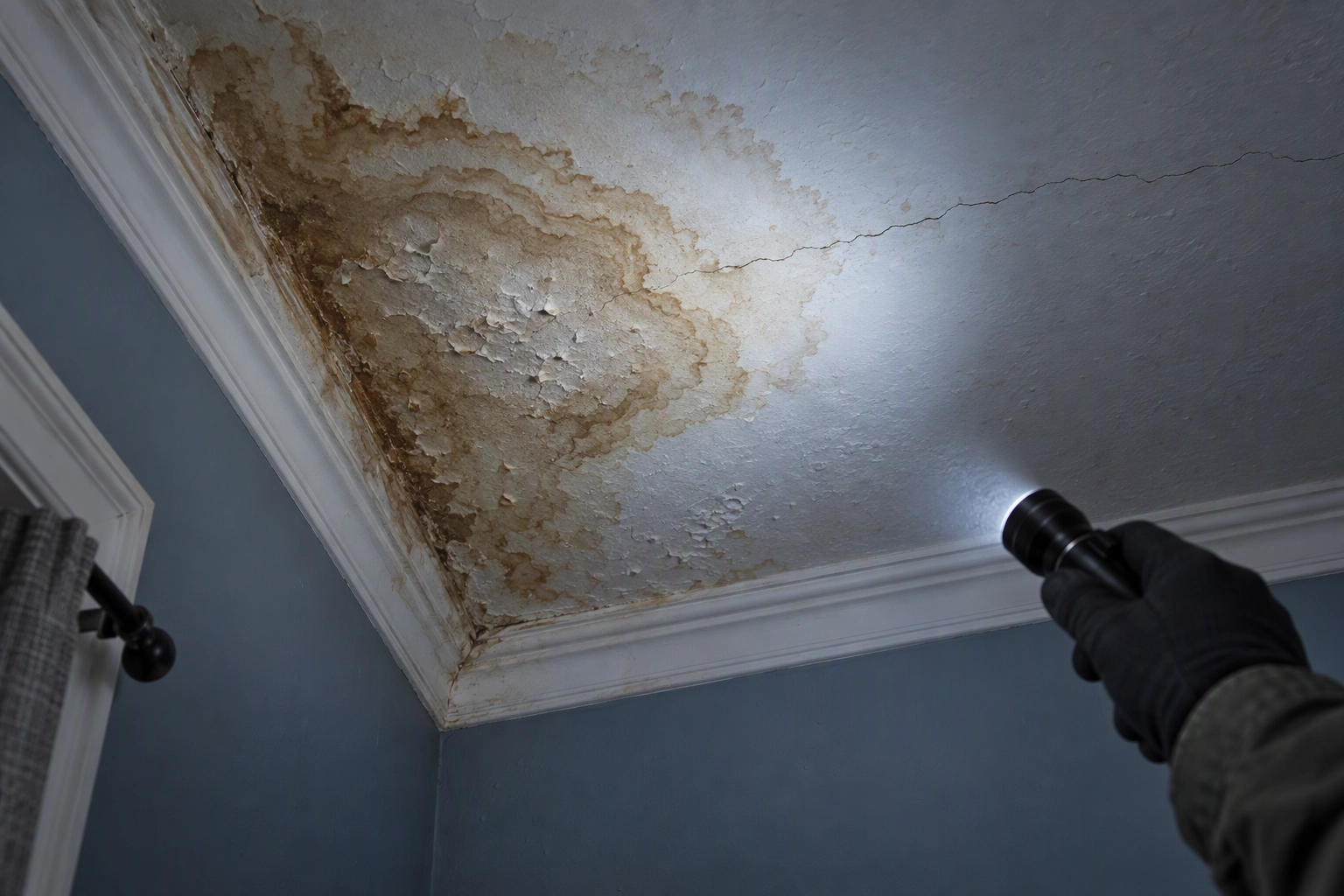
| Cracks, stains or damage hidden | Never | Misrepresentation everywhere |
The same split applies to Clutter Removal, Sky Swap and Lawn & Pool Revive outputs. Plotpane has no tool that repaints walls, re-tiles floors or swaps finishes.
How to disclose virtual staging in 5 steps
Disclose in three places: on or next to each staged photo, in the listing remarks, and with the unaltered photo where buyers can see it. In California, repeat it in online and print marketing too.
- Keep the original from the same camera position. Upload it beside the staged version where your MLS asks (CRMLS and Canopy do).
- Label every staged photo the way your MLS specifies. For boards that want text on the image, Plotpane offers an optional "Virtually Staged" label, switched on per render.
- Write the remarks line. Use your board's exact words if it sets them. Otherwise: "Living room and primary bedroom photos are virtually staged. Furniture is not included in the sale."
- Carry it into online ads and print. A California flyer needs the notice plus a link or QR code to the unaltered photos.
- Tell the seller and keep records of which photos were altered, with which tool, and when.
What should you never do with virtual staging?
Never use virtual staging to change what buyers are paying for. Disclosure covers furniture and decor that leave with the seller, not a property that looks better than it is.
- Don't remove permanent defects. Cracks, water stains and damaged floors stay in the photo.
- Don't add features that aren't there. No fireplace, kitchen island, pool or deck buyers won't find.
- Don't change views. No new ocean, and no missing power lines or neighboring buildings.
- Don't resize rooms. Moving a wall misstates the space even if every object is real.
- Don't stage over a flaw. A virtual rug over a stained floor hides the defect as surely as erasing it.
The same best practices apply to retouching: see what real estate photo retouching must not fix.
What Plotpane does for disclosure, and what it doesn't
Plotpane makes the image honest; you make the listing honest. The software controls what goes into the photo and records the edit, but MLS fields, remarks and uploads stay with listing agents.
What Plotpane does:
- Preserves the structure. Each staging render includes a preserve list: walls, windows, doors and floors stay as shot, no view is invented and no defect is cleaned up. The ethical use policy bans using it to hide defects.
- Records the edit. Staged exports carry invisible XMP disclosure metadata that travels with the file.
- Offers a visible label for boards that want text on the image.
What Plotpane does not do:
- It does not write your MLS listing-remarks disclosure, fill photo description fields or tick the staging box.
- It does not upload or host your originals, including the link California requires.
One honest caveat: the XMP tag is a record, not a disclosure. Buyers never see metadata, and none of the boards above accepts it in place of a visible label. Try the workflow on 3 free renders with no card; plans start at $39 a month billed yearly.
Frequently Asked Questions
Is virtual staging legal in California?
Yes, with a conspicuous notice on or next to each altered image and a link or QR code to the unaltered version, under AB 723. CRMLS enforces it through Rule 11.5.2; see virtual staging for San Francisco listings.
Do I have to disclose a sky swap or day-to-dusk edit?
Yes, to be safe. California exempts only common adjustments like lighting, exposure and color, and a new sky changes what is visible from the property.
Does invisible metadata count as disclosure?
No. XMP metadata is a useful audit trail, but every board above asks for something buyers can see.
Is virtual staging legal for rental listings?
Yes, with the same disclosure. AB 2025 extends California's rule to rental ads from 2027, so property managers and short-term rental hosts should label staged photos too.
Is virtual staging legal if my photographer does the editing?
Yes, but the duty doesn't move. AB 723 covers any "person acting on their behalf," and MLS rules bind the listing agent who uploads the photos.
Is virtual staging legal outside the US?
Generally yes, under consumer-protection law. Australian Consumer Law section 18 bans misleading conduct, and UK property ads fall under the Digital Markets, Competition and Consumers Act 2024.
Is virtual staging legal without a disclosure?
Not safely. In California it breaks AB 723; elsewhere it breaks most MLS rules and can count as misleading advertising. CRMLS fines $250 after a warning, REALTORS® face Article 12 complaints, and misled buyers can sue for misrepresentation.