9 Luxury Real Estate Photography Shots That Sell
By the Plotpane editorial team · Published October 6, 2026 · Market data: Redfin · Legal references: California Legislature, FAA
Luxury real estate photography is not ordinary listing photography with a bigger budget. Above roughly $1 million, nearly every property already has a professional photographer, so "professional" stops being an advantage. What separates a $4 million gallery from a $400,000 one is composition, a true evening hero shot, aerial context, flawless exteriors and a finish that holds across every frame.
Quick Summary: In luxury real estate photography, a professional shoot is the baseline, not the edge: Redfin found homes above $1 million gained no meaningful price advantage from professional photos, because almost all of them already had them. The edge comes from nine specific shots, one consistent magazine-grade finish, and edits that never misrepresent the property.
What Makes Luxury Real Estate Photography Different?
Luxury real estate photography differs in three ways: buyers judge craftsmanship rather than square footage, the same frames double as print and magazine marketing, and the tolerance for misrepresentation is zero. A high-end property needs architectural composition, twilight and aerial context, and one consistent finish, not just brighter photos of more rooms.
The stakes are measurable. In Redfin's report for the three months ending May 31, 2026, the median U.S. luxury home sold for $1,374,470 against $377,477 for a mid-market home, and took a median 49 days to go under contract versus 44 (Redfin, June 2026). Redfin defines luxury as the top 5% of each metro's values. Five extra days on a $1.37 million asset is a real carrying cost.
The older finding is more useful. Redfin's 2013 study found professionally photographed homes between $200,000 and $1 million sold for $3,400 to $11,200 more relative to list price, while homes above $1 million sold only four days faster, at prices similar to amateur-shot listings (Redfin study via PR Newswire, 2013). The likeliest reading: at that level almost every seller used a pro, so no amateur control group was left. In luxury real estate photography, professional work is now the floor. The edge is everything above it.
The 9-Shot Luxury Gallery Plan
Nine shot types form the backbone of luxury real estate photography, each proving something a buyer at this price will ask about: setting, arrival, light, volume, materials and lifestyle. The table splits each one into what must be captured on site, what can be finished afterwards, and what must never change, the line a buyer's advisors will check.
| Shot | What it proves | Capture on site | Finish after | Never change |
|---|---|---|---|---|
| 1. Twilight hero | Arrival, lighting design | Every lamp and pool light on, 20 to 40 minutes after sunset | Day to Dusk on an afternoon frame if no return visit | Fixtures that don't exist |
| 2. Aerial establishing | Lot, water, privacy, amenities | Certified pilot, one high and one low pass | Sky Swap, horizon straightening | Neighboring structures, the view |
| 3. Front elevation | Architecture, curb appeal | Tripod at mid-height, verticals level | Perspective Fix, sky, bin and car removal | Facade, windows, rooflines |
| 4. Pool terrace | Outdoor living | Pool skimmed, cover off, furniture squared | Lawn & Pool Revive after a bad-weather week | Pool shape, hardscape, plantings |
| 5. The view | What the price buys | Exposure balanced so the window holds detail | Exposure only | Anything seen through glass |
| 6. Great room | Volume and flow | Two-point perspective, lights on so it feels warm | Auto Enhance, one grade for the set | Ceiling height, proportions |
| 7. Kitchen | Craft, appliances | Counters cleared to one to three objects | Clutter Removal for a stray cable | Cabinetry, stone, appliances |
| 8. Primary suite | Privacy, finish level | Beds pulled tight, towels squared | Light grade | Fixtures, tile, water damage |
| 9. Detail vignettes | Workmanship | Raking light on stone, millwork, hardware | Light grade only | The material itself |
The full gallery runs far longer, but these nine carry the property on a portal thumbnail, a brochure cover and a magazine spread. Penthouses swap the drone frame for a skyline view, as our penthouse photography page shows.
Composition Rules for High-End Interiors
Composition is the core skill in luxury real estate photography, and it borrows from architectural photography: camera around chest height, verticals perfectly straight, lines leading to the room's best feature, and windows exposed so the view survives. Fewer, deliberate frames beat blanket coverage, because a buyer at this price judges proportion, not room count.
- Camera height. Roughly four to five feet; a little lower in kitchens so an island reads as a surface, not a slab.
- Verticals. Leaning walls read as careless at this price. Level the camera on site, or correct afterwards with Perspective Fix.
- Two-point or one-point. A corner frame shows volume; a symmetrical, straight-on frame suits formal rooms and anything designed around an axis.
- Window balance. In a view home, the view may be a third of the price. Blend exposures or add flash so the glass holds detail.
- Detail vignettes. Stone veining, hand-cut joinery and unlacquered brass prove workmanship a wide frame flattens.
Our interior photography guide covers each room type, and the 21 tips that sell homes cover the fundamentals most photographers learn first.
Twilight Hero Shots: Shoot It or Convert It?
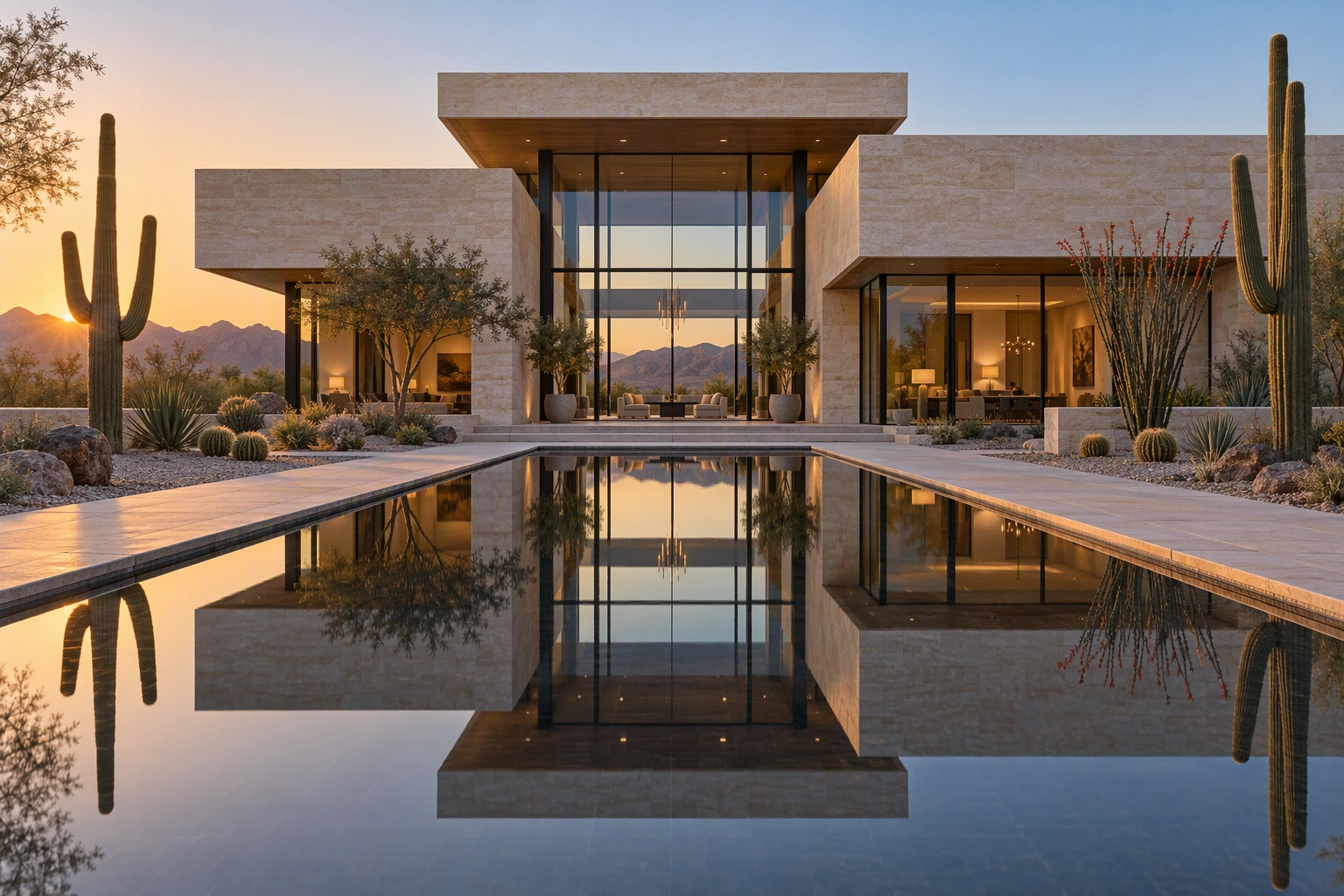
In luxury real estate photography the evening hero is usually the cover frame. Shoot it for real when the home has architectural lighting worth showing and the budget allows a return visit; convert an afternoon frame when weather, scheduling or an occupied house rules that out. Either way, only fixtures that actually exist may glow.
A real session happens in a short window, roughly 20 to 40 minutes after sunset depending on latitude and season, when the sky's brightness matches the interior. Every lamp, landscape light, pool light and fire feature goes on, and cars leave the drive. One Austin studio's published price list charges $375 for a twilight session on a separate visit, a fair benchmark.
When a return visit isn't possible, Day to Dusk re-lights an afternoon frame with an evening sky and warm window glow in about two minutes. For modern and coastal architecture, its Blue hour twilight preset trades the golden sunset for a deep-blue sky that suits glass and white render. It re-lights the frame you shot; it does not redraw the building. Our twilight photography guide covers bracketing and timing, and why some conversions look fake explains the color science.
My honest take: if a lighting designer planned the landscape lighting, book the real session. A conversion earns its place on secondary elevations and on shoots the forecast ruined.
Drone and Aerial Establishing Shots
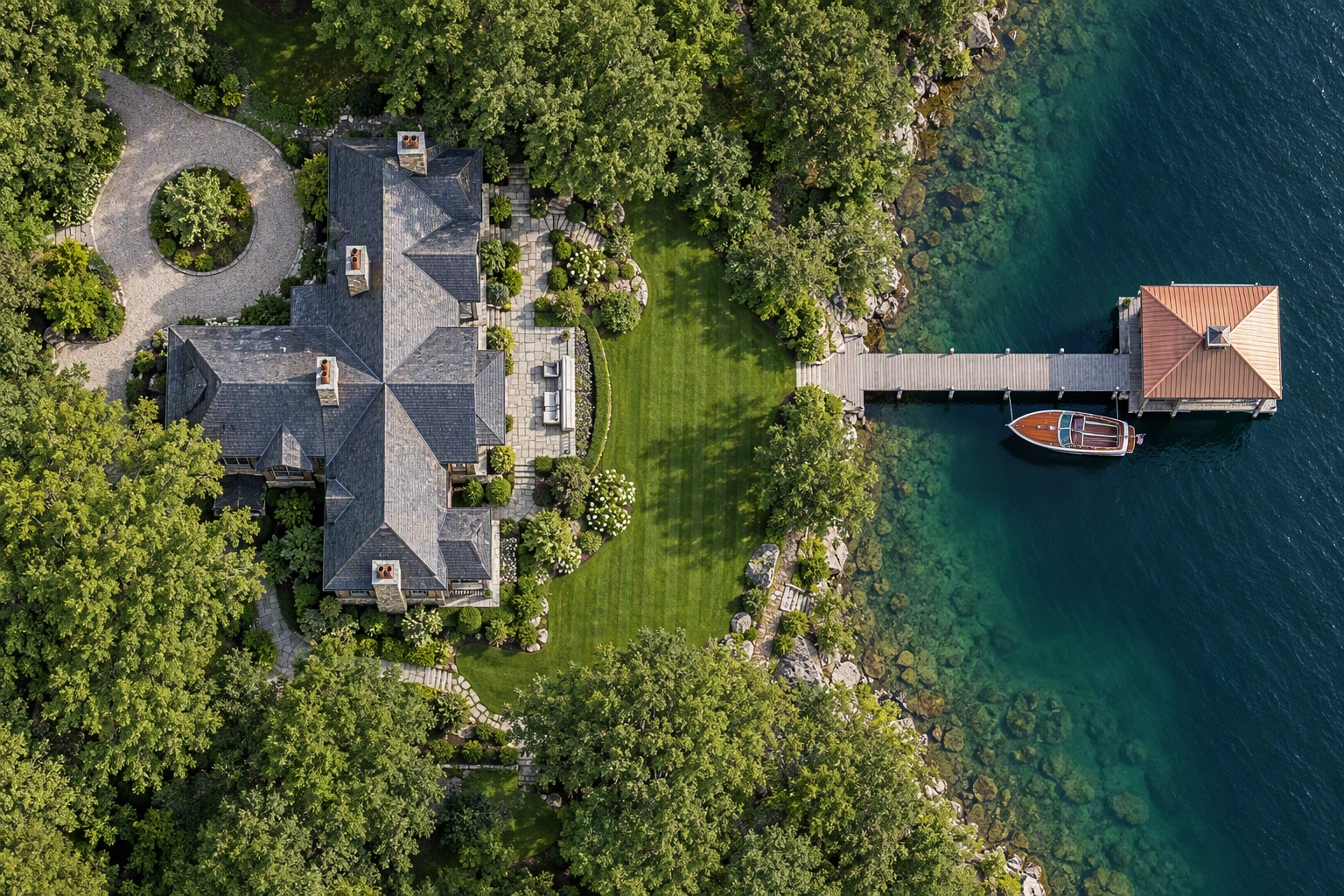
Aerial shots answer what ground-level photos can't: how big the lot is, how private it is, and how far the water or the golf course really sits. For estates, waterfront and acreage, put at least two drone frames in the first ten photos, captured by a pilot certified under the FAA's Part 107 rule.
In the U.S., anyone flying a drone for work or business needs a Remote Pilot Certificate under Part 107; a paid property shoot is a commercial flight, and many photographers subcontract it. Plan a high establishing frame that places the property in its setting, and a low pass near roofline height that keeps the architecture dominant.
AI cannot substitute here. Plotpane is image-only: it finishes the frames your pilot captured, with a Sky Swap on a hazy afternoon or a straightened horizon, but it never fabricates a drone view, a neighboring parcel or a coastline. Our villa photography and resort property pages show aerial and evening frames working together.
Immaculate Exteriors: Sky, Lawn and Pool
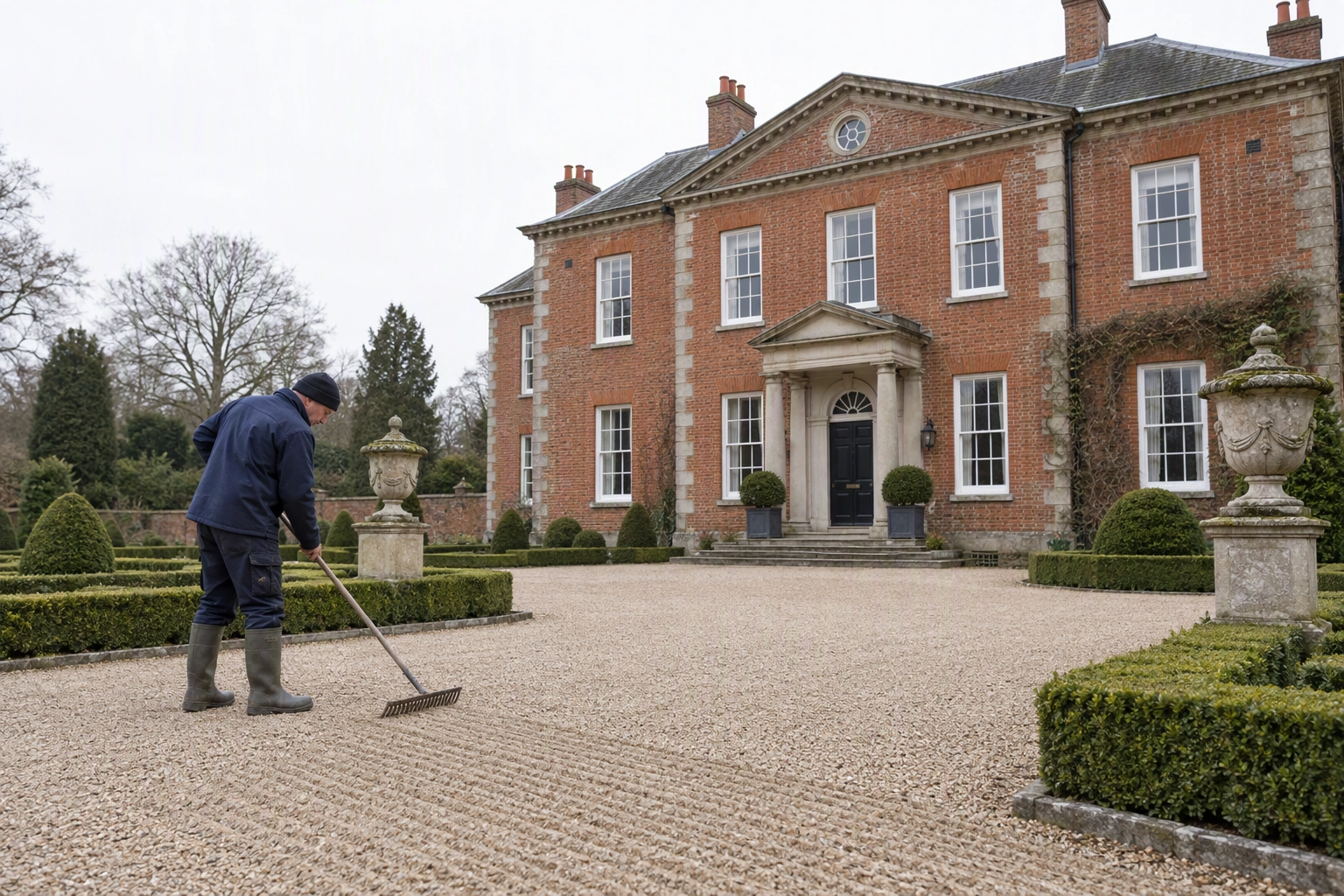
The exterior standard for luxury real estate photography allows no weak frames: a clean sky, a lawn that reads as maintained, clear pool water, and no bins, hoses or contractor vans. Prepare all of it on site first. Then finish only what the weather or the season spoiled, never what the property actually lacks.
- Pool: skimmed, cover off, cleaning robot out.
- Lawn: cut and edged 48 hours before, sprinklers off that morning.
- Drive: cars, bins, hoses and signage gone.
- Exterior lights: dead bulbs replaced, color temperatures matched.
Sky Swap replaces a flat grey sky with a natural one, graded to match the frame. Lawn & Pool Revive greens a lawn browned by a dry spell and clears a pool clouded by a storm. Clutter Removal takes out the bin the crew missed. Each is one credit per photo; our sky replacement guide, exterior photography guide and pool-home enhancement page go deeper.
The honesty line: revive a lawn that is genuinely maintained but caught in a bad week. Don't paint grass onto bare dirt or clear a pool that is green with algae; the buyer's inspector will find it, and so will their attorney.
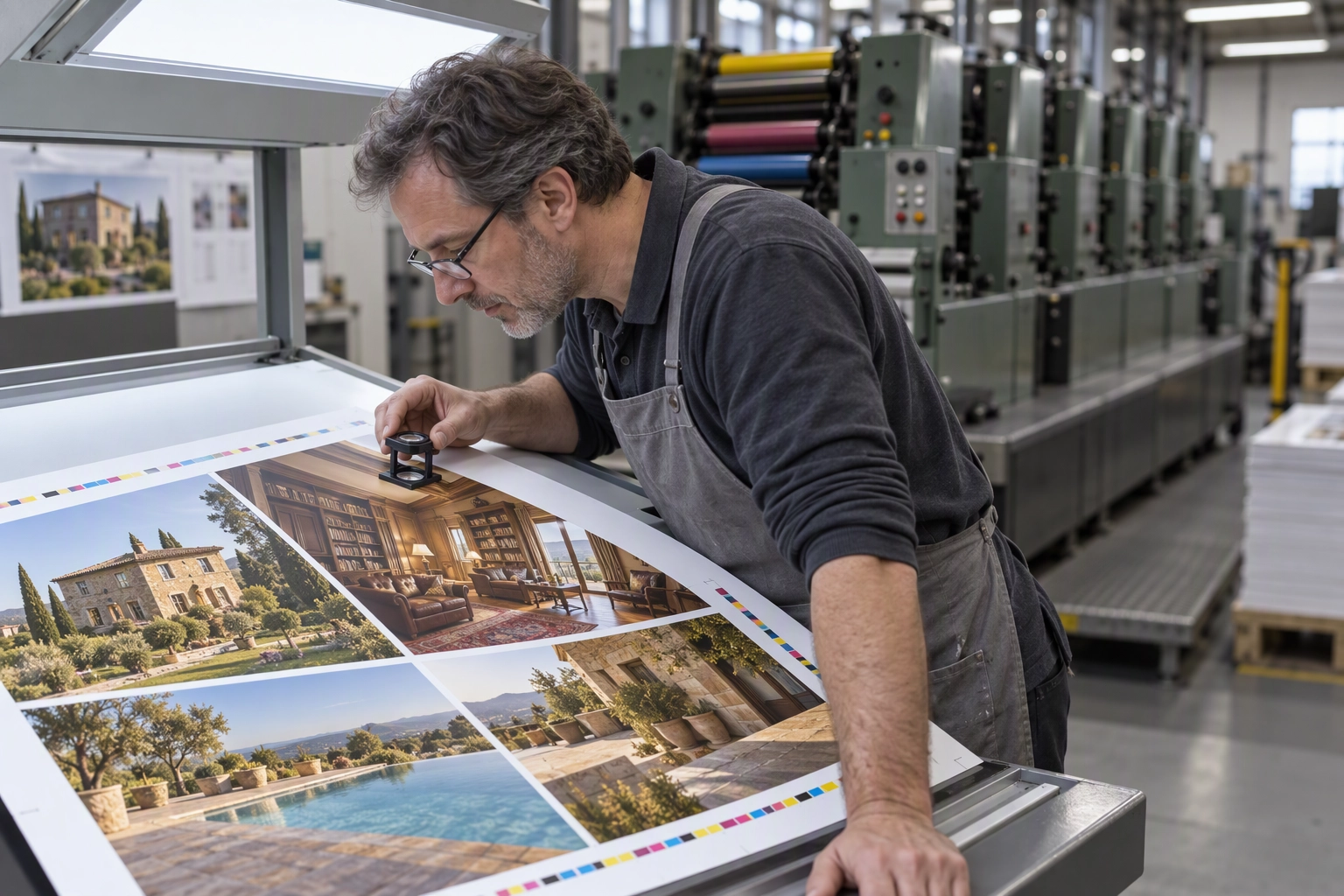
Magazine-Grade Consistency and Print Resolution
Consistency is what makes luxury real estate photography read as editorial rather than as a stack of good frames: matching white balance, contrast and sky across the whole set, at a resolution that survives print. In our view, an uneven set is the most common tell of an over-edited gallery, more damaging than any single weak frame.
Run each tool across the set, so every exterior gets the same sky and every interior the same grade. Plotpane batches take up to 10, 50 or 150 photos depending on plan; our batch consistency workflow explains how to hold one register across listings.
Print is where high-end marketing differs most. At the 300 pixels per inch printers expect:
| Use | Pixels across | Standard ~2.4K | High-res ~4.7K (second credit) |
|---|---|---|---|
| Portal, MLS, social | Screen only | Yes | Yes |
| Half page, 8 in wide | About 2,400 | Yes | Yes |
| Full page, 8.5 in wide | About 2,550 | Just short | Yes, room to crop |
| Spread, 17 in wide | About 5,100 | No | Close, about 276 ppi |
Portal limits are in our MLS photo size requirements guide.
Worked Example: Finishing an Overcast Estate Shoot
Take a hypothetical but typical case: photographers deliver 45 edited frames of a $2.8 million lakefront home shot under a flat March sky. Finishing the weak frames takes 17 renders and 23 credits, about 12 minutes of render time and roughly $8 of a Pro plan, against a return visit for the evening cover alone.
| Fix | Frames | Tool | Credits |
|---|---|---|---|
| Grey sky on exteriors and drone frames | 9 | Sky Swap | 9 |
| Patchy lawn, storm-clouded pool | 3 | Lawn & Pool Revive | 3 |
| Evening cover from the front elevation | 1 | Day to Dusk, Blue hour preset | 1 |
| Bins, a hose, a contractor van | 4 | Clutter Removal | 4 |
| Six of those frames at ~4.7K for the brochure | 6 | Second credit each | 6 |
| Total | 17 renders | 23 |
The arithmetic: Pro costs $79 a month billed yearly for 220 credits, about 36 cents a credit, so 23 credits is roughly $8.30. At about two minutes per photo, three at a time, 17 renders run in six rounds, around 12 minutes. A frame needing two fixes is run twice. Compare the $375 evening visit above, or rebooking nine exteriors.
What the example doesn't buy: a human retoucher's judgment on a composited hero, or anything never captured. The shoot carries the luxury; finishing protects it. Plans and credits are on our pricing page.
Honesty at the High End: What Must Never Change
Honest luxury real estate photography never changes anything a buyer would rely on: architecture, rooms, materials, views, fixtures or defects. At the top of the market a misleading frame is a liability, not a styling choice. Buyers' agents, inspectors and attorneys compare every photo with the property, and California now requires a link to the original.
California's AB 723, in force since January 1, 2026, requires a disclosure next to digitally altered images in real estate advertising, plus a link or QR code to the unaltered images. CRMLS and SDMLS guidance treats exposure, color and straightening as unaltered; adding, removing or materially changing physical features, such as staging furniture or deleting a fixture, needs the label. When in doubt, disclose.
Plotpane is built for that standard. Every render carries a preserve list that forbids redrawing walls, windows, doors or fixtures, concealing a defect, or inventing a view; an invented detail is treated as a bug and the credit refunded. Exports carry invisible XMP disclosure metadata and no watermark, and Virtual Staging of a vacant room can add an optional visible "Virtually Staged" label. The listing-remarks disclosure is still yours; our MLS virtual staging disclosure guide covers the rules by market.
Period and Architectural Homes
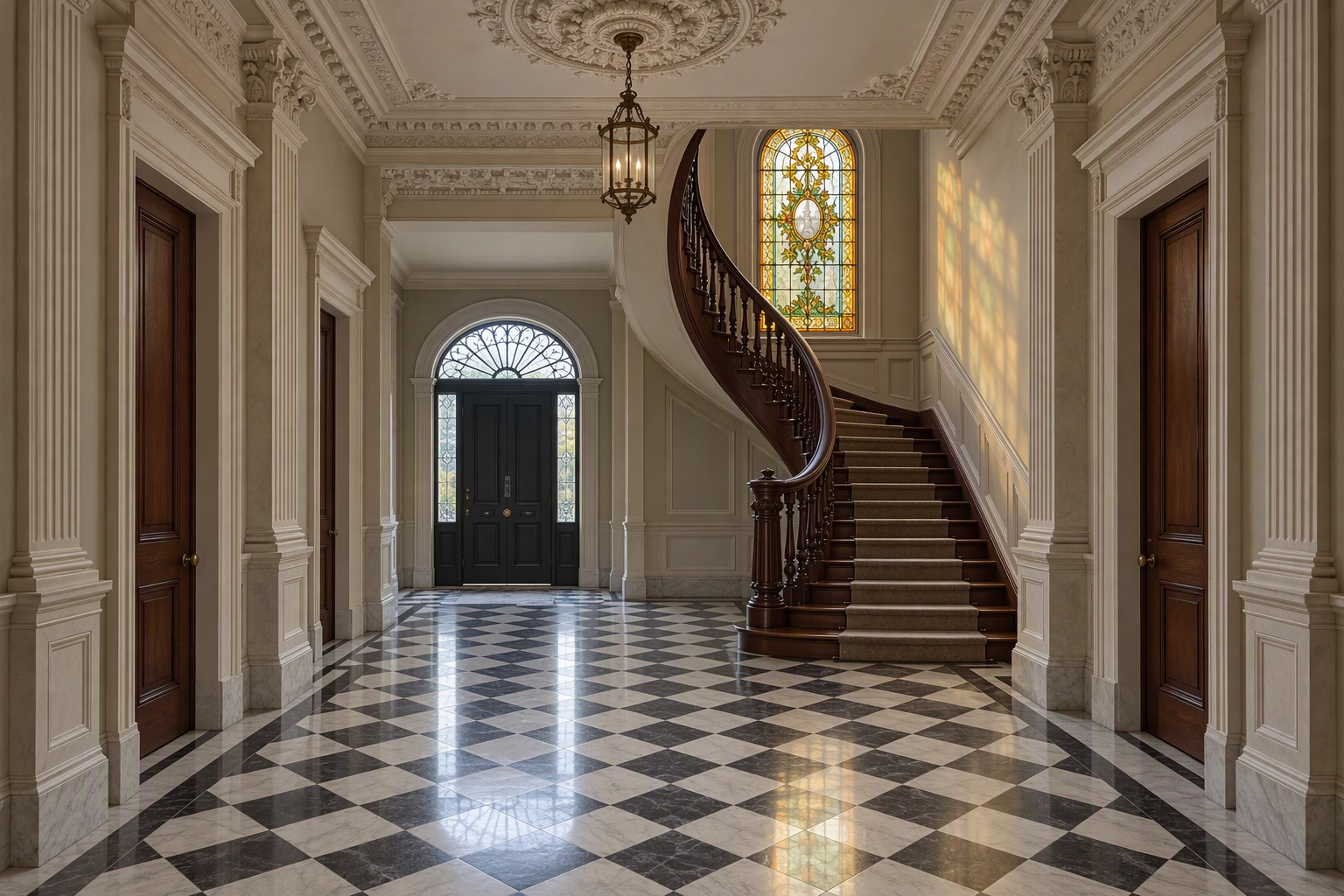
Luxury real estate photography often overlaps with historic work: many top-tier properties are period or architect-designed homes, and they need a stricter hand. Original plasterwork, joinery, stained glass and patina are the value, so nothing should be smoothed, brightened into plastic, or corrected out of character. Straight verticals and accurate color matter more here than any dramatic sky.
Our historic home photography guide covers period lighting, mixed color temperatures and what never to retouch, and our Victorian and historic house page applies it to real listings. For a Georgian townhouse or a mid-century landmark, fewer frames, longer lenses and symmetry beat the wide-angle habit.
Hiring a Luxury Real Estate Photographer vs Finishing In-House
Hire a specialist for the capture, because composition, evening light, drone work and lighting can't be added later. Bring finishing in-house when you need speed, consistency across many listings, or a fix the weather forced. The best results come from photographers who shoot with the finish in mind and a team that never overcooks the images.
Ask before you book:
- Do you shoot a real twilight, and what does a return visit cost?
- Is your drone pilot Part 107 certified and insured?
- Can I see a full gallery from one property, and do you keep unedited originals for disclosure?
Rates vary by market and home value; our photographer pricing guide breaks down typical packages. For teams, see Plotpane for agencies and brokerages and for real estate photographers, brokerage workflows such as Sotheby's International Realty, and high-end photo enhancement before-and-after images. Plans run $39, $79 or $199 a month billed yearly with 100, 220 or 600 credits, and every plan starts with 3 free renders, no card.
Frequently Asked Questions
How much does luxury real estate photography cost?
Luxury real estate photography is priced by market and home value. One Austin studio publishes tiers by value and charges $375 extra for an evening session. Expect premiums for drone work, twilight and video.
Is AI twilight acceptable for a high-end property?
Yes, when it is honest and labeled where your MLS asks. It should only light fixtures that exist and never alter the building. For flagship estates with designed landscape lighting, a real session still wins.
Do I need a licensed drone pilot for aerial shots?
In the U.S., yes: any commercial flight requires an FAA Remote Pilot Certificate under Part 107. Ask for the certificate and liability insurance.
How many photos should a top-tier property have?
Enough to cover the nine essential shots plus every room a buyer would ask about. Lead with the strongest frames; portals preview the first few.
Do I have to disclose sky replacement or an evening conversion?
It depends on your market. Under California's AB 723, basic exposure and color edits don't count as altered, while changes to physical features do. Plotpane writes XMP disclosure metadata into every export, but the remarks disclosure is yours.
What resolution do print brochures need?
About 300 pixels per inch at printed size. A full 8.5-inch page needs roughly 2,550 pixels across, so use the ~4.7K export, which costs a second credit, for print; ~2.4K suits portals and social.
Sources: Redfin (June 2026; 2013 study); California AB 723; FAA Part 107. Last reviewed October 6, 2026.