Plotpane · Pool property listings — FL, AZ, CA, TX, NV
Pool property listings — FL, AZ, CA, TX, NV
Pool Listing Photo Enhancement — Winter-Shot Pools Delivered Summer-Ready
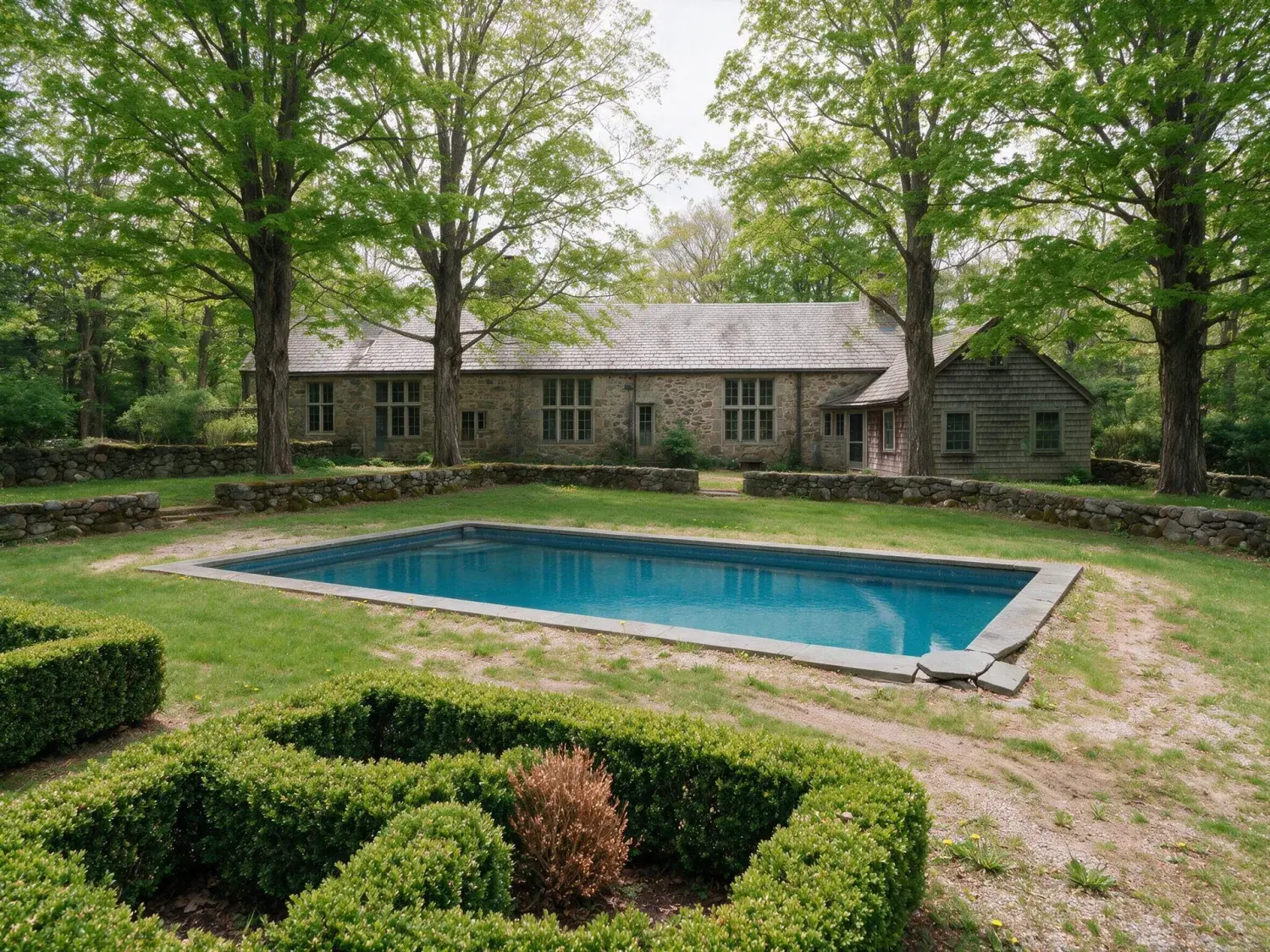
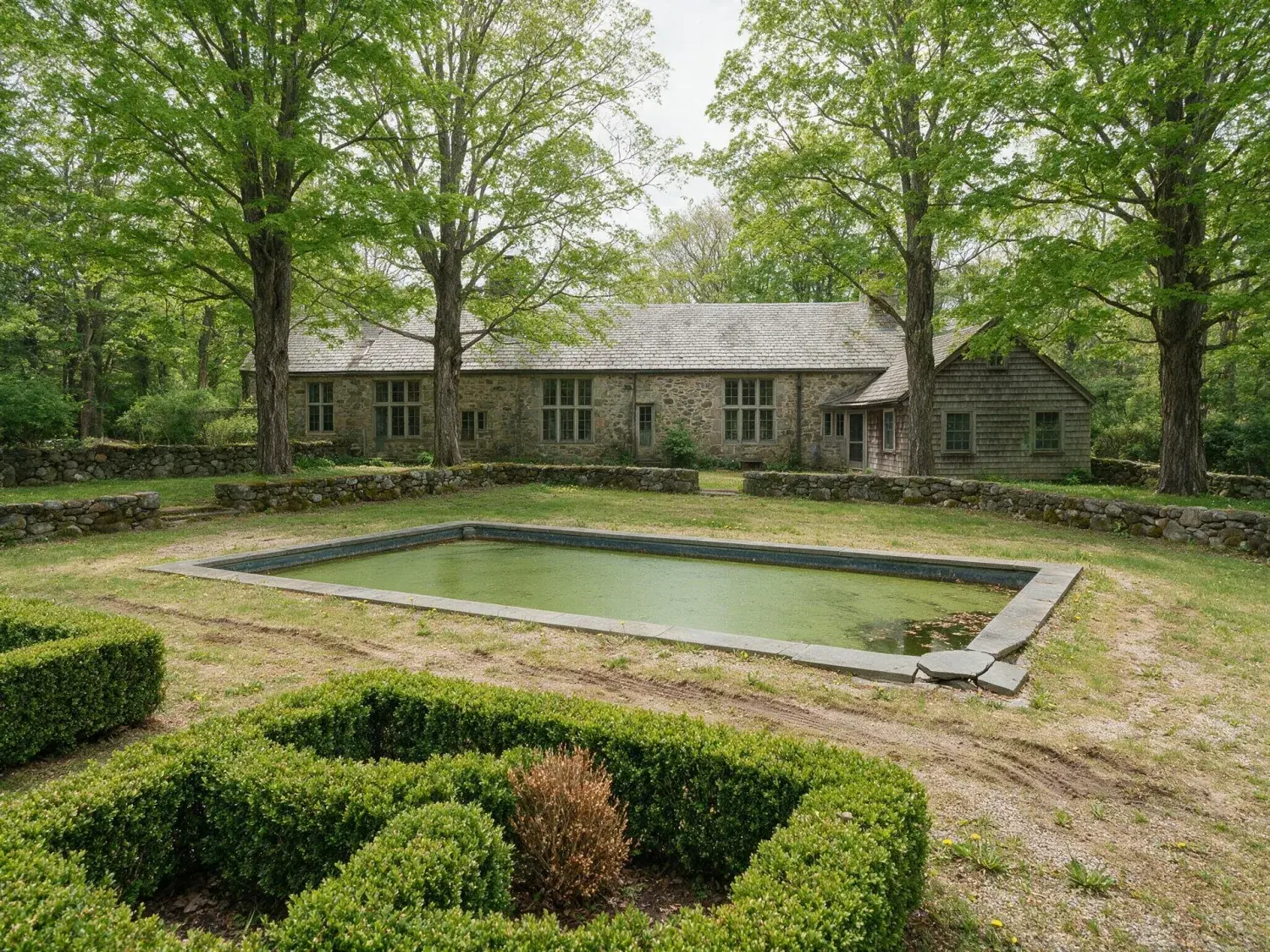
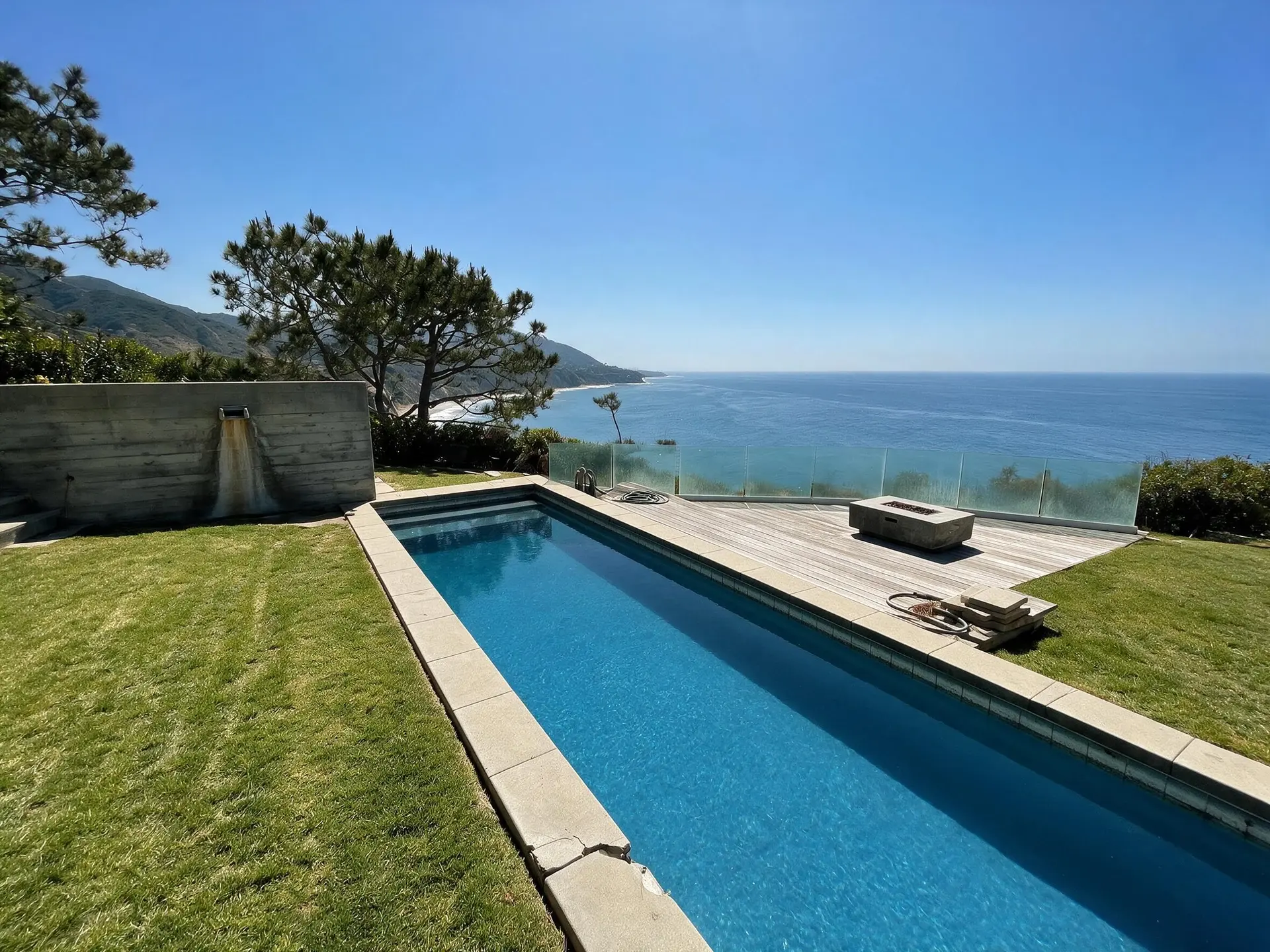
In Florida, Arizona, California, Texas, and Nevada, upwards of 70% of luxury-tier listings (US$1.5M+) include a swimming pool, and the pool image is typically the second-most-clicked thumbnail after the exterior hero. The problem: listings cross seasons. A pool photographed in January in Scottsdale or February in Cape Coral reads green-algae-tinted, leaf-strewn, or partially covered — even when the pool is structurally flawless and trivial to re-commission before closing. Plotpane's pool listing photo enhancement corrects the seasonal read without misrepresenting the asset. Algae tint lifts to natural turquoise, floating leaves vanish, deck tile crisps, pool equipment stays untouched — and nothing in the pass paints over a structural defect: the water changes, the pool does not. Shape and footprint are never altered.
Pool photography has a seasonal bias that works against cross-season listings. A summer midday shoot at 80+ degrees, water chemistry freshly balanced, deck swept that morning, is the ideal capture window — but most pool homes in FL, AZ, CA, TX, and NV list in the shoulder seasons when buyer search volume peaks, not when the pool looks its best. By November the water has shifted green from reduced chlorine demand and shorter filter runtimes, the deck is scattered with oak leaves or mesquite litter, the pool may be covered with a winter mesh safety cover, and the surrounding landscape has gone dormant. Semrush shows 'green pool water' at 1,600 US monthly searches and 'pool algae' at 1,300 — this is a real, searched problem, not a cosmetic nice-to-have. Lawn & Pool Revive solves the seasonal-capture gap: algae tint neutralizes to the pool's actual plaster-read turquoise, surface debris is cleaned, deck tile regains its crisp grout line, and the surrounding lawn greens to summer-healthy without the cartoon golf-course register that triggers buyer skepticism on the listing gallery.
02
What the Lawn & Pool pass actually does on a pool image
Lawn & Pool Revive is a specific, bounded transform — not a generic image filter. Water clarification lifts algae-green to the natural turquoise or deep blue the pool's plaster and liner would read under clean-chemistry midday light, capped at the actual color-of-record so a white-plaster pool doesn't fake into a Caribbean register. Debris cleanup removes floating leaves, pollen film, and surface insect debris via item-removal at the water surface. Tile crispness restores grout line definition and waterline tile color where algae-shadow has muted it. Pool equipment — skimmer lids, pump housings, heater units, screen-enclosure tracks, child-safety fence posts, salt-cell readouts — is preserved bit-for-bit because that hardware is a disclosable property attribute a buyer's inspector will verify. Shape, footprint, depth markers, and tile count are never altered. What you listed is what the buyer sees.
Algae-green → natural turquoise, capped at the pool's actual plaster/liner read (no fake-Caribbean override)
Surface debris cleanup — leaves, pollen, insect film — without touching submerged features
Waterline tile and deck grout crisped to summer-clean register
Pool equipment preserved unchanged — skimmers, pumps, heaters, fence posts, salt cells, screen-enclosure tracks
Pool shape, footprint, depth, and tile count never altered — output matches listed dimensions
Surrounding lawn greened with natural sun-and-shade variation, not uniform artificial green
JPEG export at quality 92, about 2.4K, with XMP disclosure metadata written in, for MLS compliance
03
The ethical line — disclosure, not cover-up
A seasonal algae tint is a chemistry artifact that dissipates in 48 hours with a shock treatment; cleaning it up in the listing photo is the same edit a luxury retoucher at Sotheby's, Compass Estates, or Douglas Elliman ships manually for $40-75 per image. A cracked coping stone, a failed pump motor leaking onto the deck, a shattered pool heater control panel, or a bowed screen-enclosure frame is a material defect the Florida Seller's Property Disclosure Form requires the seller to disclose, and the MLS listing photo is not the place to hide it. Lawn & Pool Revive works on water, lawn and deck surface, so a crack in the shell, a leaking pump, a sagging screen enclosure or a damaged heater comes back in the export exactly as it went in. The one tool that removes anything is Clutter Removal, and it removes what you type into it — so the judgement is yours, and a disclosable defect is not a debris item. Every export carries XMP disclosure metadata, which leaves the agent the real decision: repair first, or list as-is with the disclosure.
04
FL Statute 515 + AZ ARS 36-1681 — safety features stay visible
Florida Statute 515 (Residential Swimming Pool Safety Act) requires residential pools built after October 1, 2000 to have at least one approved safety feature — a barrier meeting statute spec, an approved pool cover, exit alarms on doors leading to the pool area, or a self-closing self-latching pool-area gate — and the Florida Department of Health's residential pool safety notice ties into the Seller's Property Disclosure. Arizona Revised Statute 36-1681 mirrors this with a mandatory pool enclosure requirement (barrier height, gate specs, door alarms) for any residence with a pool where a child under 6 may reside. A listing photo that removes a mandated safety barrier, even incidentally — the photographer positioned the shot around the fence, the retoucher cleaned the fence out for 'composition' — creates a misrepresentation risk that reflects on the listing agent. Lawn & Pool Revive does not touch a pool safety fence, a self-closing gate, a door alarm or an approved cover — it works on water, lawn and deck. Clutter Removal takes a typed instruction, so the rule is simply stated: you can ask it for a floating leaf, never for a code-mandated barrier.
05
Why this matters for FL, AZ, CA, TX, and NV specifically
Pool-homes as a listing cohort behave differently in the five Sunbelt/Southwest pool states. In Florida — Miami-Dade, Broward, Palm Beach, Naples, Sarasota, Orlando Lake Nona, Jacksonville Ponte Vedra — the screen enclosure is the signature feature and photographs as a gridded dark mesh that most AI retouchers mis-render as noise; Plotpane reads the screen as an architectural feature and keeps it clean. In Arizona — Scottsdale, Paradise Valley, Phoenix Arcadia, Tucson Catalina Foothills — the pebble-tec dark-bottom pool with a hot-tub spillover is the typical build and the desert palette around it (travertine deck, desert landscape, mountain horizon) is a specific warm-register that generic pool presets over-saturate; Plotpane corrects from the light in the frame, so that warm register survives. In California — SoCal pool estates, Bay Area peninsula — mid-century rectangular pools with Heath tile and dark-bottom plaster dominate, and the water reads nearly-black at the deep end; Lawn & Pool Revive preserves that intentional design instead of faking a uniform turquoise. In Texas — Austin Westlake, Dallas Preston Hollow, Houston Memorial — the limestone deck and integrated spa register is the pattern, and the cedar-pollen season (January-March) coats every surface in yellow-green film that Plotpane clears cleanly. In Nevada — Las Vegas Summerlin, The Ridges, MacDonald Highlands — the negative-edge pool with a Strip-view infinity horizon is the hero, and Plotpane's day-to-dusk conversion lands the civil-twilight register the shoot almost never captures on the first pass.
06
HOA photo rules + MLS compliance
Most gated-community HOAs in the five pool states — Scottsdale Troon, Naples Grey Oaks, Las Vegas Summerlin, Austin Barton Creek — restrict commercial photography of community amenities and shared pool areas, but your private in-ground pool and deck are fair game. Stellar MLS (the dominant Florida MLS) Photo Rules prohibit watermarks, contact information, and misleading representations on primary photos; virtual staging and photo enhancement are permitted but must be disclosed. California AB 723 (2024) tightened photo-disclosure requirements statewide: any materially-altered listing photo must carry a disclosure tag. Plotpane's JPEG export at quality 92, about 2.4K, carries XMP disclosure metadata inside the file, marking the image as AI-enhanced — the same disclosure pattern Stellar MLS, Bright MLS, CRMLS and the NTREIS (North Texas) systems work with. Upload once and the MLS re-encodes the file, which strips the tag — so the XMP is your dated record and the remarks line is the disclosure that travels. No watermark on the image itself.
For this region
Local questions, answered
The pool was photographed in January and the water reads algae-green. Can Plotpane actually fix that without misrepresenting the pool?+
Yes — algae tint is a chemistry artifact, not a structural property, and a 48-hour shock treatment will clear it in real life before any buyer walkthrough. Plotpane lifts the green tint to the pool's actual plaster-read turquoise, capped at the real color-of-record so a white-plaster pool doesn't fake into a Caribbean register. A crack, a pump failure, a heater failure or a sagging screen enclosure comes back untouched, because the pass works on water, lawn and deck — and that is a Florida Seller's Property Disclosure item, not a retouching request.
Our pool has a dark-bottom pebble-tec finish — Scottsdale, Paradise Valley style. Consumer AI turns it into generic turquoise. Does Plotpane preserve the dark register?+
Yes. Lawn & Pool Revive reads the liner and plaster colour from the source image and preserves a dark-bottom, pebble-tec, or black-tile pool as dramatic-dark, not faked-turquoise. This is an intentional-design distinction — black-bottom pools in AZ and SoCal are a deliberate luxury cue, and rendering them as a generic pool-blue would misrepresent the property.
The pool has a Florida Statute 515 safety fence and a self-closing gate. We want them kept in the photo for disclosure reasons. Will Plotpane remove them?+
No. Lawn & Pool Revive works on water, lawn and deck, so FL Statute 515 safety features, AZ ARS 36-1681 enclosures, self-closing gates, door alarms and approved covers come back exactly as shot. Clutter Removal only removes what you type into it, and a code-mandated safety barrier is not a debris item. You can clean the deck. You can't clean the fence out.
California AB 723 requires disclosure on any materially-altered listing photo. Does Plotpane's output comply?+
Yes. Every export — a quality-92 JPEG at about 2.4K — carries XMP disclosure metadata written inside the file, marking the image as AI-enhanced — the pattern Stellar MLS (Florida), Bright MLS, CRMLS (California), NTREIS (North Texas) and ARMLS (Arizona) work with. The disclosure stays in the file you download — CRMLS and the portals re-encode on upload and strip it, so pair it with the remarks-line disclosure your board asks for. No watermark on the image face on any paid plan.
We have a legitimate pool problem — the heater is broken, waiting on parts. Can we use Plotpane to hide that for now?+
No, and we'd rather you didn't. A broken heater is a disclosable defect under Florida's Seller's Property Disclosure Form and equivalents in AZ, CA, TX, NV. Lawn & Pool Revive touches water, lawn and deck only, so visible equipment failure comes back in the export untouched, and Clutter Removal is not the place to point at it. The correct move is either repair before listing or disclose in the listing remarks — hiding a material defect in the MLS photo is the kind of misrepresentation that triggers post-closing litigation and agent E&O claims. Plotpane is built to keep you on the right side of that line.
Can Plotpane convert a midday pool capture into the dusk-hero shot with underwater lights on?+
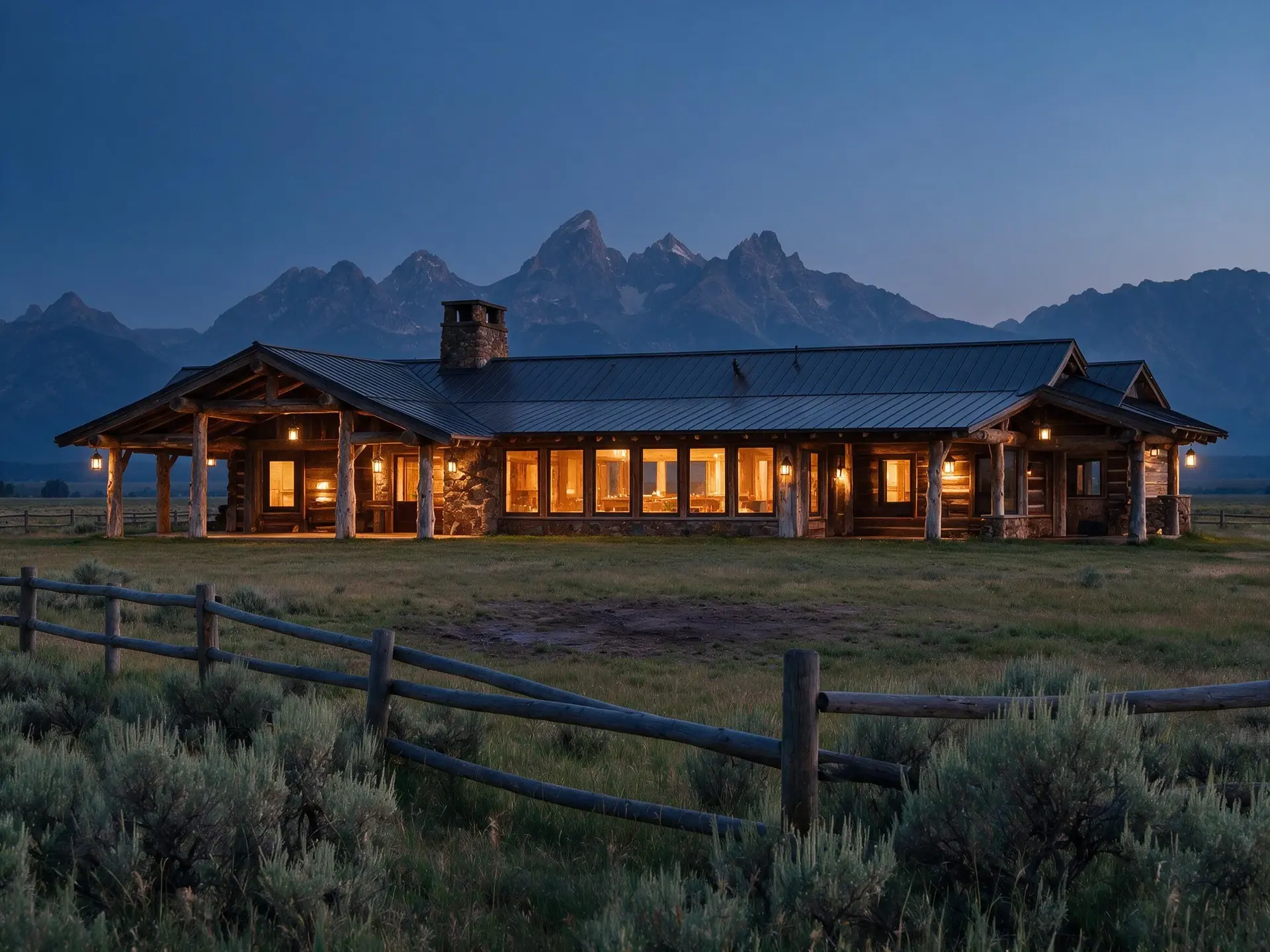
Yes. Day to Dusk is its own tool — a second pass on the frame, a second credit — and it brings underwater pool lights warm-on, deck lanterns glowing, a sky gradient that follows the bearing the shot was taken on, and interior windows warm-lit. Output is a JPEG at about 2.4K, ready for a Sotheby's, Compass Estates, Douglas Elliman or Christie's International hero placement without a twilight reshoot.
Pricing
One credit per image. Every tool, every plan.
Three plans. Every tool unlocked on all of them. Every render unmarked, standard or high resolution, cancel anytime.
Every plan starts with 3 free renders. No card until you subscribe.
Starter
For the solo agent shooting their own listings.
$39/month
billed yearly
100 credits monthly
100 images per month — 1 credit each, whichever tool you use
No Plotpane mark on any render
Every tool, no tier gating
Standard output ~2.4K, or ~4.7K for a second credit
XMP disclosure metadata written into every export
Download a finished listing as a ZIP
Free vertical listing reel from your finished photos
Cinematic clips from a single photo — 1 credit per second of video
That is the whole pricing model. No per-tool rates, no seat maths, nothing to negotiate. We are not SOC 2 certified and there is no SSO, private deployment or API — if you need those to buy, better you know now than after a call.
Starter
4
listings a month
Pro
8
listings a month
Agency
24
listings a month
Questions
The usual questions, answered directly.
No. Midjourney and DALL-E invent scenes from text prompts — beautiful for art, disqualifying for a listing. Plotpane is a structure-preserving pipeline: your room geometry, windows, and floor plan stay exact. We stage, re-light, swap skies, declutter, and enhance your actual photo. No hallucinated architecture, no invented rooms.
BoxBrownie and Styldod are human-edit services: you upload, a retoucher works overnight, you get a result in 24–48 hours at $2–$32 per image per treatment. They also sell things we do not have at all — floor plans, renderings, item removal by a person who can ask you what you meant. Plotpane is one machine pass: you pick one of seven tools, and the image comes back in about two minutes for one credit, whichever tool you picked, on a flat monthly subscription. Stacking two treatments on one photo means running it twice.
Yes, when disclosed. NAR guidelines, California AB 723, and REBNY Rule 3.3 all allow virtually staged photos provided the listing discloses them. Every Plotpane export embeds invisible XMP disclosure metadata so the staging record travels with the file. You still handle the listing-remarks disclosure in your MLS portal — that's the part only you can do.
Every render is sent with a preserve list as well as an instruction. It names one operation and forbids the rest: do not touch windows, doors, walls, ceilings, floors, cabinetry or fixtures unless the instruction names them; do not remove or conceal a defect, stain or crack; do not change what is visible through glass, and never invent a view. Furniture is added to empty rooms; named objects are removed from furnished ones; sky and light are re-graded. If you do see something invented, that is a bug — report the render in the app and the credit comes back.
Yes — one click in the Stripe billing portal from your dashboard. Billing stops immediately, remaining credits stay usable through the end of the billing period, and there's no cancellation fee.
Yes — any AI-generated or AI-modified image is considered an edit requiring disclosure under NAR's standards. That's why every Plotpane export writes invisible XMP disclosure metadata by default. The flag is machine-readable by MLS tooling and survives Lightroom round-trips. You still add the disclosure line to your listing remarks; we make sure the image itself is self-describing.
The toolkit
Seven tools. One credit each.
Every one is a single structure-preserving pass: it changes what you asked for and leaves the building alone.