Plotpane · Historic homes
Historic homes

Victorian House Photography for Historic Home Listings

Victorian house photography is the single hardest vertical in residential real estate imagery — and the one where generic AI retouchers do the most damage. A painted lady in Cape May, a Federal townhouse on Beacon Hill, a Queen Anne in Eureka, a Tudor Revival on Philadelphia's Main Line: every frame contains period features (wavy cylinder glass, 7-color trim, original plaster ceiling medallions, leaded fanlights) that a mass-market 'enhance' button flattens, smooths, or hallucinates away. Plotpane's preservation-safe pass is tuned specifically for historic home listing photography — it cleans clutter and stages empty rooms, returning a JPEG at about 2.4K, but explicitly refuses to restore missing features, recolor faded paint, or replace damaged materials. Every export ships with NAR Standard of Practice 12 AI-enhancement disclosure metadata baked in.

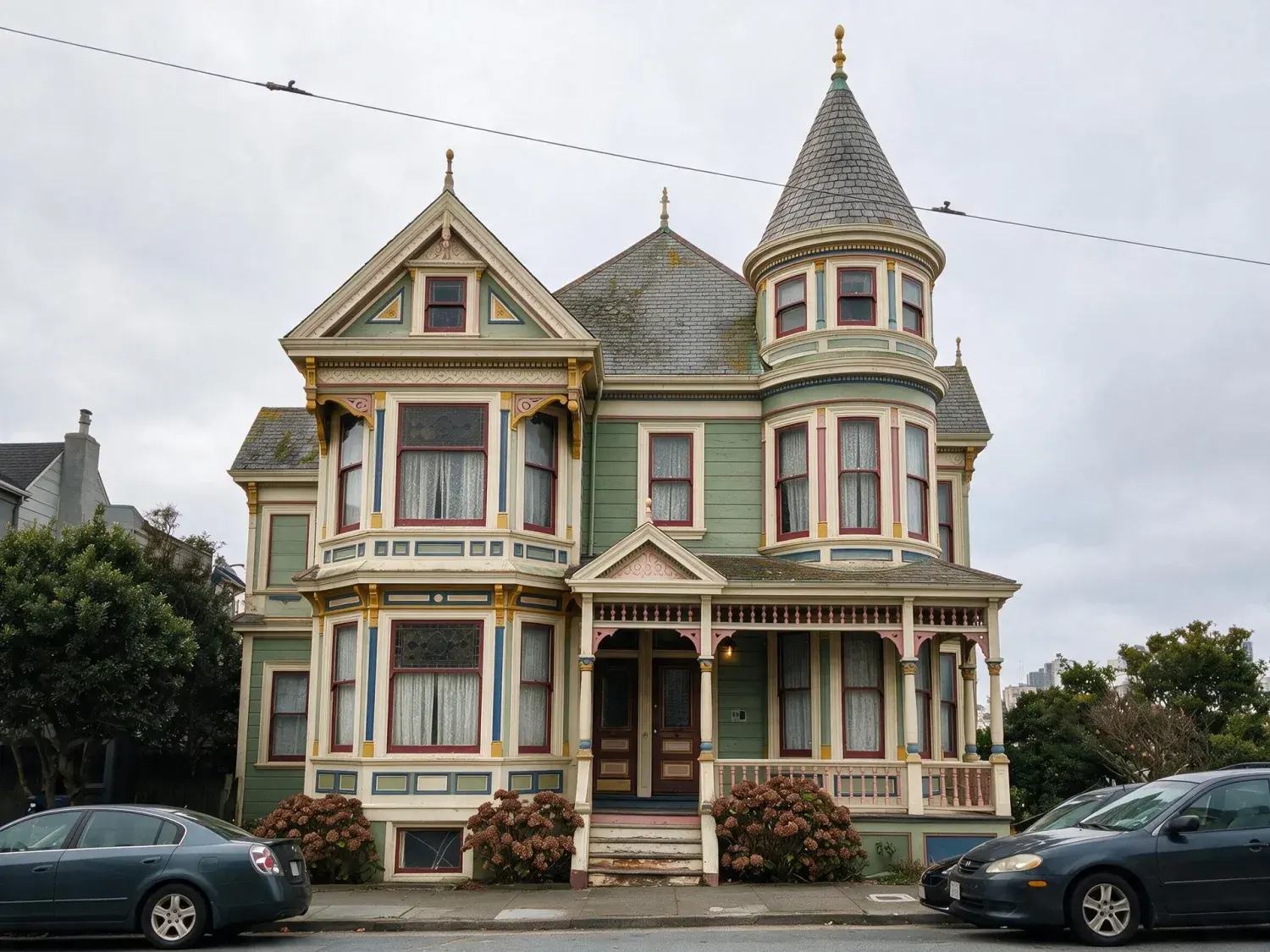
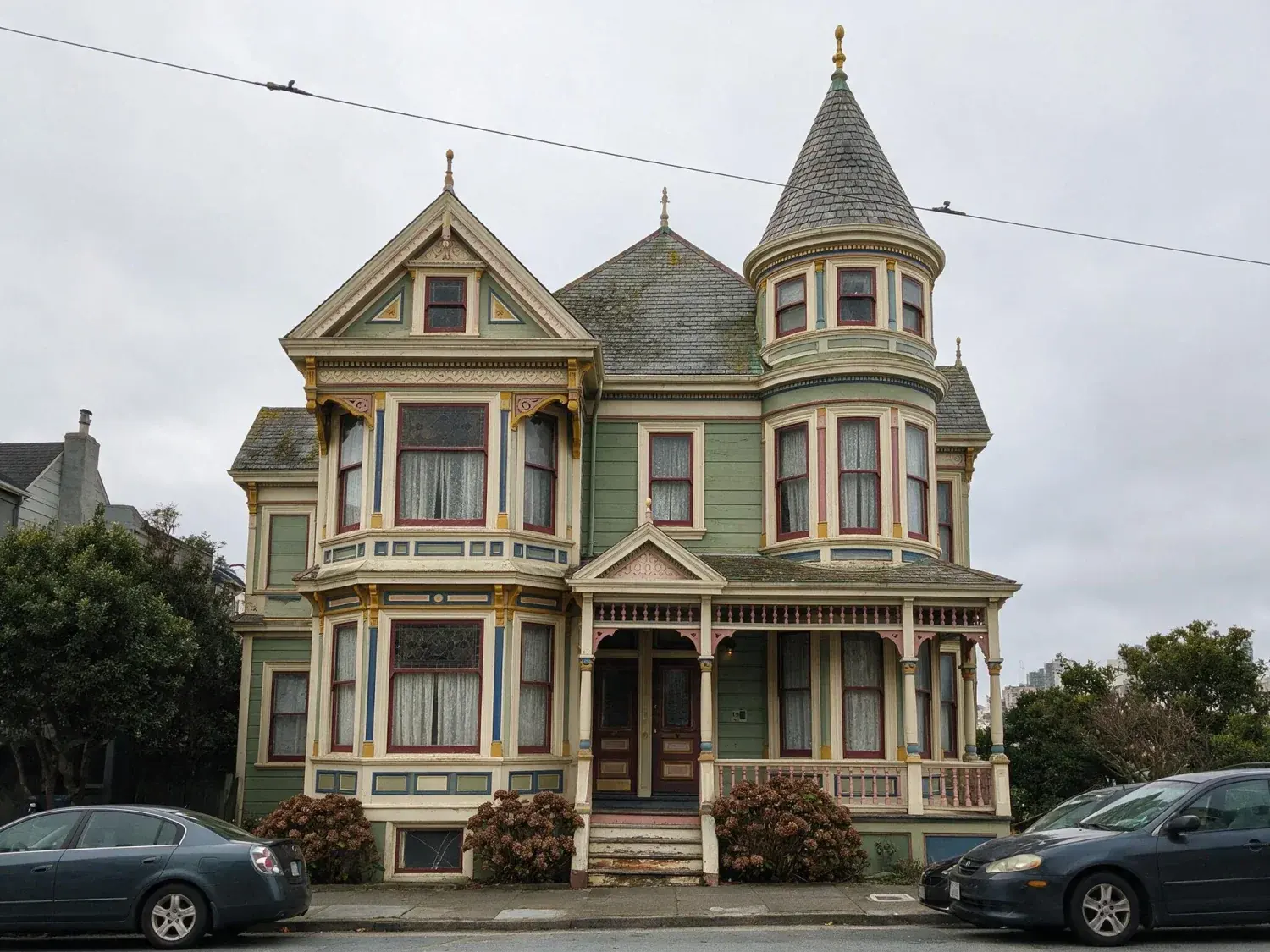
Before and after of an 1887 queen anne painted lady on alamo square with wavy cylinder glass and original slate — recovered into a circa old houses editorial hero without violating preservation disclosure — enhanced by Plotpane
Before and after of an 1887 queen anne painted lady on alamo square with wavy cylinder glass and original slate — recovered into a circa old houses editorial hero without violating preservation disclosure — original listing photo before editing
BeforeAfter
01

Victorian house photography, built for the historic listing vertical

Most real estate photo editors treat a Queen Anne like a 2020 new-build with weird trim. That approach kills listings. Victorian house photography for a property inside a National Register of Historic Places district — or under a state-level office like the California Office of Historic Preservation, the New York State Historic Preservation Office (NY SHPO), Massachusetts Historical Commission, New Jersey HPO, Pennsylvania SHPO, Georgia HPD, or the South Carolina Department of Archives and History — is governed by two pressures at once. First, state real-estate disclosure regimes require the listing imagery to accurately represent the property's actual condition, including any deferred maintenance on original materials. Second, specialty historic buyers arrive through channels (CIRCA Old Houses, OldHouses.com, Historic Properties, Old House Dreams, Preservation Directory, the National Trust for Historic Preservation's Historic Real Estate platform at savingplaces.org/historicrealestate) that scrutinize imagery harder than Zillow and reject listings where photos don't match in-person condition. Plotpane's preservation-safe pass sits between those two pressures: it corrects exposure, white balance, window pulls, lens distortion, and shadow/highlight recovery — the same corrections allowable on a 1940s darkroom print pass — while explicitly preserving the features that make a historic home historic.

02

Period homes the preservation-safe pass is calibrated for

Each American period style has distinct photo failure modes. Plotpane's preservation-safe pass reads each of them on its own terms — nothing here is a generic 'vintage filter.'

  • Victorian (Italianate, Second Empire, Stick, Queen Anne, Folk Victorian, 1837–1910) — protects 3-to-7-color polychrome paint schemes on painted ladies without flattening spindle-work shadow depth; holds decorative bargeboard contrast
  • Federal / Greek Revival (1780–1850) — preserves wavy cylinder-glass ripple in original 6/6 and 12/12 sash windows (generic AI 'fixes' this as a defect — it is not, it is the feature)
  • Georgian Colonial (1700–1780) — balances deep symmetrical window shadows against brick/clapboard facade without crushing dentil mouldings at the cornice
  • Tudor Revival (1890–1940) — corrects mossy slate/tile roof exposure while keeping authentic patina; holds half-timber-to-stucco contrast without smoothing the stucco texture
  • Queen Anne (1880–1910) — color-calibrates asymmetrical massing, towers, wrap-around porches, and fish-scale shingles without losing the three-dimensional read
  • Italianate (1840–1885) — preserves bracketed cornice shadow lines and tall narrow window proportions
  • Prairie School (1895–1920, Wright / Griffin / Purcell) — holds horizontal banding and art-glass leaded window ripple
  • Craftsman Bungalow (1905–1930) — balances deep-shadow porch interiors (battered columns, exposed rafter tails) against bright gable exteriors
  • Colonial Revival (1880–1955) — corrects symmetrical facade exposure without flattening fanlight or sidelight detail at the entry
  • Mid-Century Modern (1945–1975) — preserves clerestory light, tongue-and-groove ceiling grain, and original glazing reflections without smoothing them
  • Interior period features held verbatim — original crown/base moulding, plaster ceiling medallions, pocket doors, newel posts, ornate woodwork, stained glass, fireplace mantels, original hardware (mortise locks, rim locks, rosettes)
  • All outputs a JPEG at quality 92, about 2.4K, with embedded XMP AI-enhancement disclosure per NAR Standard of Practice 12
03

What the preservation-safe pass does — and explicitly does not — do

Plotpane's ethical stance on historic home listing photography is the opposite of most AI retouchers: the pass is subtractive, not additive. That distinction is what keeps a listing compliant with disclosure law and acceptable to CIRCA, Old House Dreams, the National Trust's Historic Real Estate program, and state preservation commissions.

  • WILL clean clutter from occupied rooms (mail piles, remotes, personal photos) — the same thing a human stylist does on a site visit
  • WILL virtually stage empty rooms with period-appropriate furniture — ten styles, six room types — disclosed in XMP and, if you switch it on, a visible "Virtually Staged" label
  • WILL correct exposure, white balance, window pulls, lens distortion, noise, and verticals — camera craft, not content change
  • WILL NOT restore missing architectural features — no hallucinated finials, no reinvented brackets, no fabricated stained glass where none remains
  • WILL NOT recolor faded paint schemes to look freshly painted — faded is the actual condition and must be shown
  • WILL NOT replace damaged slate courses, missing balusters, cracked plaster, or deteriorated woodwork — those are disclosure items
  • WILL NOT straighten settled foundation lines, sagging rooflines, or out-of-plumb original walls — structural reality stays visible
  • WILL NOT remove visible deferred maintenance (peeling paint, rot, rust, moss) — the buyer has a right to see it
04

How it fits the historic MLS, specialty listing portal, and state preservation workflow

Historic listings route through four parallel channels that each scrutinize imagery differently. Standard MLS (MLS PIN in Massachusetts, Bright MLS in the mid-Atlantic, SmartMLS in Connecticut, GAMLS/FMLS in Georgia, CRMLS in California) accepts the same ~2.4K JPEG Plotpane ships by default. Specialty historic portals — CIRCA Old Houses, OldHouses.com, Historic Properties, Old House Dreams, Preservation Directory, and the National Trust for Historic Preservation's Historic Real Estate at savingplaces.org/historicrealestate — expect imagery that reads as editorial and architectural rather than real-estate-glossy, and they reject listings whose photos don't match site condition. State historic commissions (CA OHP, NY SHPO, Massachusetts Historical Commission, NJ HPO, PA SHPO, GA HPD, SC DAH) sometimes require condition photography for tax-credit or easement reviews — that documentation photography is a separate workflow but shares the same preservation-safe edit rules. Finally, auction houses (Sotheby's Concierge, Christie's International Real Estate Historic Division) want that same output, and a second credit takes a catalogue plate to roughly 4.7K. Plotpane writes an XMP disclosure block into every file you download — what was done, with which tool, and when. Every one of those channels re-encodes on upload, so the block is the dated record in your own archive and the provenance line they ask for at intake goes into the listing text.

05

NAR Standard of Practice 12 AI disclosure — baked into every export

The National Association of Realtors' Standard of Practice 12 (Article 12 of the Code of Ethics) requires Realtors to present a true picture in advertising and representations, and the 2024 AI guidance extended that to require disclosure of material AI enhancement on listing imagery. Plotpane writes an AI-enhancement disclosure string into the XMP block of every export — which tool was run, whether it is enhancement or virtual staging, and the date — and for virtual-staging outputs an optional visible "Virtually Staged" label can be switched on in the corner of the frame. Agents can copy the disclosure string verbatim into MLS remarks and into the property description on Zillow, Realtor.com, Redfin, and any specialty historic portal.

For this region

Local questions, answered

Will Plotpane's preservation-safe pass edit a historic home photo in a way that could trigger a preservation disclosure problem?+

No. The preservation-safe pass is explicitly calibrated against the edits that create disclosure risk. It will not recolor a faded paint scheme, will not replace a damaged slate course or missing baluster, will not straighten a settled original foundation line, will not remove visible deferred maintenance, and will not hallucinate missing features like finials, brackets, or stained glass. It handles exposure, white balance, window pulls, lens distortion, and noise — the corrections that were legal on a film-era darkroom print pass — plus clutter removal and empty-room virtual staging, disclosed in XMP and, if you switch it on, a visible "Virtually Staged" label. Upload, pick the tool the frame needs, export a JPEG at about 2.4K, done.

Does it work for listings routed through CIRCA Old Houses, Old House Dreams, Historic Properties, or the National Trust's Historic Real Estate?+

Yes — and those platforms are where this approach actually shines. All four accept full-resolution uploads, all four scrutinize authenticity harder than standard MLS, and all four have an editorial-architectural preference over real-estate-glossy imagery. The preservation-first edit rules align with what CIRCA, OldHouses.com, Old House Dreams, Historic Properties, Preservation Directory, and savingplaces.org/historicrealestate editors want to see.

How does it handle stained glass, leaded windows, and original wavy cylinder glass?+

Those are treated as features, not defects. Auto Enhance's exposure and white-balance pass is tuned to preserve the refractive ripple of original cylinder glass, the colored light cast by stained-glass windows, the lead came lines in art-glass panels (common in Prairie School and Craftsman homes), and the fanlight/sidelight detail at Federal and Colonial Revival entries. Generic AI enhancers read wavy glass as 'blur' and try to sharpen it — that destroys provenance. Plotpane does not.

What about original moulding, plaster ceiling medallions, and fireplace mantels?+

Interior period features — crown and base moulding, ceiling medallions and rosettes, pocket doors, newel posts, ornate woodwork, fireplace mantels (marble, slate, cast-iron, carved wood), original hardware like mortise locks and rim locks — are preserved verbatim in edge and texture. Clutter Removal runs off a list you type, so nothing goes unless you name it; it will not accidentally edit out an original hardware element because it looked like clutter.

What does the AI-enhancement disclosure look like in the exported file?+

Every Plotpane export carries an embedded XMP block: which tool was run, the edit type (enhancement or virtual staging), the ISO date, and a plain-English disclosure string formatted to NAR Standard of Practice 12. For virtual staging you can also switch on a visible label reading 'Virtually Staged.' Agents copy the plain-English string into MLS public remarks and into the property description on Zillow, Realtor.com, Redfin, CIRCA, and any state-MLS that requires AI disclosure (Bright MLS, CRMLS, Stellar, MRED, NWMLS all already do).

Is my property historic if it is not on the National Register?+

Often yes. The National Register of Historic Places is the federal list, but most states run their own registers (California Register, New York State Register, Massachusetts State Register, etc.) plus local landmark designations run by city or county historic preservation commissions. A home can be eligible for the National Register without being listed. Plotpane's preservation-safe pass is appropriate for any period home — National Register listed or not — where the listing agent wants the photography to read as architectural rather than real-estate-glossy.

How much does historic home listing photography enhancement cost?+

One credit per image, whichever tool you use, on every plan, exported as a JPEG at quality 92, about 2.4K. No surcharge for historic-home work, cancel anytime. That pricing is the point: photographers and agents working historic listings were previously paying specialty retouchers $8–$25 per image for preservation-safe work. Starter is $49/mo for 40 images, Pro $99 for 120, Agency $249 for 400.

Pricing

One credit per image.
Every tool, every plan.

Three plans. Every tool unlocked on all of them. Every render unmarked, standard or high resolution, cancel anytime.

Every plan starts with 3 free renders. No card until you subscribe.

Starter

For the solo agent shooting their own listings.

$39/month

billed yearly

40 credits monthly

  • 40 images per month — 1 credit each, whichever tool you use
  • No Plotpane mark on any render
  • Every tool, no tier gating
  • Standard output ~2.4K, or ~4.7K for a second credit
  • XMP disclosure metadata written into every export
  • Up to 5 photos per batch
  • Email support
Subscribe to Starter

For one agent, listing by listing.

Most popular

Pro

For top-producing agents and real-estate photographers.

$79/month

billed yearly

120 credits monthly

  • 120 images per month — 1 credit each, whichever tool you use
  • No Plotpane mark on any render
  • Up to 25 photos per batch, one preset across the shoot
  • Download a finished listing as a ZIP
  • Everything in Starter
  • Priority support
Subscribe to Pro

The plan a working photographer buys.

Agency

For brokerages, teams, and photography networks.

$199/month

billed yearly

400 credits monthly

  • 400 images per month — 1 credit each, whichever tool you use
  • No Plotpane mark on any render
  • Up to 100 photos per batch
  • Download a finished listing as a ZIP
  • Everything in Pro
  • Direct line to the founder, not a ticket queue
Subscribe to Agency

For a brokerage running whole shoots.

FeatureStarter$39/mo annualPro$79/mo annualAgency$199/mo annual
Renders per month40120400
Credits per image111
All seven tools
Free renders on sign-up333
Plotpane mark on the imageNoneNoneNone
Standard output (~2.4K)
High resolution (~4.7K, second credit)
XMP disclosure written into every export
Optional visible “Virtually Staged” label
Photos per batch525100
Download a set as a ZIP
Refund a render that came back wrong
SupportEmailPriority emailDirect to the founder
Cancel anytime, one click
At volume

A 25-photo listing costs 25 credits.

That is the whole pricing model. No per-tool rates, no seat maths, nothing to negotiate. We are not SOC 2 certified and there is no SSO, private deployment or API — if you need those to buy, better you know now than after a call.

Starter

1

listings
a month

Pro

4

listings
a month

Agency

16

listings
a month

Questions

The usual questions,
answered directly.

  • No. Midjourney and DALL-E invent scenes from text prompts — beautiful for art, disqualifying for a listing. Plotpane is a structure-preserving pipeline: your room geometry, windows, and floor plan stay exact. We stage, re-light, swap skies, declutter, and enhance your actual photo. No hallucinated architecture, no invented rooms.

  • BoxBrownie and Styldod are human-edit services: you upload, a retoucher works overnight, you get a result in 24–48 hours at $2–$32 per image per treatment. They also sell things we do not have at all — floor plans, renderings, item removal by a person who can ask you what you meant. Plotpane is one machine pass: you pick one of seven tools, and the image comes back in about two minutes for one credit, whichever tool you picked, on a flat monthly subscription. Stacking two treatments on one photo means running it twice.

  • Yes, when disclosed. NAR guidelines, California AB 723, and REBNY Rule 3.3 all allow virtually staged photos provided the listing discloses them. Every Plotpane export embeds invisible XMP disclosure metadata so the staging record travels with the file. You still handle the listing-remarks disclosure in your MLS portal — that's the part only you can do.

  • Every render is sent with a preserve list as well as an instruction. It names one operation and forbids the rest: do not touch windows, doors, walls, ceilings, floors, cabinetry or fixtures unless the instruction names them; do not remove or conceal a defect, stain or crack; do not change what is visible through glass, and never invent a view. Furniture is added to empty rooms; named objects are removed from furnished ones; sky and light are re-graded. If you do see something invented, that is a bug — report the render in the app and the credit comes back.

  • Yes — one click in the Stripe billing portal from your dashboard. Billing stops immediately, remaining credits stay usable through the end of the billing period, and there's no cancellation fee.

  • Yes — any AI-generated or AI-modified image is considered an edit requiring disclosure under NAR's standards. That's why every Plotpane export writes invisible XMP disclosure metadata by default. The flag is machine-readable by MLS tooling and survives Lightroom round-trips. You still add the disclosure line to your listing remarks; we make sure the image itself is self-describing.

Ready when you are

Stop re-uploading.
Start shipping listing-ready.

Seven tools, one credit an image, a finished JPEG back in about two minutes — on every plan.

Get startedSee the before/aftersEvery tool on every plan · cancel anytime