Plotpane · Empty-room staging use case
Empty-room staging use case

Empty-room virtual furniture staging — done before the listing goes live

Empty rooms photograph 15% smaller than they measure, and that single perception gap costs sellers a week of days-on-market. Plotpane is the virtual furniture staging workflow built for the 90-minute window between photographer dropbox and MLS go-live — pick one of ten built-in styles, bundle the whole vacant house in about two minutes per room, and ship clean exports at about 2.4K with an invisible XMP disclosure tag wired for NAR Standard of Practice 12-5.

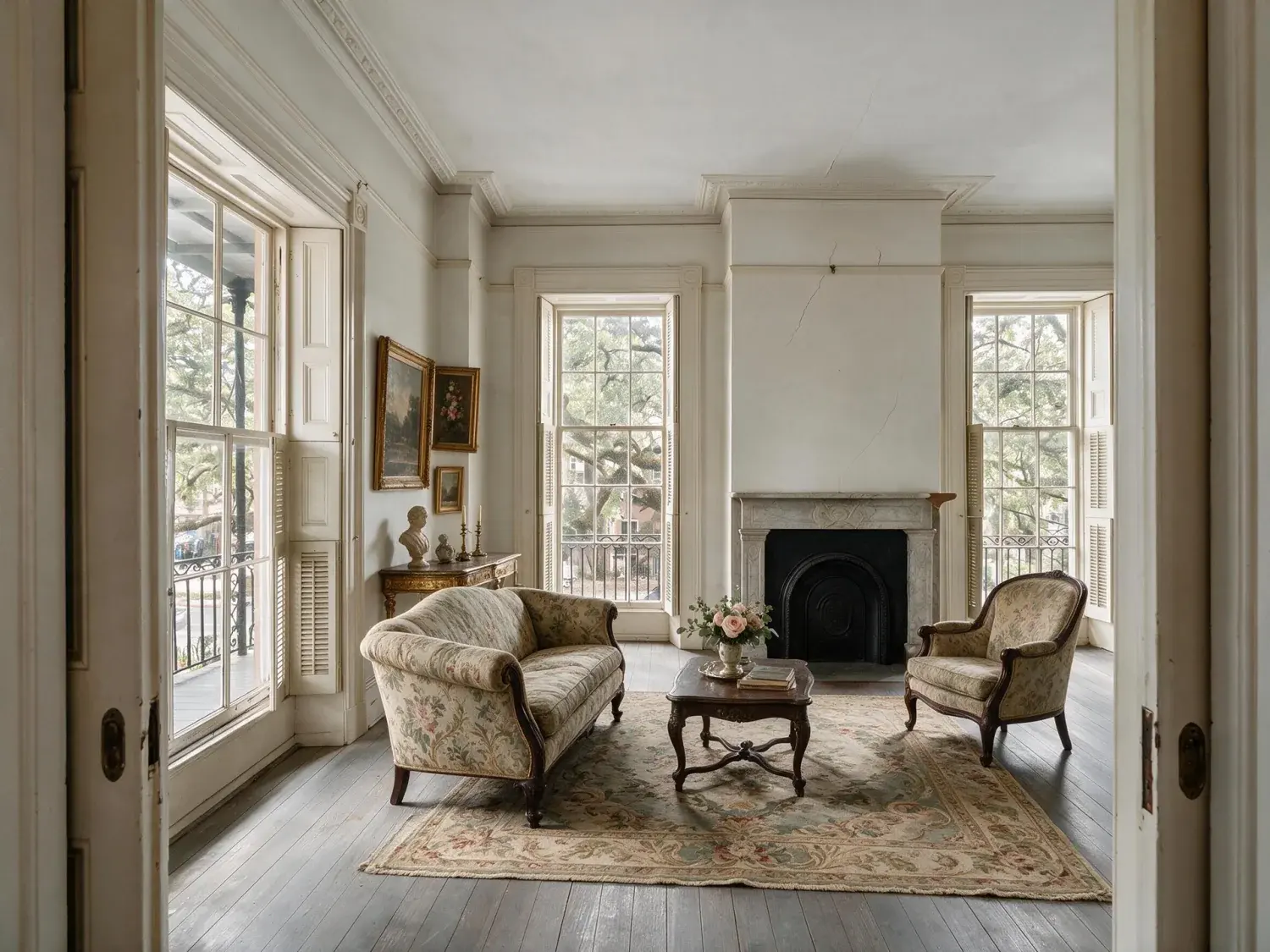
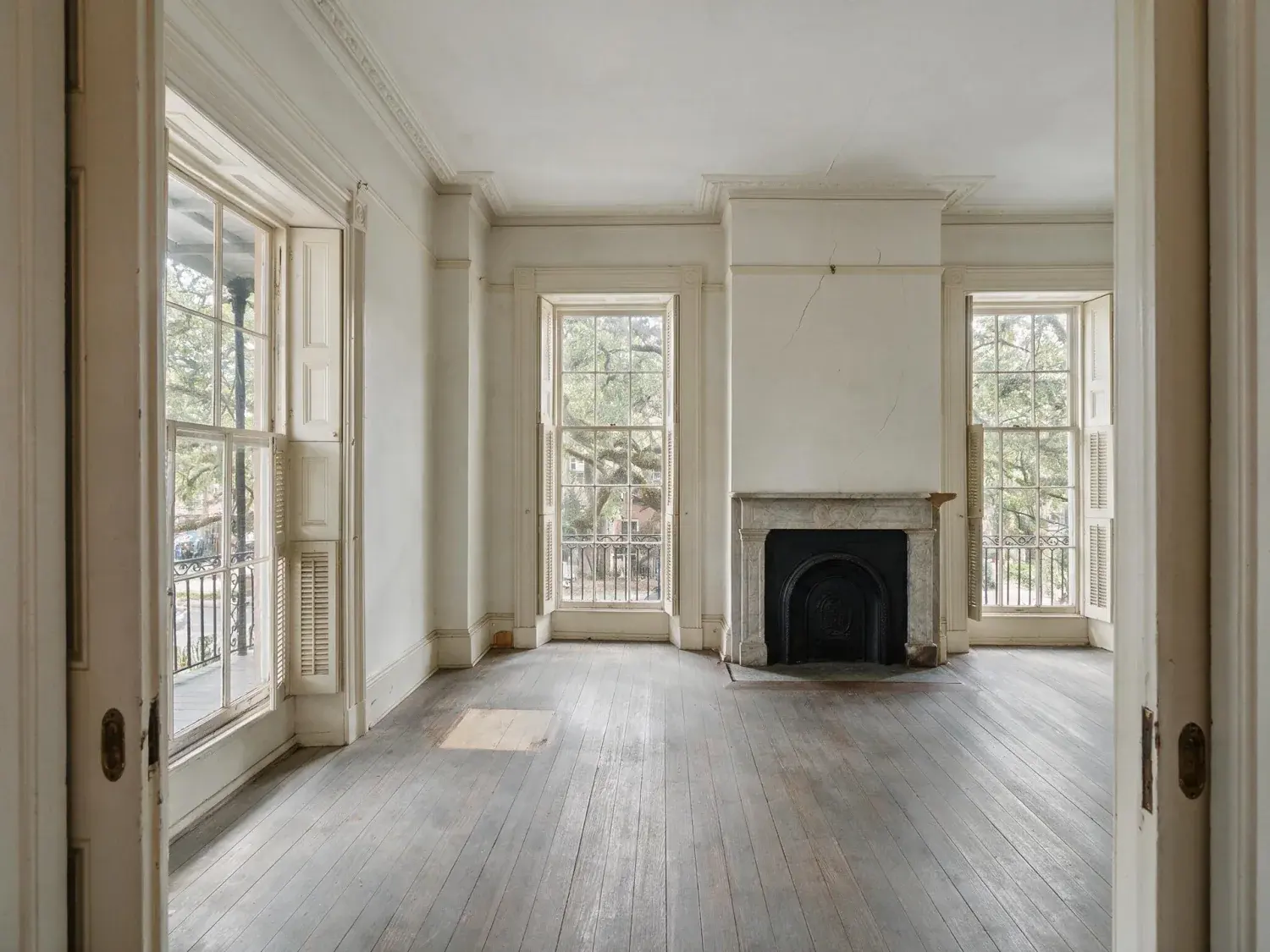
Before and after of a federal-era savannah rowhouse parlor on monterey square — an empty heritage shell that'll sit 73% longer on market unstaged, transformed into a scroll-stopping mls hero — enhanced by Plotpane
Before and after of a federal-era savannah rowhouse parlor on monterey square — an empty heritage shell that'll sit 73% longer on market unstaged, transformed into a scroll-stopping mls hero — original listing photo before editing
BeforeAfter
01

Why empty rooms photograph badly (and why virtual furniture staging fixes it)

A vacant room has no reference objects. Without a sofa, a bed, or a dining table to anchor the frame, buyers lose spatial scale and default to 'this feels smaller than the sqft says.' The Real Estate Staging Association's longitudinal tracking found that staged homes sell materially faster than identical vacant comps — RESA's oft-cited 4,600-home study placed the staged-sell rate at 73% on favorable terms. The mechanism is scale, not taste: furniture gives buyers a mental ruler. Plotpane's virtual furniture staging drops that ruler into the shot and returns it at about 2.4K, so the first MLS tile reads as roomy and move-in-ready instead of cold and cavernous.
02

Ten staging styles — pick one, bundle the whole house

Pre-listing staging is a bundling problem, not a per-room problem: the primary bedroom, living room, kitchen, dining room and home office need to feel like one house, not five Pinterest boards. Plotpane ships ten built-in staging styles — Modern, Scandinavian, Gulf Modern, Luxury, European Classic, Japandi, Coastal, Industrial, Mediterranean and Mid-Century — across six room types, so holding one style over the whole vacant gallery keeps the furniture vocabulary consistent at about two minutes a room. Five of them do most of the work on empty listings:

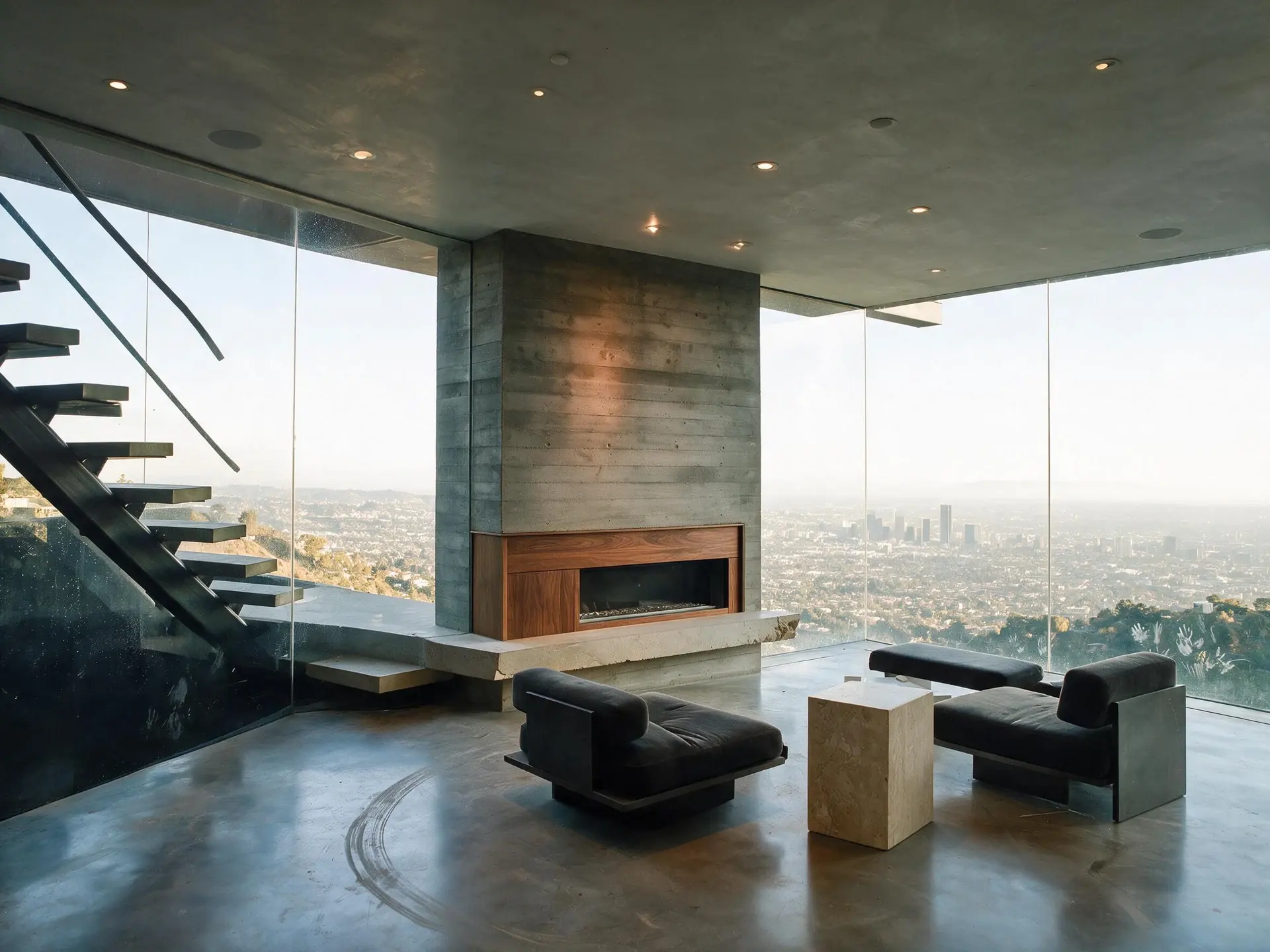
  • Modern — low-profile sectional, matte black accents, neutral palette for urban condos
  • Mid-Century — walnut, tapered legs, olive and mustard accents for post-war ranches and split-levels
  • Scandinavian — pale wood, wool texture, plain lines and warm whites for suburban new-construction
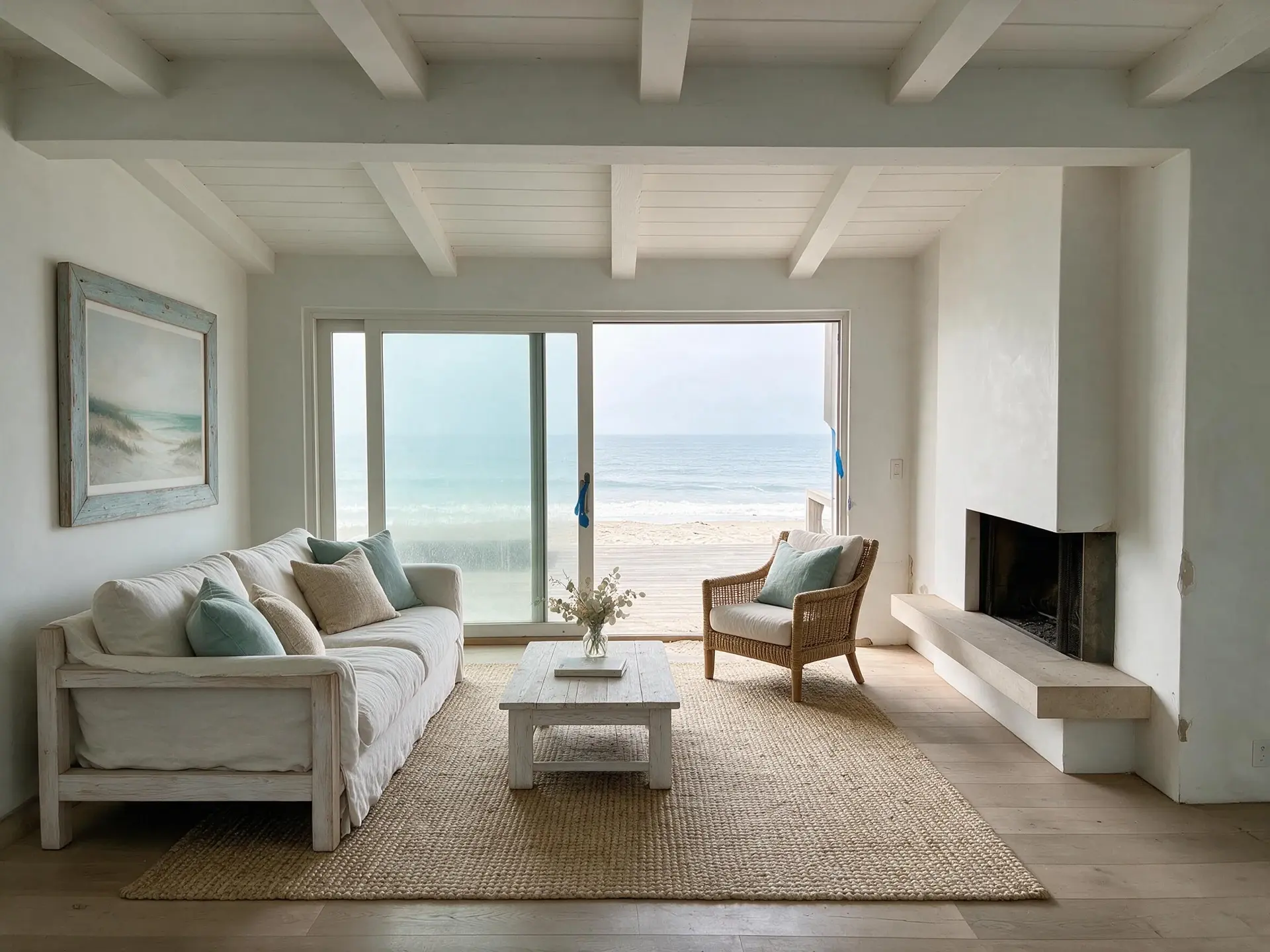
  • Coastal — rattan, pale oak, soft blue-grey for shoreline and lake listings
  • Luxury — deep upholstery, marble and brass, generous negative space for high-end and pre-construction
03

Where this fits in the pre-listing timeline

The pre-listing window is tight. Photographer shoots Tuesday morning, raw files land by Tuesday evening, and the seller wants the listing live Wednesday or Thursday so the weekend open-house traffic is maximised. Plotpane's workflow compresses the staging step from 'wait three days for a human stager's re-render' to 'pick a style, approve the bundle, upload the MLS gallery' — all within the Wednesday morning window. That speed matters because RESA's industry tracking puts every additional week on market between $1,800 and $4,200 of carrying cost on a mid-tier listing.

04

NAR SoP 12-5 disclosure — baked into every export

NAR Standard of Practice 12-5 requires Realtors to disclose when listing imagery has been digitally manipulated, and most state MLS boards extend that to all virtually staged photos. Plotpane writes an invisible XMP disclosure tag — 'Virtually Staged by Plotpane' — into the bytes of every staged export you download. Matrix, Flexmls, Bright, Stellar and CRMLS all re-encode images on upload and routinely strip metadata, so treat the XMP as the record in your own archive rather than something that travels. The disclosure that does the work on the listing is the one-line note in your MLS remarks ('Photos include virtually staged rooms'), plus the optional visible 'Virtually Staged' label Plotpane can burn in where a board or a broker wants it on the face of the image. That pairing satisfies NAR Articles 2 and 12, California AB 723, REBNY's strict-disclosure rule, and every state commission we've reviewed — and the hero shot stays clean unless you ask for the label.

05

Who the pre-listing workflow is actually built for

Four seller archetypes account for the overwhelming majority of empty-room staging demand, and each has a different deadline pressure.

  • Vacant property flips — every week of DOM burns the flip's margin; the pre-listing staging pass is the cheapest day-one lever
  • New construction pre-sale — model units and spec homes photograph like showrooms when empty; one staging style across the set sells the layout
  • Estate sales — trustees and executors rarely want physical staging quotes; virtual furniture staging lets the listing go live in days, not months
  • Owner-occupied but already moved — the photos were taken Saturday morning after the moving truck left; virtual staging rescues the gallery
For this region

Local questions, answered

What is virtual staging, and how is it different from physical staging for an empty room?+

Virtual staging is the digital insertion of furniture and decor into a photograph of a vacant room. Physical staging requires renting or moving furniture into the actual property, typically $2,000-$6,000 for a whole-house vacancy with a 60-90 day minimum. Virtual furniture staging at Plotpane drops the equivalent bundle into the photograph in about two minutes per room, at a fraction of the cost, which is why the pre-listing workflow has shifted toward AI staging for vacant listings.

How much does virtual staging cost compared to traditional home staging?+

Traditional physical home staging of a vacant house runs $2,000-$6,000 per month with a multi-month minimum — usually $5,000-$15,000 before the listing closes. Plotpane's virtual furniture staging is a flat monthly subscription — one credit per image, 40 images on Starter, 120 on Pro, 400 on Agency — with the same ~2.4K export on every paid plan. For a typical vacant listing with 12 photos, the effective cost per staged room is roughly two orders of magnitude lower than physical staging.

Is virtual staging worth it for a vacant home?+

For empty rooms it's the highest-leverage marketing decision an agent can make before the listing goes live. RESA's industry tracking and the Marginal Revolution 2026 meta-analysis both converge on the same finding — staged homes sell faster and for more than comparable vacant comps. Virtual furniture staging captures most of that premium at a fraction of the cost, which is why the pre-listing workflow has shifted toward AI staging.

How do I stage an empty house for sale without hiring a physical stager?+

Three steps. Shoot the vacant rooms at capture resolution (photographer's standard pass is fine — no special lighting needed). Upload the five rooms that anchor buyer decisions: primary bedroom, living room, kitchen, dining room, and home office. Pick one of the ten built-in styles — Modern, Mid-Century, Scandinavian, Coastal and Luxury cover most houses — so the whole listing reads as one house. Plotpane ships the bundle in about two minutes per room with XMP disclosure metadata baked in.

Does virtual staging comply with NAR's Standard of Practice 12-5?+

Yes, when disclosure is handled correctly. NAR SoP 12-5 requires that digitally manipulated listing photos be 'clearly identified as such.' Plotpane writes an invisible XMP disclosure tag — 'Virtually Staged by Plotpane' — into every staged export, but MLS and portal uploads re-encode images and routinely strip metadata, so that tag is your own dated record rather than something that travels. The disclosure the rule turns on is the one-line note in your MLS remarks ('Photos include virtually staged rooms'), with the optional visible 'Virtually Staged' label if you want it on the image itself. Those keep you aligned with NAR Articles 2 and 12, California AB 723, REBNY strict disclosure, and every state commission we've reviewed.

Do it yourself virtual staging with great furniture — is that realistic?+

Yes. Plotpane is the self-serve virtual furniture staging workflow: upload the shot, pick the style, export. The furniture is tuned per style — Mid-Century has walnut and tapered legs, Scandinavian has pale wood and wool, Coastal has rattan and pale oak. Same two-minute pipeline whether you're staging one unit or a 40-listing portfolio flip.

Pricing

One credit per image.
Every tool, every plan.

Three plans. Every tool unlocked on all of them. Every render unmarked, standard or high resolution, cancel anytime.

Every plan starts with 3 free renders. No card until you subscribe.

Starter

For the solo agent shooting their own listings.

$39/month

billed yearly

40 credits monthly

  • 40 images per month — 1 credit each, whichever tool you use
  • No Plotpane mark on any render
  • Every tool, no tier gating
  • Standard output ~2.4K, or ~4.7K for a second credit
  • XMP disclosure metadata written into every export
  • Up to 5 photos per batch
  • Email support
Subscribe to Starter

For one agent, listing by listing.

Most popular

Pro

For top-producing agents and real-estate photographers.

$79/month

billed yearly

120 credits monthly

  • 120 images per month — 1 credit each, whichever tool you use
  • No Plotpane mark on any render
  • Up to 25 photos per batch, one preset across the shoot
  • Download a finished listing as a ZIP
  • Everything in Starter
  • Priority support
Subscribe to Pro

The plan a working photographer buys.

Agency

For brokerages, teams, and photography networks.

$199/month

billed yearly

400 credits monthly

  • 400 images per month — 1 credit each, whichever tool you use
  • No Plotpane mark on any render
  • Up to 100 photos per batch
  • Download a finished listing as a ZIP
  • Everything in Pro
  • Direct line to the founder, not a ticket queue
Subscribe to Agency

For a brokerage running whole shoots.

FeatureStarter$39/mo annualPro$79/mo annualAgency$199/mo annual
Renders per month40120400
Credits per image111
All seven tools
Free renders on sign-up333
Plotpane mark on the imageNoneNoneNone
Standard output (~2.4K)
High resolution (~4.7K, second credit)
XMP disclosure written into every export
Optional visible “Virtually Staged” label
Photos per batch525100
Download a set as a ZIP
Refund a render that came back wrong
SupportEmailPriority emailDirect to the founder
Cancel anytime, one click
At volume

A 25-photo listing costs 25 credits.

That is the whole pricing model. No per-tool rates, no seat maths, nothing to negotiate. We are not SOC 2 certified and there is no SSO, private deployment or API — if you need those to buy, better you know now than after a call.

Starter

1

listings
a month

Pro

4

listings
a month

Agency

16

listings
a month

Questions

The usual questions,
answered directly.

  • No. Midjourney and DALL-E invent scenes from text prompts — beautiful for art, disqualifying for a listing. Plotpane is a structure-preserving pipeline: your room geometry, windows, and floor plan stay exact. We stage, re-light, swap skies, declutter, and enhance your actual photo. No hallucinated architecture, no invented rooms.

  • BoxBrownie and Styldod are human-edit services: you upload, a retoucher works overnight, you get a result in 24–48 hours at $2–$32 per image per treatment. They also sell things we do not have at all — floor plans, renderings, item removal by a person who can ask you what you meant. Plotpane is one machine pass: you pick one of seven tools, and the image comes back in about two minutes for one credit, whichever tool you picked, on a flat monthly subscription. Stacking two treatments on one photo means running it twice.

  • Yes, when disclosed. NAR guidelines, California AB 723, and REBNY Rule 3.3 all allow virtually staged photos provided the listing discloses them. Every Plotpane export embeds invisible XMP disclosure metadata so the staging record travels with the file. You still handle the listing-remarks disclosure in your MLS portal — that's the part only you can do.

  • Every render is sent with a preserve list as well as an instruction. It names one operation and forbids the rest: do not touch windows, doors, walls, ceilings, floors, cabinetry or fixtures unless the instruction names them; do not remove or conceal a defect, stain or crack; do not change what is visible through glass, and never invent a view. Furniture is added to empty rooms; named objects are removed from furnished ones; sky and light are re-graded. If you do see something invented, that is a bug — report the render in the app and the credit comes back.

  • Yes — one click in the Stripe billing portal from your dashboard. Billing stops immediately, remaining credits stay usable through the end of the billing period, and there's no cancellation fee.

  • Yes — any AI-generated or AI-modified image is considered an edit requiring disclosure under NAR's standards. That's why every Plotpane export writes invisible XMP disclosure metadata by default. The flag is machine-readable by MLS tooling and survives Lightroom round-trips. You still add the disclosure line to your listing remarks; we make sure the image itself is self-describing.

Ready when you are

Stop re-uploading.
Start shipping listing-ready.

Seven tools, one credit an image, a finished JPEG back in about two minutes — on every plan.

Get startedSee the before/aftersEvery tool on every plan · cancel anytime