01
The three project types, the same consistency problem
Three distinct developer scales, one shared pain. Multi-unit residential — a 20 to 500-unit tower from Related, JDS, TF Cornerstone, RXR in New York or Greystar across the US apartment portfolio — ships a marketing site plus per-floorplate unit galleries plus amenity-floor shoots. Mixed-use — retail podium, residential tower, Class-A office — needs three audience books: leasing brokers get the office, retailers get the ground plane, buyers get the units. Master-planned communities — 500 to 5,000 homes from Berkeley, Landsec, British Land in the UK or DAMAC, EMAAR, Sobha in Dubai, or CapitaLand in Singapore, or Country Garden in China — need phase-by-phase photography spanning 36 months of construction while the early phases are already selling. Plotpane keeps the register identical across all three, provided the choice stays identical: the same tool, the same sky, on every frame that ships. There is nothing to save and reload — the consistency is a decision you take at kickoff and keep taking for the next three years.
02
Marketing website hero + unit gallery batch
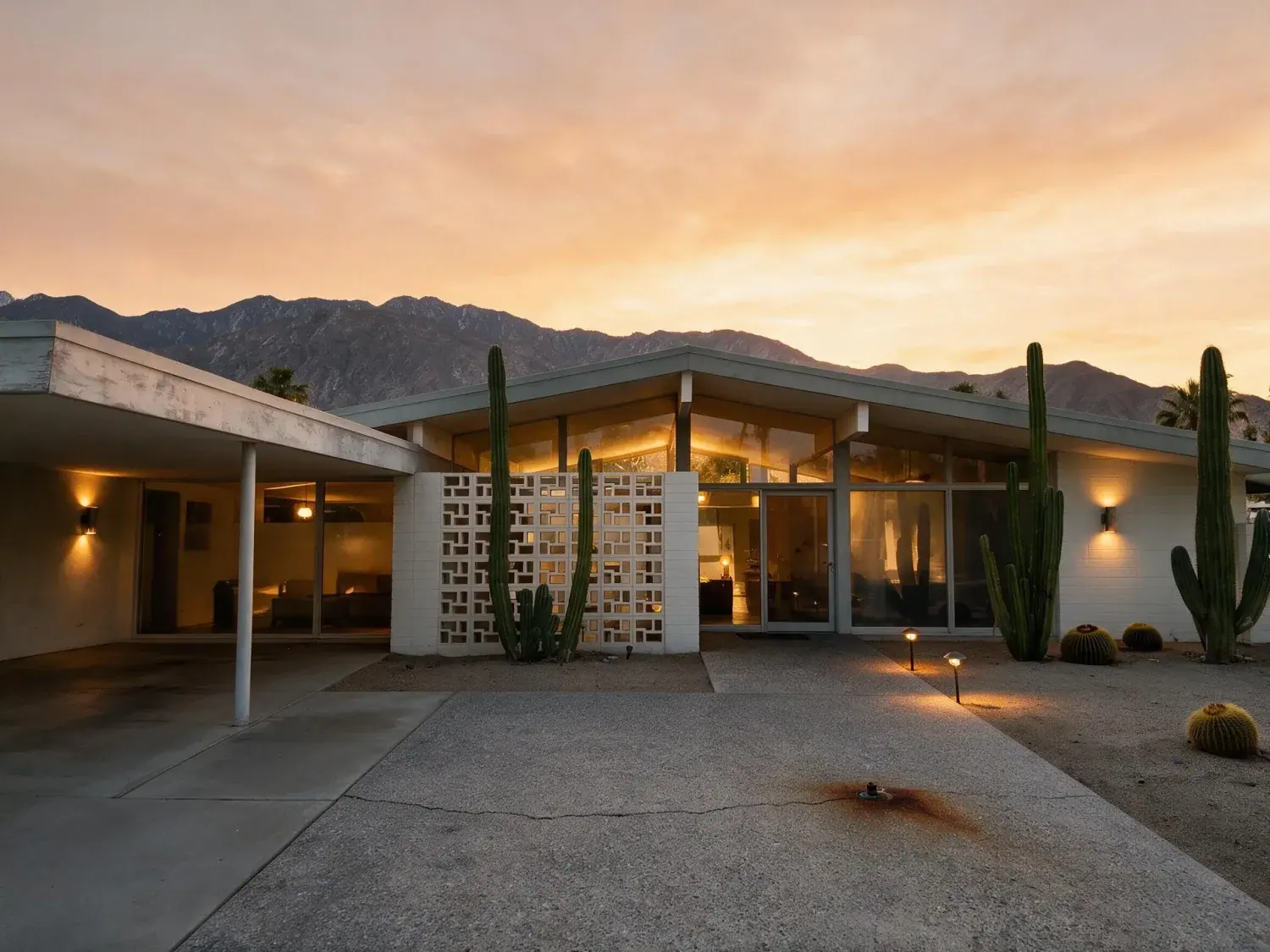
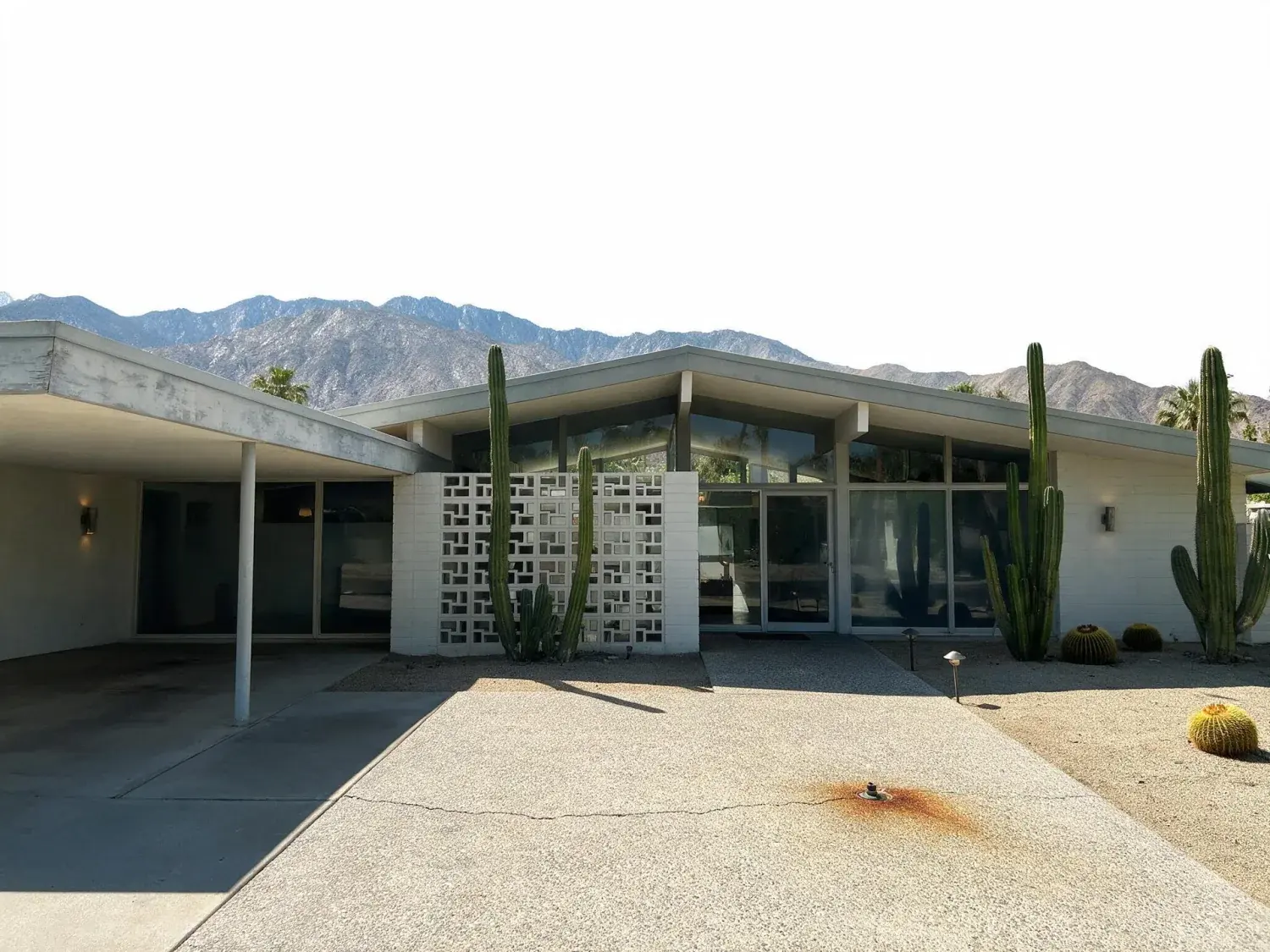
The website hero sets the brand grade — dusk, saturated sky, warm-lit tower against city lights. Every downstream asset has to match that grade. A typical Plotpane developer workflow: the construction photographer ships a 300-frame shoot on a clean midday with consistent cloud cover. The developer's marketing team picks the hero angle and runs it through Day to Dusk. Once that frame is signed off, every remaining frame — 280 unit gallery shots, 40 amenity plates, 30 neighbourhood context frames — goes through the same tool, 150 photos to a batch on Agency, one credit each, about two minutes a render. Output: 350 JPGs at about 2.4K with XMP disclosure metadata written in, all reading as the same building shot during the same 20-minute dusk window. That is the frame set that ships to the portal, the marketing site, the sales gallery touchscreens, and the Hong Kong investor roadshow deck on Tuesday morning.
03
Amenity shots, neighborhood context, drone aerials
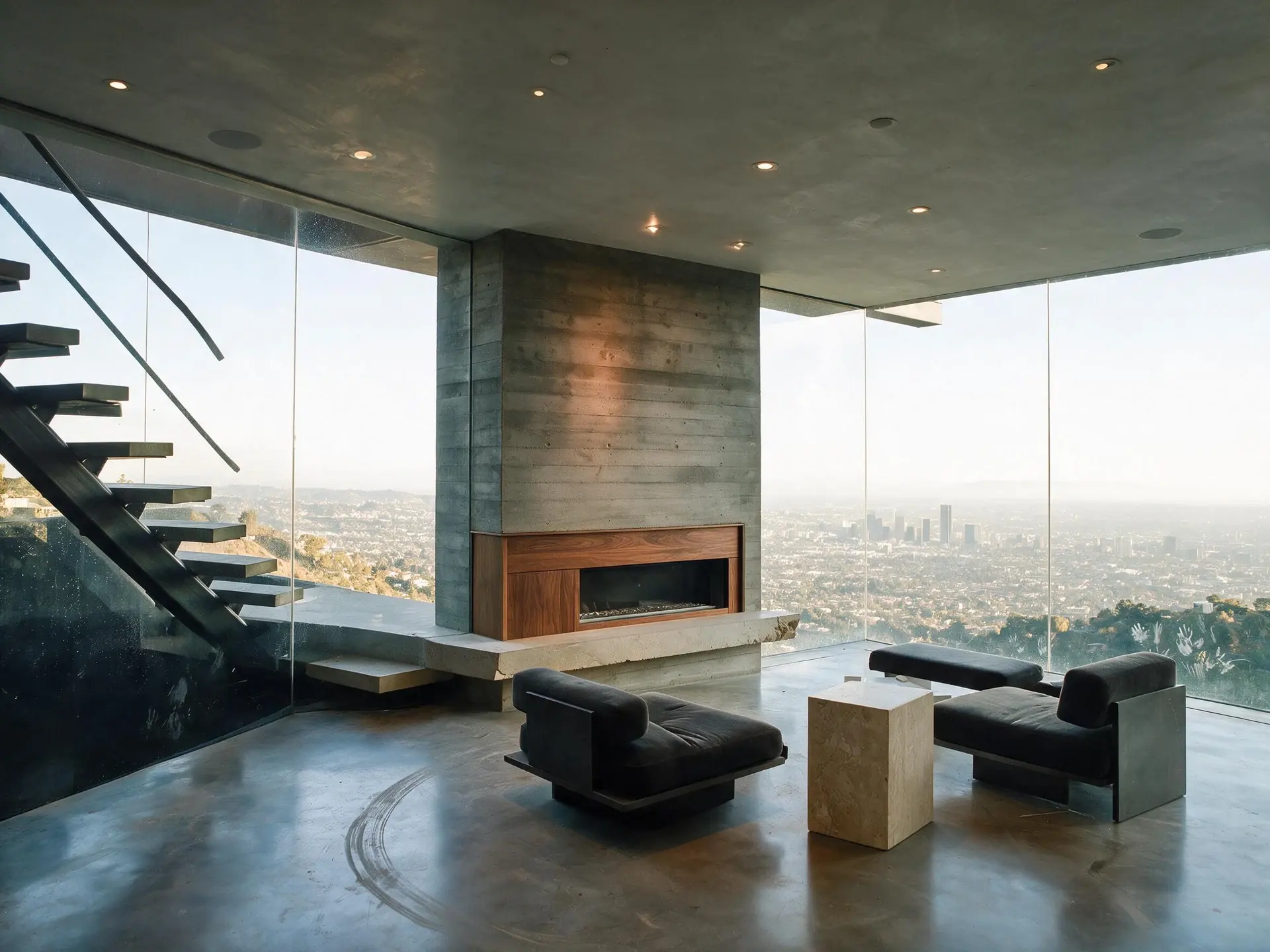
Amenity floors are where developer marketing differentiates from 400-unit competitors two blocks over. The rooftop pool at dusk, the pet spa, the co-working floor, the wine cellar, the Peloton studio. These are photographed while the building is still in punch-list, when the landscape is half-installed and the sky is whatever sky the photographer got that day. Sky Swap puts the same sky behind every one of them — four built-in options, and the discipline is picking one and staying with it — while the warm interior spill is matched against the blue-hour exterior, so the frame reads as if the amenity floor had opened six months after TCO in perfect weather. The same pass runs on the aerial frames the drone team already shot — rooftop-and-sky, tower-and-park, tower-and-skyline — and on the neighbourhood context shots that anchor the masterplan in its geography.
04
CGI for the unreleased phases — and where we stop
Developer marketing is 50% photograph and 50% CGI. Phase 1 is photographed; phase 2-5 only exist in Chaos Corona, V-Ray, Enscape. The failure mode is obvious: the CGI reads as render, the photograph reads as photograph, and the brochure spread looks like two different projects stapled together. Plotpane does not solve that half. There is no CGI mode here — nothing adds sensor grain, haze or lens falloff to a render, and nothing models a building that has not been built. What it works on is the photographed half, which is also the half you control: grade the photography toward the register the renders already sit in and the spread stops looking stapled together. For brochure prep the export is a JPEG at quality 92 and about 2.4K — roughly eight inches at 300dpi, so a half-page sits fine and a full-bleed spread should be set from the original capture. The sRGB-to-CMYK convert stays with your print house, and the twilight sky is the first thing to check when the proof comes back, because that is where the magenta shift shows.
05
Sales gallery flat-screen content + trade show booth graphics
The sales gallery is where the transaction closes. 85-inch flat screens loop the marketing film; backlit booth graphics wrap the scale model; touchscreen kiosks let the buyer browse floorplates. Every surface needs the same frame library at the right aspect ratio and resolution. Plotpane returns one JPEG per frame at about 2.4K, or roughly 4.7K for a second credit, and the four sizes come out of it: 16:9 for the flat-screen loops, 3:2 for the brochure spreads, 2:1 ultrawide for the backlit booth wraps, square for social and the investor deck inline. The booth wrap is the one that wants the larger export. One tool, one source frame, four crops, the same grade under all of them. The sales director does not call on Friday saying the booth graphic does not match the website.
06
International investor roadshow decks
DAMAC, EMAAR, Sobha, CapitaLand, Country Garden — the investor roadshow through Singapore, Hong Kong, London, Dubai, Mumbai is where the real capital comes in. The deck opens with the tower hero at dusk, cuts to a masterplan aerial, walks through the amenity floors, lands on the ROI math. Each slide needs the image at presentation-grade — color-managed for projector output, zero banding in the sky gradient, and enough pixels behind the 16:9 crop. Plotpane returns a ~2.4K master you crop the slide from, comfortably past what any conference-room projector resolves, with a sky gradient smooth enough to survive a conference-room projector in humidity-80% Singapore. The same tool that produced the Tuesday website hero produces the Thursday Hong Kong investor deck.
07
Batch consistency: one tool, one choice, 500 frames
The differentiator on a 500-frame developer shoot is not creative flair on any single frame. It is consistency across all 500. There is no preset to save, and that is the whole discipline: settle the tool and the sky at frame one, then run frames 2 through 500 through the identical choice, 150 photos to a batch, one credit an image. Agency's 600 images a month covers a full launch set inside a single period, and credits reset rather than roll over, so the batch belongs in the month you need it. The marketing director does not pick the 500 best of 600 tries; the marketing director gets 500 frames, all at grade. That is what lets a 48-page brochure span three Greater London sites and still read as one developer, or two amenity books for two towers ship at once without the photography budget doubling.