Pre-construction photography AI for off-plan condo and villa marketing
Pre-construction marketing photography starts with nothing: a floor plan, an architect rendering, and a drone plate of a dirt lot. Buyers are expected to commit a deposit on a unit that does not physically exist. Plotpane is not the answer to that first problem: it does not model, render or invent a building, and nothing here turns a plan into a picture. It takes over the moment there is something to photograph — the show home, the marketing suite, the completed phase, the site as it stands, and, once the tower tops out, every empty shell unit virtually staged in one of ten built-in styles, so the off-plan listing ships with hero-grade imagery from the day the elevator opens. Built for the workflows that actually move pre-construction inventory in Miami, Dubai, Singapore, London's Nine Elms, and Toronto's Yonge/Bloor corridor.
The off-plan photography problem: you are selling a unit that does not exist
Pre-construction marketing — called off-plan in Dubai, London and Singapore, pre-construction in Toronto, pre-sale in Miami — has a structural photography gap. Until handover the sales team has three assets: a PDF floor plan, a CGI hero rendering from Chaos Corona or V-Ray, and a drone plate of a bare lot. Buyers across Dubai's Downtown and Palm Jumeirah, Miami's Brickell and Edgewater, Singapore's Orchard and Marina Bay, London's Nine Elms, and Toronto's Yonge/Bloor and King West are asked to wire a 20-30% deposit on that package. Plotpane does not close that gap with invented imagery — no CGI, no 3D, no flythroughs, no floor plans, nothing rendered from a drawing. It starts where the photography starts: the marketing suite and show home, the completed phase down the road, the site once there is something standing on it, and — the moment the floor plate is drywalled — a phone shot of the real shell unit turned into a virtually staged interior the sales team can ship to PropertyGuru, Bayut, Zillow, Rightmove, Idealista and the developer's own sales-centre iPad the same week.
02
Built for the developers running the actual inventory: Related, JDS, Fortune International, DAMAC, EMAAR, CapitaLand, Berkeley Group, Tridel, Concord Adex
Pre-construction marketing is not a generic property-photography workflow. It is a specific 24-36 month campaign cycle with different failure modes at each phase, and the teams running it at Related Companies and JDS Development (Miami), Fortune International Group (Miami and South Florida), DAMAC Properties and EMAAR Properties (Dubai and Abu Dhabi), CapitaLand Development (Singapore), Berkeley Group and Ballymore (London Nine Elms), and Tridel and Concord Adex (Toronto) are shipping cross-border marketing collateral to buyers who will never physically walk the site. Plotpane fits that scale on the photographic side: 600 images a month on Agency, 150 photos to a batch, the finished set downloadable as a ZIP — enough to stage the unsold shell units in a 400-unit Dubai tower, a 300-unit Nine Elms phase, a 60-storey Yonge/Bloor corridor launch, or the South Florida pre-sale that closes out from Miami to São Paulo to Buenos Aires.
Singapore new-launch — CapitaLand (Orchard, Marina Bay, Bukit Timah)
London Nine Elms + Battersea — Berkeley Group, Ballymore (zones 1-2 riverside)
Toronto pre-construction — Tridel, Concord Adex (Yonge/Bloor, King West, CityPlace)
03
The CGI hero stays the rendering studio's job
The CGI hero from the rendering studio is the single most important asset in the pre-launch deck — and the one buyers have learned to distrust the fastest. Over-clean marble, impossibly sharp specular highlights, that uncanny CAD sheen on bronze and glass. Plotpane does not fix that, and will not pretend to: there is no CGI mode here, nothing that models a tower, and no way to dress a render into a photograph. The counter-move available to you is the opposite one — put something real next to it. The week the show home or the marketing suite is finished, a phone shot of it through Auto Enhance, Perspective Fix and Day to Dusk gives the launch deck a page the buyer does not have to take on faith, and it costs a credit an image rather than a studio revision. A photograph of a room that exists is the only asset in the pre-launch pack that cannot be argued with.
04
The site plate: what we will and will not do to it
The pre-ground-break drone plate is always ugly. Construction hoardings, trucks, a muddy excavation, the crane base. Plotpane will not composite the architect's tower into it. No invented structures, no borrowed skyline, nothing dropped into the site geometry that is not already in the frame. What it will do is the ordinary photographic work on the plate you already have: Sky Swap for a dusk or golden-hour sky from four built-in options, Clutter Removal for the litter and cones you type in, Perspective Fix for the lean. The hoarding, the crane and the excavation stay, because they are the site. That still gives you a usable frame for the sales-centre lightbox, the launch invitation, the WeChat pitch for Singapore and Hong Kong buyer delegations, and the DIFC Magazine ad the Dubai team is running against DAMAC and EMAAR's current-cycle launches. Give the magazine's studio the original capture for the full-page layout; what the export gives you either way is a frame that is honest about the phase the project is actually in. It saves the second site shoot, not the rendering studio's invoice.
05
Three staged looks on the real drywalled floor plate
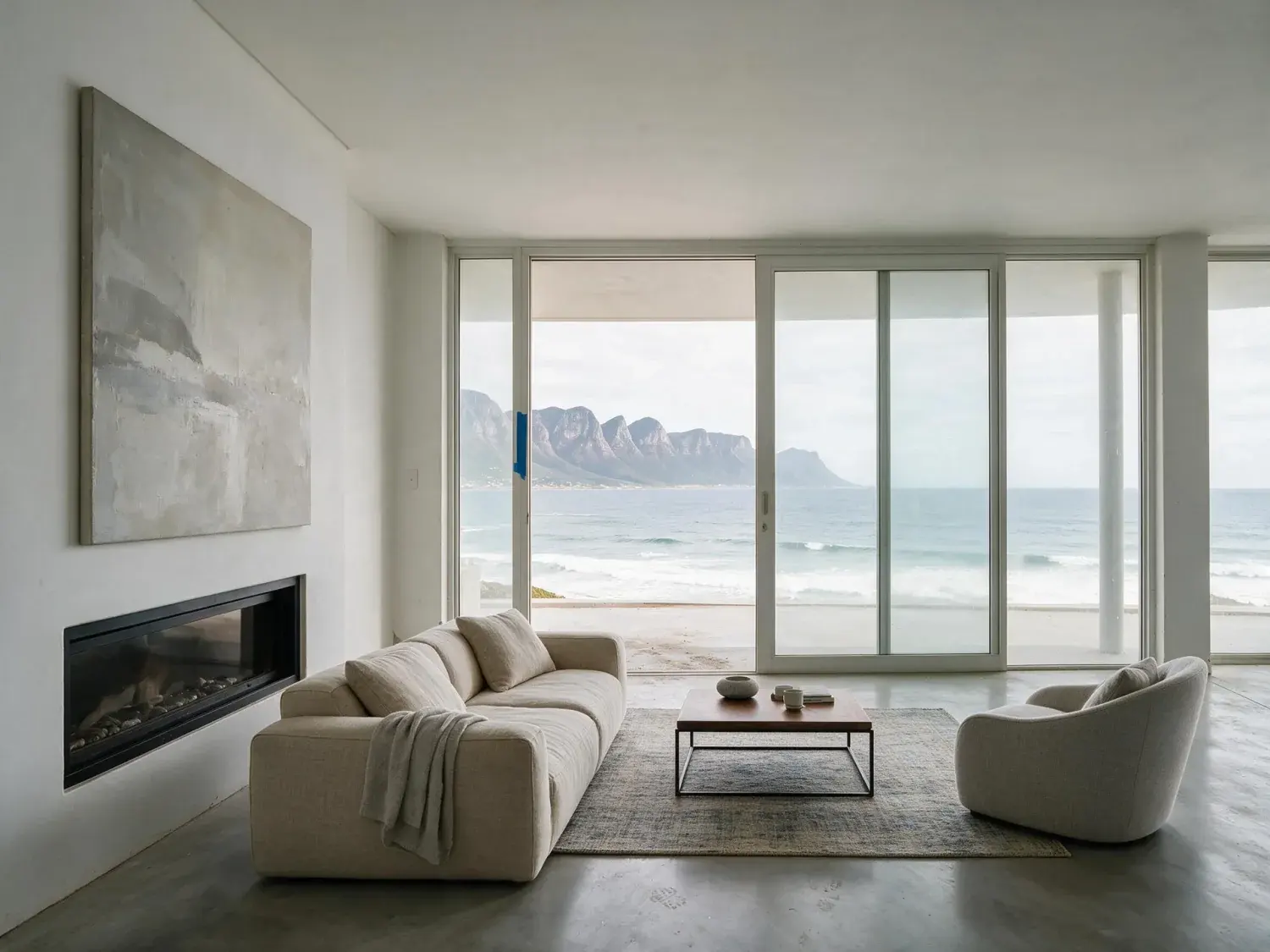
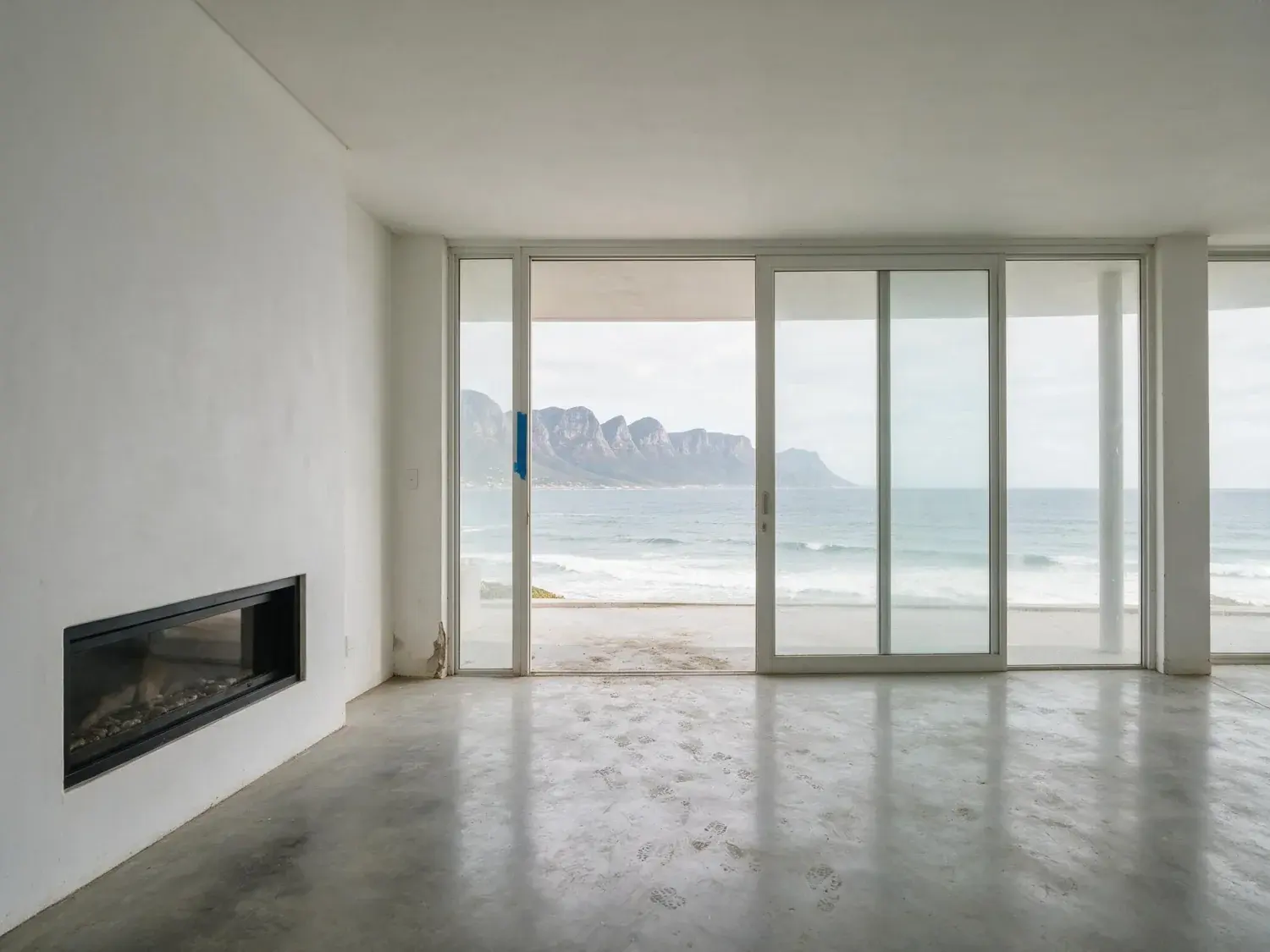
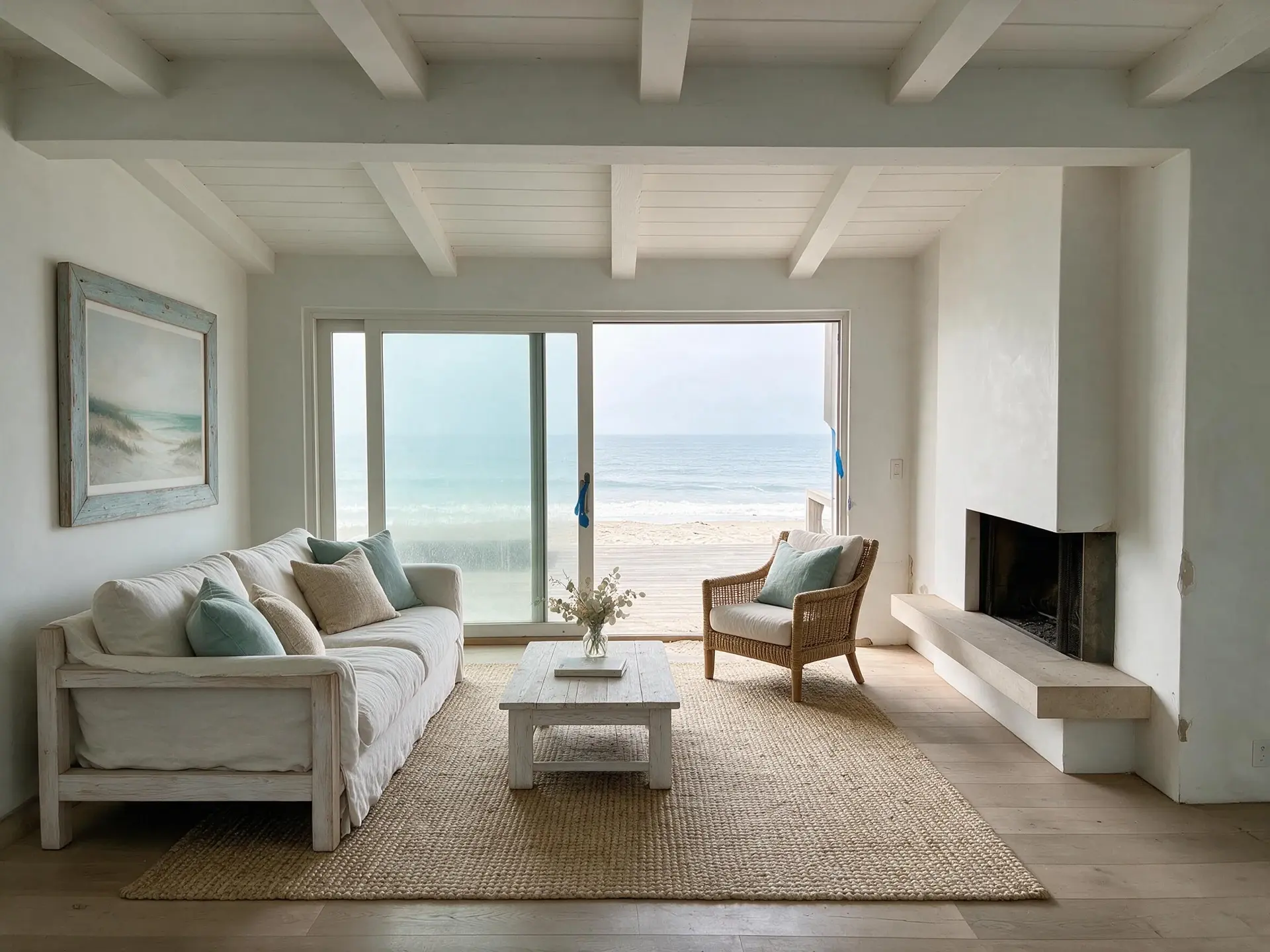
The handover moment is where pre-construction marketing either converts or collapses. The buyer who committed 24 months ago on a floor plan now wants to see their actual unit — with the actual finish package they are paying for — before the deed transfer. Traditional approach: commission the CGI studio for each variation at $800-$3,000 per view per option, wait 1-2 weeks per iteration, revise three times, blow the quarterly closing target. Plotpane approach: the sales team captures the drywalled floor plate on an iPhone, exports a JPEG, and runs Virtual Staging over the same frame three times — Luxury, Scandinavian and Japandi, say, out of the ten built-in styles — at one credit and about two minutes each. What changes between the three is the furnishing and the register, not the materials: the flooring, cabinetry and stone in the shot stay exactly as built, so the buyer sees their unit dressed three ways rather than a promise about finishes.
Real unit geometry captured on a phone — not a regenerated CGI model
Ten staging styles and six room types built in — living, bedroom, dining, kitchen, home office, outdoor
Three staged looks in about six minutes of render time, not weeks of studio back-and-forth
The same style runs across a whole batch — 150 photos at a time on Agency
A JPEG at about 2.4K you upload yourself — sales-centre iPad, Bayut, PropertyGuru, Zillow, Rightmove
06
Shell-unit virtual staging at handover: closing the gap between model and actual inventory
Every pre-construction tower hits the same inventory gap at TCO: the two model units photograph beautifully, but the other 180-380 unsold shell units photograph as drywall and exposed concrete. The off-plan listing goes live on Bayut, PropertyGuru, Rightmove, Zillow or Realtor.ca looking half-finished — and the resale carries the same weak photography for years. Plotpane virtually stages every shell unit from ten built-in styles, so you pick the one nearest the model-unit book and hold it across the tower: Gulf Modern for the warm-cream Dubai register, Scandinavian for the cool grey, European Classic or Luxury for a heritage-leaning Nine Elms phase, Modern for a crisp Yonge/Bloor product, Coastal or Mediterranean for a Miami pre-sale. There is no brand book to upload and no saved palette to teach it — you choose a style and keep choosing it. Consistent with the model-unit book, shipped on the day the elevator opens.
07
Getting the files into the sales-centre iPad and the launch pack
Pre-construction sales happens on the iPad in the Downtown Dubai presentation suite, the Raffles Place showroom, the Related sales gallery in Brickell, the Berkeley pavilion at Nine Elms, the Tridel presentation centre at Yonge. Most developer sales centres run a custom CMS driving the finish-package selector and the amenity walk-through — Spacemaker, Realist, Contentful-based internal tools, or the EMAAR / DAMAC in-house platforms. Plotpane does not connect to any of them. There is no API, no CMS connector and nothing that renders on demand: you get one JPEG per image at about 2.4K, and someone on the team uploads it the way they would a photograph from any camera. Pro and Agency hand the finished listing back as a single ZIP, which is usually how the launch pack gets assembled, and the crops for the WeChat and Instagram teasers the Singapore and Hong Kong buyer agents run happen wherever that work already happens. The print book is the one place to go back to the original capture — 2.4K, or roughly 4.7K for a second credit, is a screen size before it is a press size.
08
NAHB + local municipality pre-construction approvals + HUD marketing rules (the compliance layer)
Pre-construction marketing in the US sits inside a specific regulatory envelope. The National Association of Home Builders (NAHB) treats photographic enhancement — exposure, sky, lawn, virtual staging with disclosure — as standard industry practice. HUD's Interstate Land Sales Full Disclosure Act governs pre-sale marketing of undeveloped lots and requires truthful representation of what exists versus what is promised. Local municipality pre-construction approvals (Miami-Dade's condo association disclosure, New York's Attorney General offering plan, California's Bureau of Real Estate public report) require that rendering-based marketing be labelled as artist's impression or conceptual. Plotpane writes XMP metadata into every enhanced or virtually staged export — the same provenance model the real estate photography industry has used since 2019 — so your compliance team has an audit trail in its own archive for every image that goes on to a portal, a print brochure or a sales-centre screen — the portals re-encode and drop that tag, so on the listing itself the work is done by the optional visible Virtually Staged label you can switch on and by the disclosure line. Dubai's RERA, London's ASA / CAP Code, Singapore's URA, and Toronto's Tarion / HCRA rules track similar disclosure principles, and the XMP layer gives you the same record to point at under each. The artist's-impression labelling those rules require attaches to the rendering studio's output, not to a photograph of a room that exists.
For this region
Local questions, answered
Does this replace our CGI rendering studio for the pre-launch off-plan hero?+
No — not for the pre-ground-break hero where nothing physical exists yet. Your CGI studio still produces the initial master rendering of the tower, the masterplan aerial, and the amenity-floor visualisation. Plotpane picks up in three places, all of them photographic: (1) the show home and marketing suite the week they are finished, (2) the site plate you already have, cleaned up without anything invented into it, and (3) virtual staging on real drywalled unit captures at the structural-completion phase. The two flows sit side by side on a Miami, Dubai or Toronto campaign — the CGI studio for the headline hero, Plotpane for the two hundred photographs of real units the studio would never economically produce.
How is pre-construction photography AI different from post-construction photography enhancement?+
Different phase of the campaign, same seven tools. After TCO the work is Auto Enhance, Perspective Fix, Sky Swap and Day to Dusk on real completed-unit photography for MLS, Bayut, Rightmove and Realtor.ca listings. Before it, the work is Virtual Staging on drywalled shell-unit captures, plus the ordinary corrections on show-home and site frames, for the pre-sales and handover pack. Nothing in either phase renders a building — what changes is which tool you reach for and when.
We are pre-launching a 400-unit tower in Dubai Marina with DAMAC as the developer — how does pricing work?+
There is no enterprise tier and no project fee — Plotpane is a monthly subscription at one credit per image, whichever tool you run. The photographic half of a 400-unit Dubai Marina launch is roughly: the show home and marketing suite, a handful of site frames, 10-15 floor-plate captures staged two or three ways each, and 300-plus shell-unit stagings post-TCO for the unsold inventory. That is about 400 images, comfortably inside one month of Agency at $249 ($199 billed annually), 150 photos to a batch. Credits reset each period and do not roll over, so run the campaign in the month you need it. The same arithmetic applies to EMAAR launches, CapitaLand Singapore projects, Berkeley Group Nine Elms phases, and Tridel or Concord Adex Toronto towers. What Plotpane will not do at any price is produce the CGI.
Does Plotpane handle the Miami / Dubai / Singapore / London / Toronto regulatory disclosure for pre-construction marketing?+
Yes — at the metadata layer. Every enhanced or virtually staged asset exports with XMP provenance metadata flagging the edit and the fact that the room was staged rather than furnished, and an optional visible Virtually Staged label can be switched on for the image face. That satisfies NAHB and HUD disclosure expectations in the US, New York AG offering-plan requirements, Miami-Dade condo disclosure, Dubai's RERA pre-launch advertising rules, Singapore's URA marketing guidelines, London's ASA / CAP Code artist-impression labelling, and Ontario's Tarion / HCRA pre-construction disclosure. The XMP sits inside the file you download, so it is your own dated record for the developer's compliance counsel; Bayut, PropertyGuru, Rightmove and Zillow all re-encode on upload and strip it, which is why the visible label and the listing's own disclosure line are what carry on the portal.
Can the sales-center iPad CMS pull live variations, or do we need a pre-baked CGI library?+
Pre-baked, always. Plotpane has no API and nothing renders on demand, so the flow is: stage the set in advance, download it — a ZIP on Pro and Agency — hand the ~2.4K JPEGs to whoever loads the sales-centre CMS, and let the iPad selector drive a static gallery. Developers running high-mix configurable inventory (Berkeley Group's bespoke Nine Elms penthouses, CapitaLand's premium Singapore product, Fortune International's Miami penthouses) will still need the CGI studio for on-the-fly variation; what Plotpane covers is the photographic set of the real units, staged as many ways as you have credits for.
What about the overseas-buyer channel — WeChat, WhatsApp, Telegram, the Dubai-to-Mumbai and Miami-to-São Paulo flows?+
Same set of images; the sizing stays with you. Plotpane returns one JPEG per image at about 2.4K with XMP metadata written in, and the 1080x1350 vertical for the Instagram and WeChat teasers, the 1080x1080 square for WhatsApp status and Telegram broadcasts, and the 1920x1080 landscape for the YouTube short and the LinkedIn post the Singapore buyer agents run all crop out of that master wherever you already do that work. The Dubai-to-Mumbai off-plan channel, the Miami-to-São Paulo and Miami-to-Buenos Aires Brickell flow, the Singapore-to-Jakarta and Singapore-to-KL feeder markets, and the London Nine Elms to Hong Kong / Shanghai buyer delegations all run on the same asset set. One master per image, five distribution channels.
Pricing
One credit per image. Every tool, every plan.
Three plans. Every tool unlocked on all of them. Every render unmarked, standard or high resolution, cancel anytime.
Every plan starts with 3 free renders. No card until you subscribe.
Starter
For the solo agent shooting their own listings.
$39/month
billed yearly
100 credits monthly
100 images per month — 1 credit each, whichever tool you use
No Plotpane mark on any render
Every tool, no tier gating
Standard output ~2.4K, or ~4.7K for a second credit
XMP disclosure metadata written into every export
Download a finished listing as a ZIP
Free vertical listing reel from your finished photos
Cinematic clips from a single photo — 1 credit per second of video
That is the whole pricing model. No per-tool rates, no seat maths, nothing to negotiate. We are not SOC 2 certified and there is no SSO, private deployment or API — if you need those to buy, better you know now than after a call.
Starter
4
listings a month
Pro
8
listings a month
Agency
24
listings a month
Questions
The usual questions, answered directly.
No. Midjourney and DALL-E invent scenes from text prompts — beautiful for art, disqualifying for a listing. Plotpane is a structure-preserving pipeline: your room geometry, windows, and floor plan stay exact. We stage, re-light, swap skies, declutter, and enhance your actual photo. No hallucinated architecture, no invented rooms.
BoxBrownie and Styldod are human-edit services: you upload, a retoucher works overnight, you get a result in 24–48 hours at $2–$32 per image per treatment. They also sell things we do not have at all — floor plans, renderings, item removal by a person who can ask you what you meant. Plotpane is one machine pass: you pick one of seven tools, and the image comes back in about two minutes for one credit, whichever tool you picked, on a flat monthly subscription. Stacking two treatments on one photo means running it twice.
Yes, when disclosed. NAR guidelines, California AB 723, and REBNY Rule 3.3 all allow virtually staged photos provided the listing discloses them. Every Plotpane export embeds invisible XMP disclosure metadata so the staging record travels with the file. You still handle the listing-remarks disclosure in your MLS portal — that's the part only you can do.
Every render is sent with a preserve list as well as an instruction. It names one operation and forbids the rest: do not touch windows, doors, walls, ceilings, floors, cabinetry or fixtures unless the instruction names them; do not remove or conceal a defect, stain or crack; do not change what is visible through glass, and never invent a view. Furniture is added to empty rooms; named objects are removed from furnished ones; sky and light are re-graded. If you do see something invented, that is a bug — report the render in the app and the credit comes back.
Yes — one click in the Stripe billing portal from your dashboard. Billing stops immediately, remaining credits stay usable through the end of the billing period, and there's no cancellation fee.
Yes — any AI-generated or AI-modified image is considered an edit requiring disclosure under NAR's standards. That's why every Plotpane export writes invisible XMP disclosure metadata by default. The flag is machine-readable by MLS tooling and survives Lightroom round-trips. You still add the disclosure line to your listing remarks; we make sure the image itself is self-describing.
The toolkit
Seven tools. One credit each.
Every one is a single structure-preserving pass: it changes what you asked for and leaves the building alone.