Plotpane · Australia · realestate.com.au and Domain campaigns
Australia · realestate.com.au and Domain campaigns
Real estate photography rates in Australia, line by line
Nobody in Australia publishes a defensible national rate for real estate photography, and most of the figures that circulate are one photographer's package in one suburb. What can be described honestly is the structure: what a quote is built from, which lines are genuinely add-ons, where GST lands, who actually pays, and what turnaround an auction calendar demands. This page does that first, for whichever side of the invoice you are on. Then it separates the shoot from the edit and puts a checkable number on the editing half — Plotpane is $49 a month for 100 images, one credit per render, whichever of the seven tools you run.
Australia has no MLS and no listing co-op. Marketing is vendor-paid: the seller signs an agency agreement with a marketing schedule attached, and every line on it — portal depth listing, photography, floorplan, copywriting, signboard, brochures — is money the vendor puts up before the property sells. Photography is rarely the biggest line. A depth product like realestate.com.au Premiere or Domain Platinum usually dominates the schedule, which is why a vendor trimming the budget reaches for the photographer's fee before the portal's. In practice the photographer invoices the agency and the agency recovers it through the schedule, so the repeat buyer and the payer are two different people with two different sensitivities. Say on the quote whether your figure is ex-GST or inc-GST; agencies are GST-registered businesses and expect ex-GST, vendors read the schedule as a consumer and see the inc-GST number. Campaign shape changes the deadline more than the price: auction is dominant in Sydney, Melbourne and Canberra with a three to four week run and a midweek portal launch before the first Saturday open, while Brisbane, Perth and Adelaide skew private treaty, where the calendar is looser but the launch still wants the photos on day one.
02
What is in the shoot fee, and what is genuinely an add-on
The base fee tracks the property and the deliverable frame count, not the asking price. A two-bedroom unit with eight usable frames is not the same job as a five-bedroom on a large block with a pool, a studio out the back and three exterior aspects that each need their own light. Time on site and travel beyond the metro area are the two variables that move it most. Everything else should be a named line the vendor can drop: twilight, which is a second visit for a window of twenty or thirty minutes after sunset; drone, which carries its own regulatory cost; a measured floorplan; video and vertical cuts for social; and a rush or next-morning turnaround. Licensing belongs on the invoice too, because the images are normally licensed for the marketing of that campaign — when the property relists with a different agency a year later, that is a new licence, and "can another agency use those photos" is one of the most common questions Australian photographers get asked after the fact. Define what counts as a reshoot at your cost versus theirs before anyone needs the answer.
03
The two add-ons that carry their own rules: drone and twilight
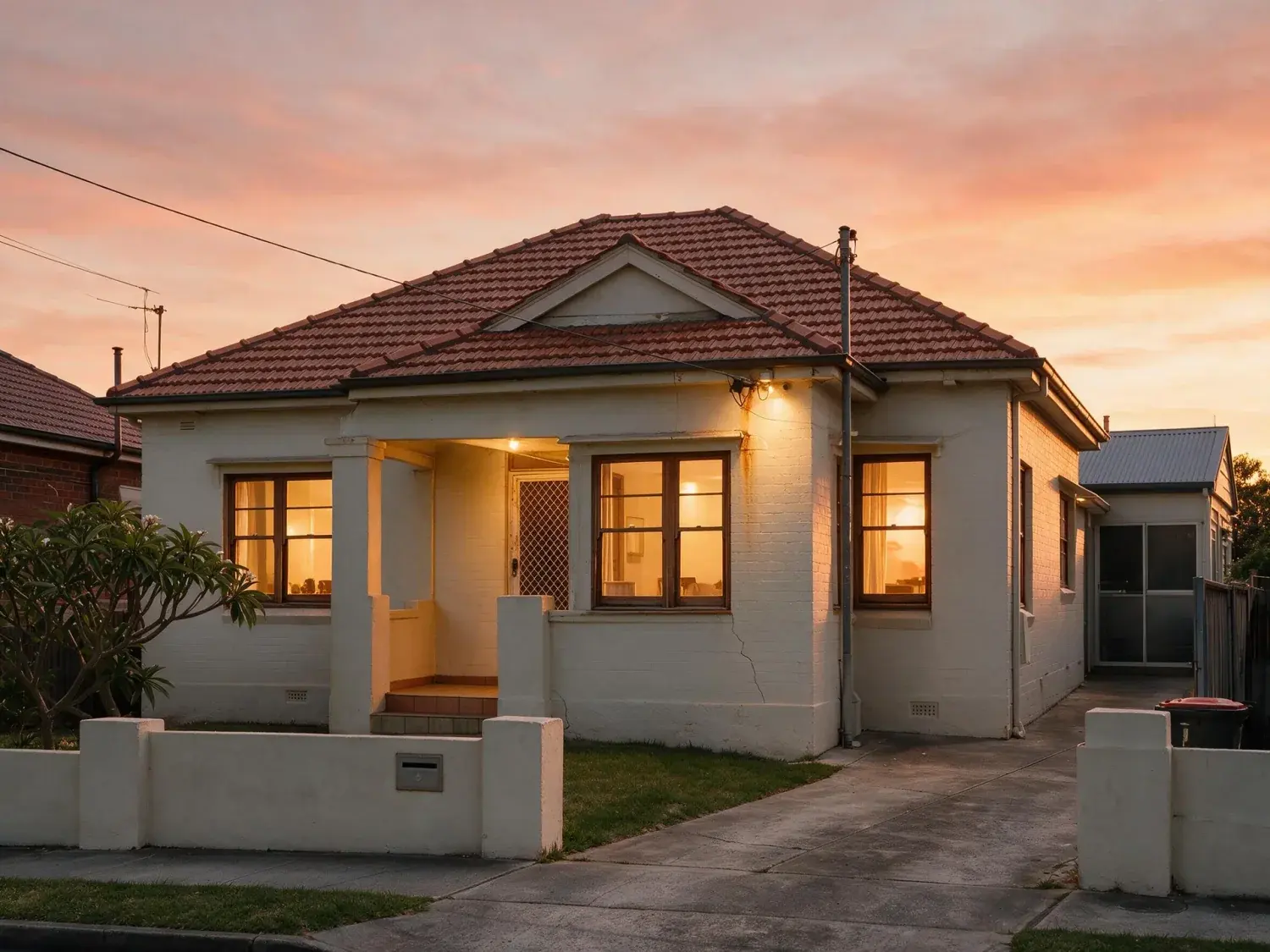
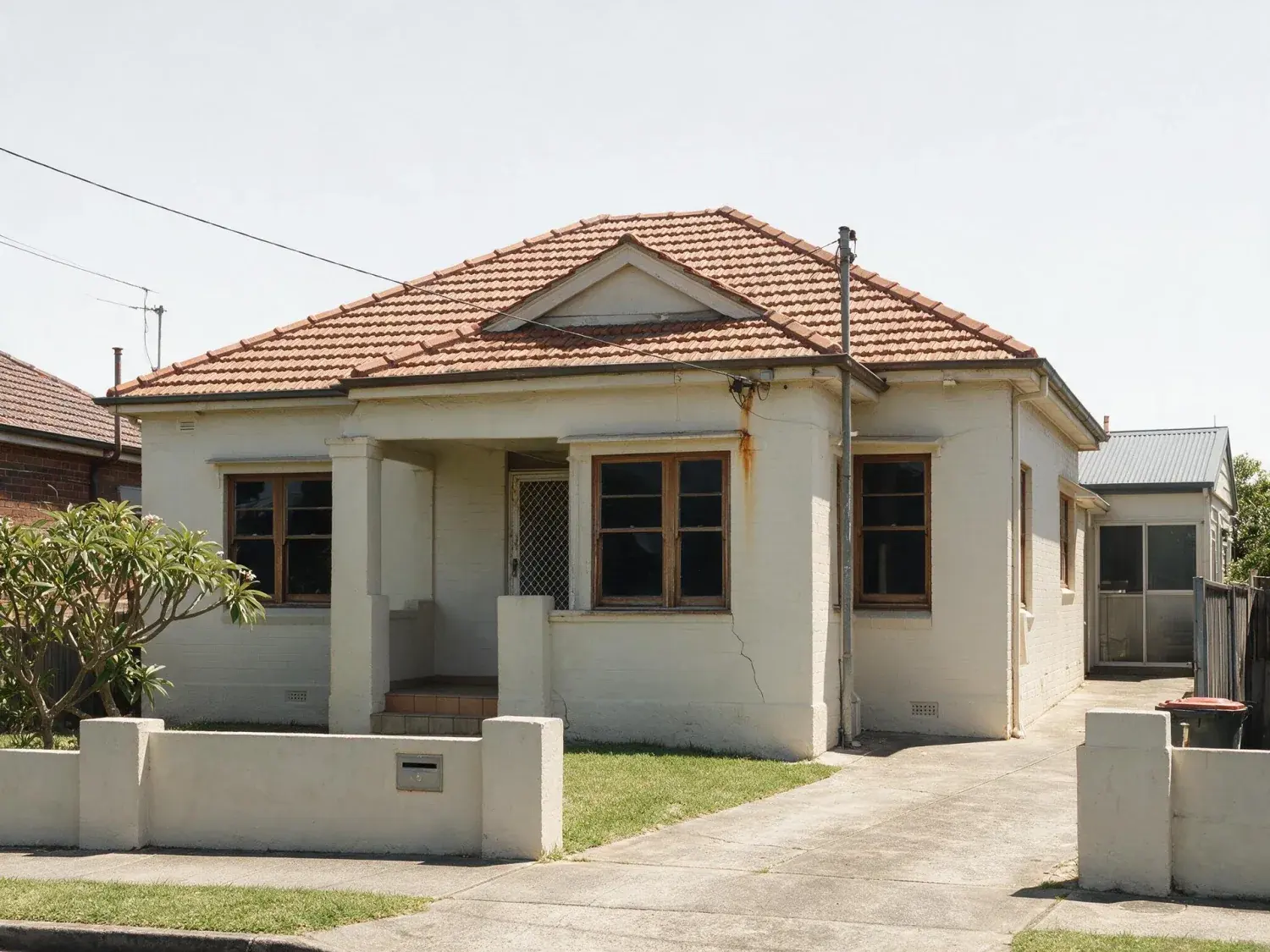
Drone is a separate line because it sits on a separate legal footing. Flying in connection with a business in Australia means registering the aircraft with CASA, holding an operator accreditation and notifying CASA before your first commercial flight. Sub-2kg work can be flown in the excluded category without a remote pilot licence, but only inside the standard operating conditions: daylight, visual line of sight, below 120 metres, at least 30 metres from anyone not involved, one aircraft at a time, not over a populous area. Tight inner-city frontages are where those conditions bite. Read CASA's own current guidance, not a summary in an article, this one included. Twilight is a separate line for a duller reason: it is a second visit inside a window of twenty or thirty minutes, with the vendor switching lamps on room by room. Day to Dusk is what you have instead when that trip never happened — the North Bondi semi shot at one in the afternoon, sky bleached out, every window mirroring it. It converts the exterior to golden or blue hour, warms the interior window light to about 2700K, and switches on exterior fittings already visible. It will not add a light that is not there, move the camera, or add or remove a structure or plant.
04
The editing half, priced against what Plotpane actually charges
Plotpane is a metered subscription rather than a per-image retouching desk, so the editing line becomes a fixed monthly number you can divide out. Starter is $49 a month for 100 images, about 49 cents an image. Pro is $99 for 220, about 45 cents. Agency is $249 for 600, about 41 cents. Billed annually those are $39, $79 and $199 a month, roughly 39 cents, 36 cents and 33 cents an image. Prices are in US dollars, so an Australian card pays the AUD equivalent on the day plus whatever the issuer adds for a foreign transaction. Every render costs exactly one credit whichever of the seven tools you run, so an exposure correction and a sky replacement cost the same. Two operations on one frame is two credits: a sky swap and then a perspective correction on the same facade is two renders. Subscription credits reset at the start of each billing period and do not roll over, and there is no top-up to buy, so size the plan against a normal month rather than your quietest one.
Starter $49/100 images (~49c each), Pro $99/220 (~45c), Agency $249/600 (~41c) — US dollars
Annual billing: $39, $79 and $199 a month — about 98c, 66c and 50c an image
1 credit per render on any of the seven tools; two operations on one frame is two credits
Credits reset each billing period and do not roll over; no top-ups
Batch 10 photos at once on Starter, 50 on Pro, 150 on Agency; ZIP download on Pro and Agency
05
Files, portals, and the midweek launch
Almost nothing reaches realestate.com.au or Domain by hand. The agency loads the shoot into its CRM — Agentbox, VaultRE, Box+Dice, Rex, MyDesktop, Console — and the listing goes out over a REAXML feed, so what you deliver is a folder that somebody's admin uploads in order. Name and sequence the files, because the first image becomes the search thumbnail and nobody reorders twenty frames at 4pm on launch day. Both portals re-encode and resize for their own galleries and the gallery frame is landscape, so send the largest clean JPEG you have, keep portrait frames for the floorplan and the brochure, and check the portal's current upload spec in its own help centre rather than in an article. Plotpane accepts JPEG, PNG, WebP, HEIC and camera raw, though a raw is not developed — it reads the full-size JPEG the camera already wrote inside the file. A bracketed merge still happens in Lightroom, Photomatix or Aurora, because Plotpane takes one frame per render, and it picks up the exported JPEG afterwards. Output is a JPEG at quality 92 at about 2.4K, or roughly 4.7K if you spend a second credit on the upscale — that is the only export, so the designer laying out the window card gets the same file the portal does. Each render takes about two minutes, measured.
06
Disclosure here is the ACL, not a board rule
There is no Australian equivalent of a US listing board telling you to caption a staged photo. What applies instead is the Australian Consumer Law, Schedule 2 of the Competition and Consumer Act 2010 — section 18 on misleading or deceptive conduct and section 30 on false or misleading representations about the sale of land — enforced by the ACCC and the state regulators: NSW Fair Trading, Consumer Affairs Victoria, the Queensland Office of Fair Trading and their counterparts. The workable convention is a plain caption on the image and a line in the copy saying it is digitally furnished or virtually styled. Plotpane writes an XMP packet into every export naming the operation, the engine and the timestamp, and there is an optional visible "Virtually Staged" label you can switch on per render. The judgement stays with you. Clutter Removal removes exactly what you name, and what you name can be a condition rather than clutter — the rust stain below the gutter bracket, the crack through the render beside the porch. It will do it if you ask. The metadata records that something was removed. It does not record that removing it was appropriate.
No shoot, no travel, no site access — Plotpane edits a photo that already exists
No drone flying and no CASA accreditation; that line stays on the photographer's invoice
No floorplans, no Matterport scans, no video
No API, no CRM or DAM connector, no team seats, no brand presets, no white-label
Agency's 600 images a month is one login, not four seats
For this region
Local questions, answered
How much does real estate photography cost in Australia?+
There is no honest national number, and the ones quoted online are usually a single studio's package page. Price it from the structure instead. The base fee follows the property and the number of usable frames, not the asking price, and moves most with time on site and travel beyond the metro. Twilight, drone, a measured floorplan, video and a rush turnaround are separate lines that are separately dropped when the vendor trims the marketing schedule. GST is 10 per cent on top if the photographer is registered, and whether the quote shows it changes the number by that much before anything else does. The useful move is to brief three local photographers identically — same address, same frame count, same deliverables, same deadline — and compare the quotes line by line. Anything that only shows a total is hiding which line you are actually paying for.
How much do real estate agents pay for photography?+
Usually nothing out of their own pocket. In Australia marketing is vendor-paid: the agent presents a marketing schedule with the agency agreement, the vendor funds it up front, and the agency pays the photographer and recovers the cost through that schedule. So the agent is the repeat buyer and the vendor is the payer, which is why fee pressure arrives second-hand — a vendor trims the budget, and the agent asks the photographer to hold a rate on a job the agent is not personally funding. Photography also sits next to a portal depth-listing line on the same page that is often several times larger, which is a useful thing to know when you are being compared. Property management shoots run on a different economics again: fewer frames, no twilight, and either the landlord or the agency absorbs it.
How much are real estate photos, per image?+
Per-image pricing is normal for editing and unusual for shooting. Photographers mostly quote a shoot fee with a deliverable frame count, because the cost is the time the property takes, not the number of files that come off the card. Editing is where per-image genuinely applies: an outsourced desk quotes per image with an overnight human turnaround, and a metered tool quotes per render. On Plotpane every render is one credit whichever tool you use, which works out at about 49 cents an image on Starter, 45 cents on Pro and 41 cents on Agency, or roughly 39, 36 and 33 cents on annual billing. Two operations on the same photo — straighten the verticals, then swap the sky — is two credits, so budget by operations rather than by photographs.
How much should I charge for real estate photography?+
Work up from your own floor before you look at anyone else's rate card. Gear and its replacement cycle, public liability cover — agencies and strata managers do ask for a certificate of currency — vehicle and travel, drone registration and accreditation if you fly, and your editing tooling. Add GST once you cross the ATO's $75,000 turnover threshold and quote ex-GST to agencies, who claim it back. Then price the time the property takes rather than the frame count, because the frames are the cheap part and the hour spent waiting for a tenant to open a bedroom is not. Keep twilight, drone, floorplan and video as named add-ons so a vendor trimming the schedule drops a deliverable instead of negotiating your base fee down. If the edit runs on a subscription, your marginal cost for one more frame is a known number, so "can you add four from the deck" becomes a scheduling question rather than a pricing one.
Do I need a drone licence for real estate photography in Australia?+
Flying for a business means registering the drone with CASA and holding an operator accreditation, and notifying CASA before your first commercial flight, even if you never need a licence beyond that. Sub-2kg work can be flown in the excluded category without a remote pilot licence provided you stay inside the standard operating conditions — daylight, visual line of sight, below 120 metres, at least 30 metres from anyone not involved, one aircraft at a time, and not over a populous area. Tight inner-city frontages are where those conditions actually bite. Step outside them, or fly heavier equipment, and you need a remote pilot licence and to operate under an operator's certificate. Treat this as a pointer to CASA's own current guidance rather than as advice. Plotpane does not fly and does not change any of it.
How long do real estate photos take to come back?+
The campaign sets the deadline, not the photographer. An auction campaign in Sydney or Melbourne wants the shoot early in week one and the listing live on the portals midweek so the first Saturday open has a live link behind it, which in practice means images back within 24 to 48 hours of the shoot. That is why rush turnaround is a real, chargeable line. If you are running the edit yourself, Plotpane takes about two minutes per render, measured — so a 24-frame set is an errand rather than an instant, and batching matters. Starter runs 10 photos at once, Pro 50 and Agency 150, and Pro and Agency can pull a finished set down as a ZIP.
What does the editing half cost if I run it through Plotpane?+
Every render is exactly one credit, whichever of the seven tools you use — Auto Enhance, Perspective Fix, Sky Swap, Lawn & Pool Revive, Clutter Removal, Day to Dusk or Virtual Staging. Starter is $49 a month for 100 credits, Pro $99 for 220, Agency $249 for 600; annually those are $39, $79 and $199 a month. Prices are in US dollars, so an Australian card also wears the conversion. Subscription credits reset at the start of each billing period and do not roll over, and there is no top-up to buy, so pick the tier that fits a normal month rather than a quiet one. Batch ceilings are 10, 50 and 150 photos at once, with ZIP download on Pro and Agency. What it does not replace is the shoot, the drone, the floorplan or the video.
Pricing
One credit per image. Every tool, every plan.
Three plans. Every tool unlocked on all of them. Every render unmarked, standard or high resolution, cancel anytime.
Every plan starts with 3 free renders. No card until you subscribe.
Starter
For the solo agent shooting their own listings.
$39/month
billed yearly
100 credits monthly
100 images per month — 1 credit each, whichever tool you use
No Plotpane mark on any render
Every tool, no tier gating
Standard output ~2.4K, or ~4.7K for a second credit
XMP disclosure metadata written into every export
Download a finished listing as a ZIP
Free vertical listing reel from your finished photos
Cinematic clips from a single photo — 1 credit per second of video
That is the whole pricing model. No per-tool rates, no seat maths, nothing to negotiate. We are not SOC 2 certified and there is no SSO, private deployment or API — if you need those to buy, better you know now than after a call.
Starter
4
listings a month
Pro
8
listings a month
Agency
24
listings a month
Questions
The usual questions, answered directly.
No. Midjourney and DALL-E invent scenes from text prompts — beautiful for art, disqualifying for a listing. Plotpane is a structure-preserving pipeline: your room geometry, windows, and floor plan stay exact. We stage, re-light, swap skies, declutter, and enhance your actual photo. No hallucinated architecture, no invented rooms.
BoxBrownie and Styldod are human-edit services: you upload, a retoucher works overnight, you get a result in 24–48 hours at $2–$32 per image per treatment. They also sell things we do not have at all — floor plans, renderings, item removal by a person who can ask you what you meant. Plotpane is one machine pass: you pick one of seven tools, and the image comes back in about two minutes for one credit, whichever tool you picked, on a flat monthly subscription. Stacking two treatments on one photo means running it twice.
Yes, when disclosed. NAR guidelines, California AB 723, and REBNY Rule 3.3 all allow virtually staged photos provided the listing discloses them. Every Plotpane export embeds invisible XMP disclosure metadata so the staging record travels with the file. You still handle the listing-remarks disclosure in your MLS portal — that's the part only you can do.
Every render is sent with a preserve list as well as an instruction. It names one operation and forbids the rest: do not touch windows, doors, walls, ceilings, floors, cabinetry or fixtures unless the instruction names them; do not remove or conceal a defect, stain or crack; do not change what is visible through glass, and never invent a view. Furniture is added to empty rooms; named objects are removed from furnished ones; sky and light are re-graded. If you do see something invented, that is a bug — report the render in the app and the credit comes back.
Yes — one click in the Stripe billing portal from your dashboard. Billing stops immediately, remaining credits stay usable through the end of the billing period, and there's no cancellation fee.
Yes — any AI-generated or AI-modified image is considered an edit requiring disclosure under NAR's standards. That's why every Plotpane export writes invisible XMP disclosure metadata by default. The flag is machine-readable by MLS tooling and survives Lightroom round-trips. You still add the disclosure line to your listing remarks; we make sure the image itself is self-describing.
The toolkit
Seven tools. One credit each.
Every one is a single structure-preserving pass: it changes what you asked for and leaves the building alone.