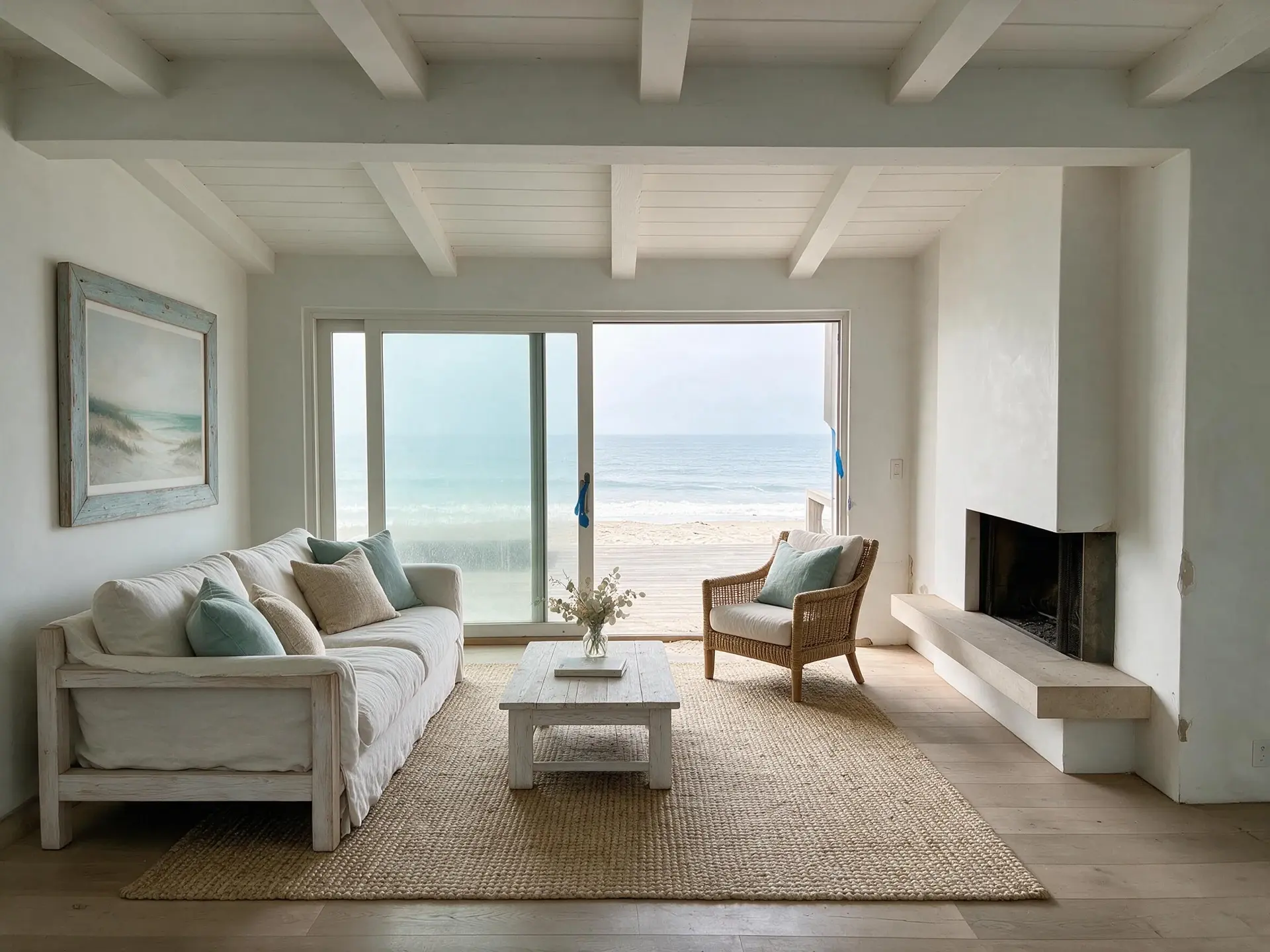
Real estate photography in Dubai is bought by the visit, not by the frame. You book a photographer for a villa in Emirates Hills or a one-bed in Downtown, they shoot the unit in one pass, and you get a set of JPEGs back. What the fee does not cover is the frame you needed and did not get: the twilight elevation, the reshoot after the tenant moved their drying rack, the exterior on a day the shamal was not sitting on the sky. PlotPane does not replace the photographer. It edits the frames you already have — Auto Enhance, Perspective Fix, Sky Swap, Clutter Removal, Day to Dusk, Lawn & Pool Revive, Virtual Staging — at one credit per image, about two minutes per render, exported as a JPEG at quality 92, about 2.4K, with no watermark and an XMP disclosure record written into the file.
What a Dubai villa or apartment shoot actually covers
A villa brief in Emirates Hills, Jumeirah Islands, Arabian Ranches or on a Palm frond runs the front elevation from the motor court, the majlis, the living and dining rooms, the kitchen, every bedroom, the garden and the pool. An apartment brief in Downtown, Marina, Business Bay or JVC runs the living area, the kitchen, each bedroom, a bathroom, the balcony and the view from it. The deliverable is a set of JPEGs sized for a portal gallery: Bayut's agent-portal guidance asks for ten high-quality photos in a logical order, and Property Finder scores completeness through its Listing Quality Score, so the count in the brief is usually written backwards from that. Bayut's own photography guide is the standard most Dubai shooters work to — tripod rather than handheld, camera at three to four feet, natural light, no flash, and the property photographed at its cleanest. Aerial frames are a separate booking with a DCAA-permitted operator. Floor plans, video and 360 tours are quoted separately again. None of that is something an editing tool substitutes for.
Villa: motor-court elevation, majlis, living, dining, kitchen, bedrooms, garden, pool
Apartment: living area, kitchen, bedrooms, bathroom, balcony and the view
Aerial, floor plans, video and 360 tours are separate bookings
02
Why the reshoot is the expensive part
Everything that goes wrong on a Dubai shoot goes wrong on the day, and the fix is a second visit. Twilight is the clearest case: the usable window on a villa elevation is the twenty-odd minutes after sunset, and a photographer who spent the afternoon covering seven interiors is not still on site at 18:40 unless the return was booked and paid for. Tenanted units are the second case — you shot around the drying rack and the delivery boxes because the tenant was home and the viewing was in an hour. Handover units are the third: protective film still taped to the floor, builder's dust across the travertine, a ladder against the TV wall. Then there is weather, which nobody reshoots for. Shamal season leaves the sky a flat beige with no gradient in it and the render on a facade reading grey rather than white. By late August the paspalum lawn is straw with bare sandy scars through it and the pool has gone cloudy green between services. Each of those is one frame, and one frame is a second booking and a listing sitting unpublished while you wait for it.
03
Trakheesi, Madmoun, and what a Dubai property ad has to carry
Every property advertisement in Dubai carries a Trakheesi permit number issued through the Dubai Land Department's Trakheesi system and supervised by RERA. That is not only the portal listing — the permit requirement covers Instagram and other social posts, WhatsApp broadcasts, print, billboards, open houses and launch events. Since 2024 a Madmoun QR code sits alongside the permit number so the listing can be verified from the ad itself, and the portals check the permit before a unit goes live. The permit is tied to a signed Form A between owner and broker, and the practical consequence for photography is simple: the images have to be of the unit named in the permit. Dubai does not publish a rule that names virtual staging specifically; the operative standard is that the advertisement must not mislead. So the working practice is to label it. PlotPane writes an XMP disclosure packet into every export recording the operation, the engine and a timestamp, and offers an optional visible "Virtually Staged" label per render. What it does not do is touch compliance: it does not issue permits, does not talk to Trakheesi, and does not know your permit number.
Trakheesi permit number required on every ad, social posts and WhatsApp included
Madmoun QR verifies the listing from the advertisement itself
XMP disclosure in every export; visible "Virtually Staged" label optional per render
04
Bayut, Property Finder and Dubizzle: what the file has to be
The three portals that matter take an ordinary web JPEG and re-encode it, so the thing that gets a listing rejected is rarely resolution. Property Finder's listing-quality guidance puts the floor at 800×600 pixels with a width-to-height ratio between 1.3 and 1.8, which any landscape frame off a phone clears several times over. Bayut does not permit agency names or logos burned into listing images as watermarks — it provides its own watermarking through Agency Tools instead — so an editor's stamp in the corner is a real reason to have a photo pulled. PlotPane exports a JPEG at quality 92 at about 2.4K, with no watermark of any kind on any paid plan. Input is a JPEG, PNG, WebP or HEIC, so an iPhone frame goes in straight off the phone. It takes camera raw as well — DNG, CR3, NEF, ARW and the rest — though the raw is not developed: PlotPane reads the full-size JPEG the camera already wrote inside the file, so what you get is the camera's rendering, not highlight recovery from the sensor data. The file that comes back is a JPEG too — that is the only export, because it is the format the portals ingest. Batches run ten photos at once on Starter, fifty on Pro, a hundred and fifty on Agency, with ZIP download on Pro and Agency.
Property Finder guidance: 800×600 minimum, 1.3–1.8 aspect ratio
Bayut: no agency name or logo watermarked into the image
In: JPEG, PNG, WebP, HEIC and camera raw — raw read as the camera's embedded JPEG, not developed. Out: JPEG at quality 92, about 2.4K, no watermark
05
The Dubai frames that come back wrong, and which tool fixes each
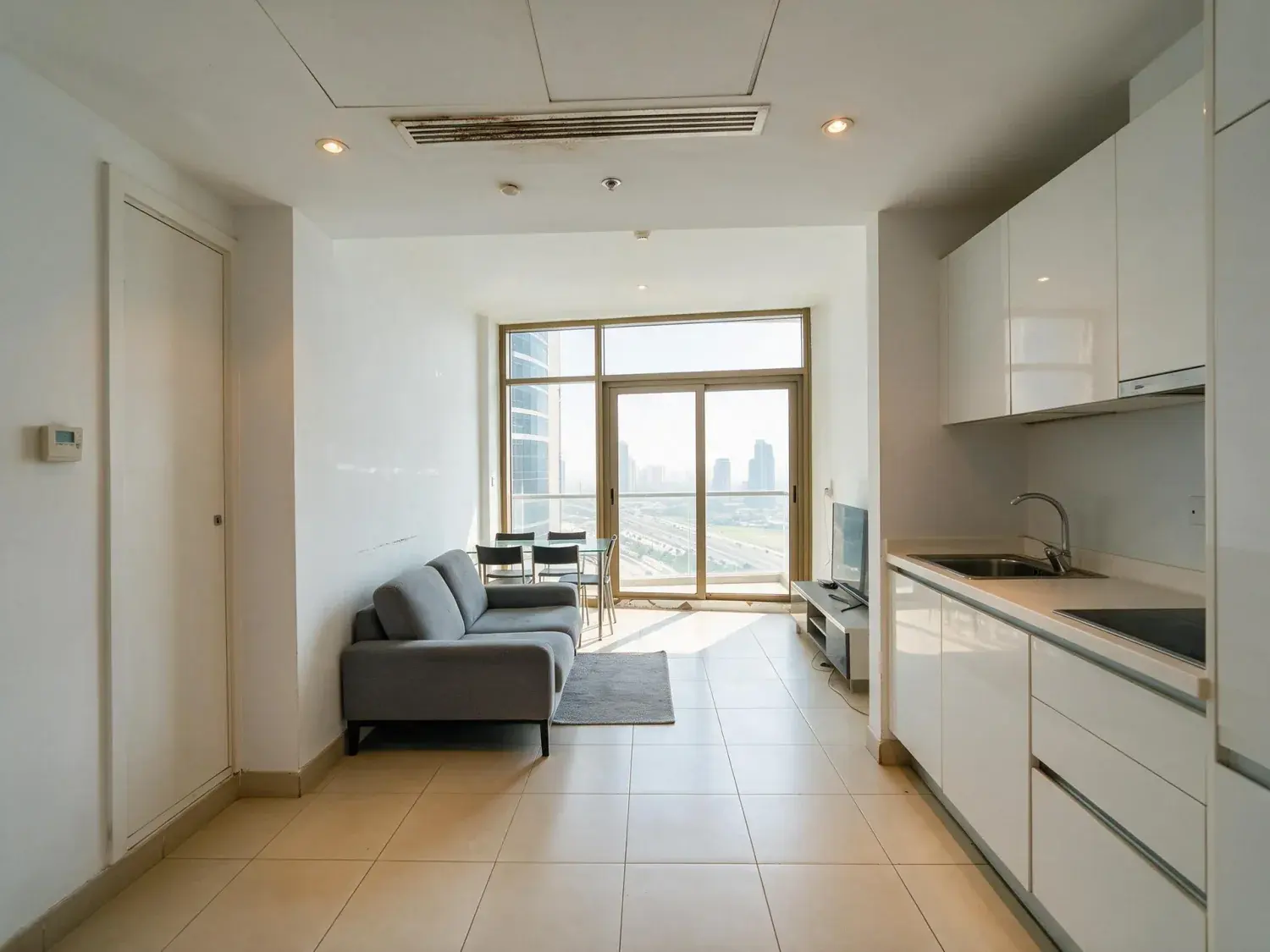
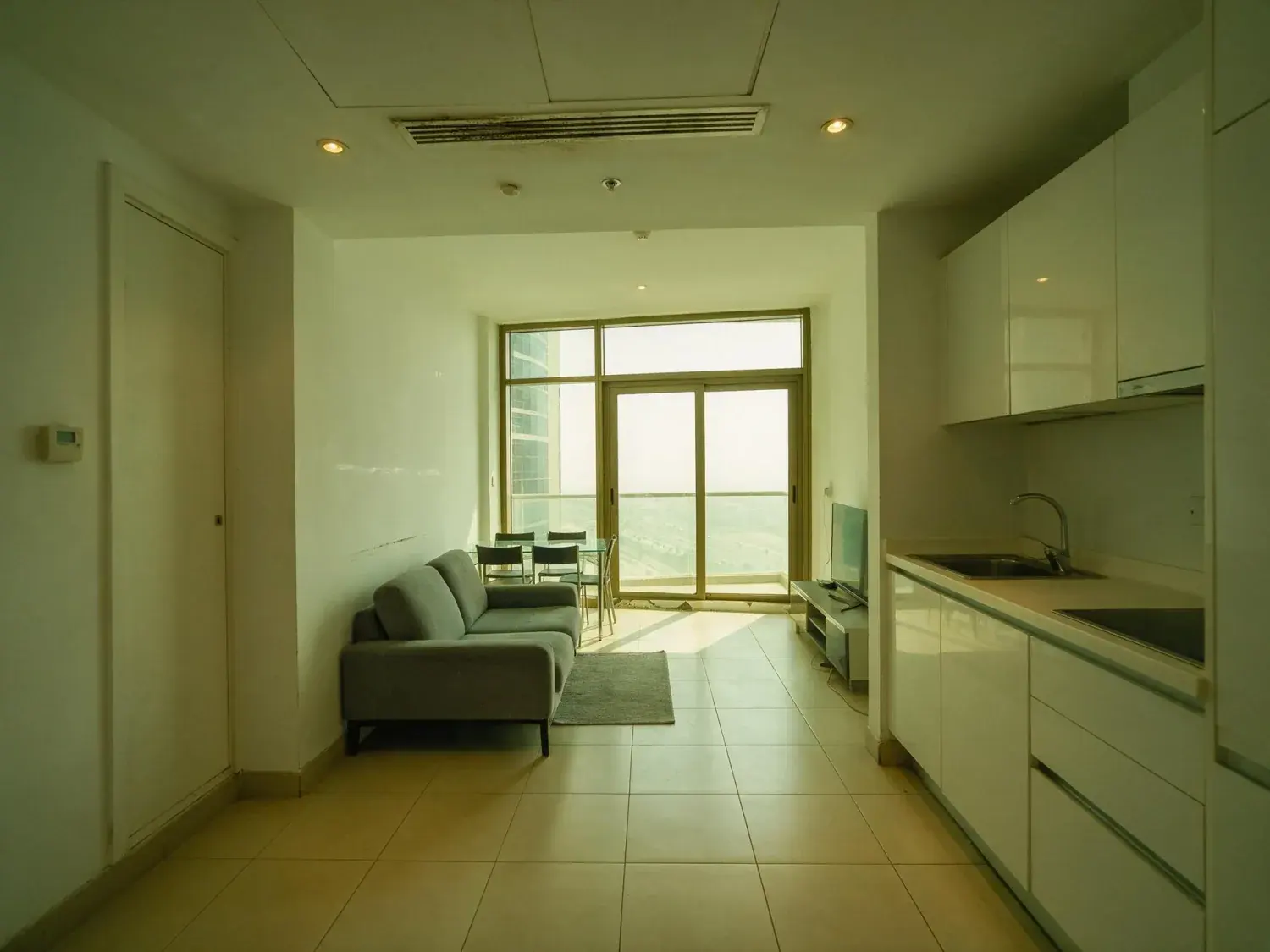
A Downtown or Marina one-bed shot from the entrance hall towards floor-to-ceiling glazing comes back exposed for the window: the room several stops under, the glass burned to flat white, 3000K downlights fighting daylight into a green-orange cast. Auto Enhance corrects exposure and colour and recovers what is already visible through the glass — it will not invent a Burj view that was not in the frame. A tower flat photographed handheld with the phone tilted up to fit the ceiling cove leaves every mullion and door frame leaning inward; Perspective Fix squares the verticals, crops minimally and changes nothing else. A Saadiyat or Emirates Hills elevation shot during a shamal loses the sky to flat beige; Sky Swap replaces only the sky region and matches the light on the facade, adding no skyline or landmark. A Palm Jumeirah garden in late August gets Lawn & Pool Revive, working inside the existing lawn and pool boundaries. A tenanted apartment gets Clutter Removal, where you name the drying rack, the boxes and the scooter — anything you do not name stays. A 2pm villa elevation gets Day to Dusk. An empty handover gets Virtual Staging, with Gulf Modern among the ten styles. One credit each, about two minutes each.
06
What PlotPane will not do
It is not a photographer and does not pretend to be one. It will not recompose a badly framed shot, move the camera, widen a room, change the lens, or add a room that is not there. It will not invent scenery through a window — the only exception is Day to Dusk, where lighting the windows from within is the operation you asked for. It will not conceal a defect: the hairline crack at the wall corner, the rust streak running down the render from an AC bracket, the water stain below the split unit all survive the edit, because hiding them is what turns a marketing image into a misrepresentation. One render is one image and one tool, so straightening a frame and then taking it to dusk is two credits and two waits. There is no API, no CRM or portal integration, no team seats, no shared brand presets, no priority queue and no white-label — the upload to Bayut, Property Finder or Dubizzle is still yours to do. Subscription credits reset each period and do not roll over, and there is no top-up to buy mid-month. Starter is $49 for 100 credits, Pro $99 for 220, Agency $249 for 600, less on annual.
No API, no portal or CRM integration, no team seats, no brand presets
Defects stay visible — the tool does not retouch damage away
Subscription credits reset each period; they do not roll over
For this region
Local questions, answered
How do I edit real estate photos?+
Work in a fixed order, because each pass constrains the next. Straighten first — leaning verticals are the most visible phone-shot tell, and correcting them crops the frame slightly, so do it before you judge composition. Correct exposure and white balance second, which on a Dubai tower flat means recovering the blown window and neutralising 3000K downlights against daylight. Replace the sky third, if the haze cost you one. Remove clutter fourth, naming what goes. Take the exterior to twilight last, because a dusk conversion assumes the daylight frame underneath it is already correct. In PlotPane each of those is a separate render at one credit, taking about two minutes. In Lightroom and Photoshop it is the same sequence done by hand.
What is virtual staging?+
Virtual staging is furniture rendered into a photograph of an empty room. The room itself is not touched — walls, windows, flooring, trim and fixtures stay exactly as photographed, and only the furnishings are added. It is not a 3D render of a unit that does not exist, and it is not a substitute for showing the property as it is. In Dubai the common case is an off-plan handover: the developer turns over a shell and the listing goes live before anyone has furnished it. PlotPane offers ten styles, including Gulf Modern for a majlis-influenced arrangement in ivory and brass, across six room types. One credit, about two minutes, and every export carries an XMP disclosure record with an optional visible "Virtually Staged" label.
What is home staging, and how is it different?+
Home staging is physical: real furniture hired in, the property dressed, sometimes repainted, for the duration of the marketing campaign. It costs a rental fee and takes days to install and strike. Virtual staging is the photograph-only version — it changes what the buyer sees in the gallery, not what they walk into at the viewing. That difference is the whole disclosure question. A buyer who arrives at an empty Dubai Hills apartment expecting the sofa from the listing has been misled, which is why the staged frame should be labelled and the gallery should also show the room empty.
How do I stage a home for sale in Dubai?+
Most of it happens before the photographer arrives. Run the AC well ahead of the shoot so the glazing is not fogged, open every curtain, clear the shoe rack at the entrance, take the drying rack off the balcony, clear the counters and the fridge door, and photograph the property at its cleanest — that is Bayut's own advice and it is the cheapest thing on this list. Whatever survives into the frame is what an editing tool has to deal with afterwards: Clutter Removal for a tenanted unit, where you name each object and anything unnamed stays, and Virtual Staging for an empty handover.
Do I still need a real estate photographer in Dubai?+
Yes, for anything you are putting real marketing behind. Composition, lens choice, a tripod at the right height, bracketed exposures in a room with a 14-stop range between the glass and the shaded corner, aerials from a DCAA-permitted operator, floor plans and video are all things a photographer does and PlotPane does not. What PlotPane covers is the gap between shoots: the phone frames you took on a valuation visit, the unit that came up between bookings, and the twilight version of an elevation you did not book a second visit for.
Can I publish an edited or virtually staged photo on Bayut or Property Finder?+
The advertisement has to carry a valid Trakheesi permit and represent the unit named in it. Neither portal publishes a rule naming virtual staging that we can point you to, and the DLD standard is the general one — the ad must not mislead. So the defensible practice is to label the staged frame, keep an unfurnished version of the same room in the gallery, and keep a record of what was edited. PlotPane writes that record into the file as XMP disclosure metadata on every export and can burn a visible "Virtually Staged" label on request. This is not legal advice; your brokerage's compliance officer signs off on the ad, not us.
Can PlotPane open the raw files my photographer sent?+
Yes, with one thing worth understanding. Input is a JPEG, PNG, WebP, HEIC or a camera raw — DNG, CR3, NEF, ARW and the rest all upload as they are, up to 25MB. PlotPane does not develop the raw, though: it reads the full-size JPEG the camera already wrote inside the file, which is the camera's own rendering rather than a conversion off the sensor data. If a frame needs real highlight recovery, have your photographer develop it in Lightroom or Capture One and send the JPEG — which is what they would be doing before a portal upload anyway, since Bayut, Property Finder and Dubizzle all ingest JPEG. Output is a JPEG at quality 92 at about 2.4K, or roughly 4.7K if you spend a second credit on the upscale, and that is the only file that comes back.
Pricing
One credit per image. Every tool, every plan.
Three plans. Every tool unlocked on all of them. Every render unmarked, standard or high resolution, cancel anytime.
Every plan starts with 3 free renders. No card until you subscribe.
Starter
For the solo agent shooting their own listings.
$39/month
billed yearly
100 credits monthly
100 images per month — 1 credit each, whichever tool you use
No Plotpane mark on any render
Every tool, no tier gating
Standard output ~2.4K, or ~4.7K for a second credit
XMP disclosure metadata written into every export
Download a finished listing as a ZIP
Free vertical listing reel from your finished photos
Cinematic clips from a single photo — 1 credit per second of video
That is the whole pricing model. No per-tool rates, no seat maths, nothing to negotiate. We are not SOC 2 certified and there is no SSO, private deployment or API — if you need those to buy, better you know now than after a call.
Starter
4
listings a month
Pro
8
listings a month
Agency
24
listings a month
Questions
The usual questions, answered directly.
No. Midjourney and DALL-E invent scenes from text prompts — beautiful for art, disqualifying for a listing. Plotpane is a structure-preserving pipeline: your room geometry, windows, and floor plan stay exact. We stage, re-light, swap skies, declutter, and enhance your actual photo. No hallucinated architecture, no invented rooms.
BoxBrownie and Styldod are human-edit services: you upload, a retoucher works overnight, you get a result in 24–48 hours at $2–$32 per image per treatment. They also sell things we do not have at all — floor plans, renderings, item removal by a person who can ask you what you meant. Plotpane is one machine pass: you pick one of seven tools, and the image comes back in about two minutes for one credit, whichever tool you picked, on a flat monthly subscription. Stacking two treatments on one photo means running it twice.
Yes, when disclosed. NAR guidelines, California AB 723, and REBNY Rule 3.3 all allow virtually staged photos provided the listing discloses them. Every Plotpane export embeds invisible XMP disclosure metadata so the staging record travels with the file. You still handle the listing-remarks disclosure in your MLS portal — that's the part only you can do.
Every render is sent with a preserve list as well as an instruction. It names one operation and forbids the rest: do not touch windows, doors, walls, ceilings, floors, cabinetry or fixtures unless the instruction names them; do not remove or conceal a defect, stain or crack; do not change what is visible through glass, and never invent a view. Furniture is added to empty rooms; named objects are removed from furnished ones; sky and light are re-graded. If you do see something invented, that is a bug — report the render in the app and the credit comes back.
Yes — one click in the Stripe billing portal from your dashboard. Billing stops immediately, remaining credits stay usable through the end of the billing period, and there's no cancellation fee.
Yes — any AI-generated or AI-modified image is considered an edit requiring disclosure under NAR's standards. That's why every Plotpane export writes invisible XMP disclosure metadata by default. The flag is machine-readable by MLS tooling and survives Lightroom round-trips. You still add the disclosure line to your listing remarks; we make sure the image itself is self-describing.
The toolkit
Seven tools. One credit each.
Every one is a single structure-preserving pass: it changes what you asked for and leaves the building alone.