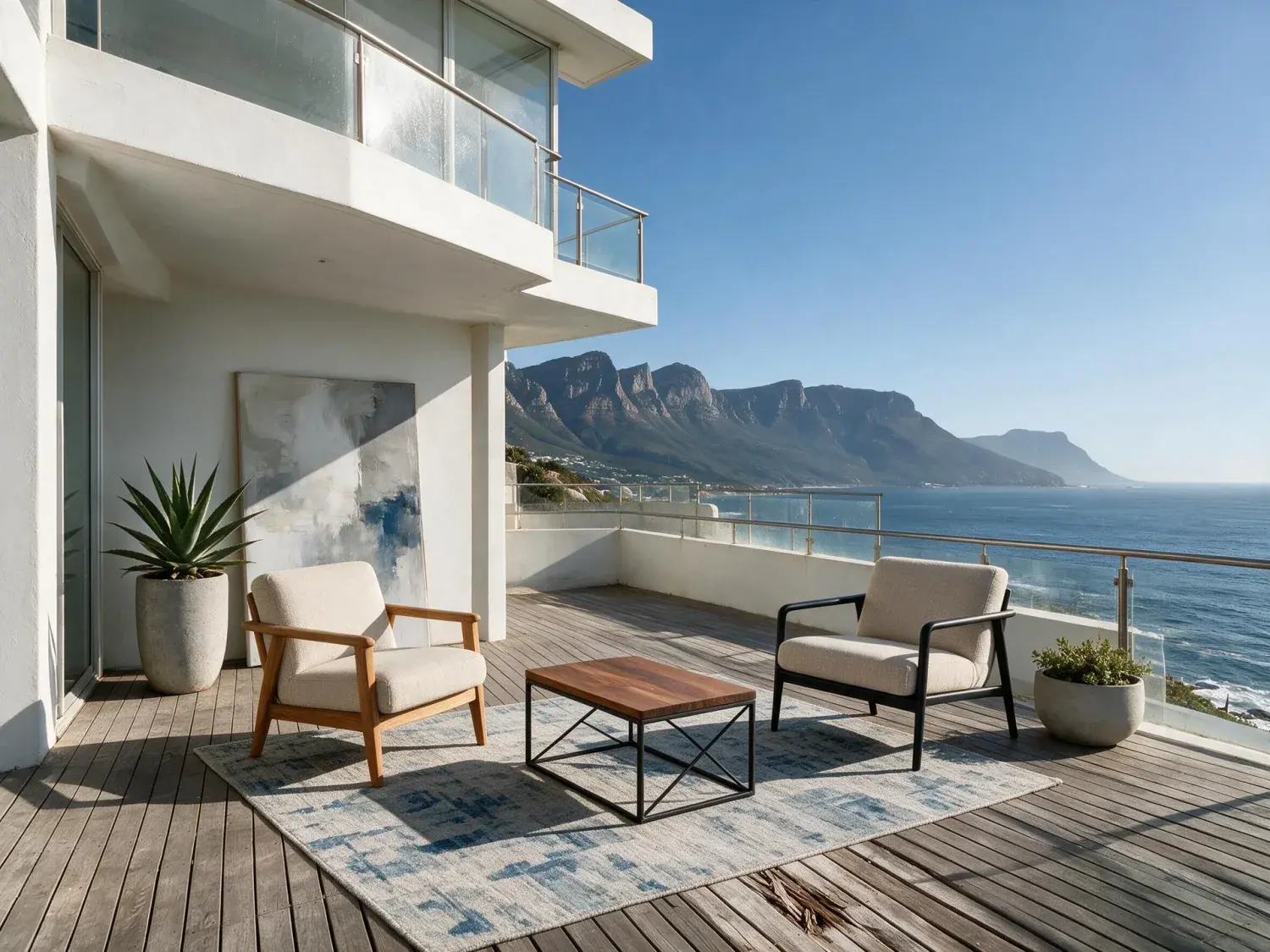
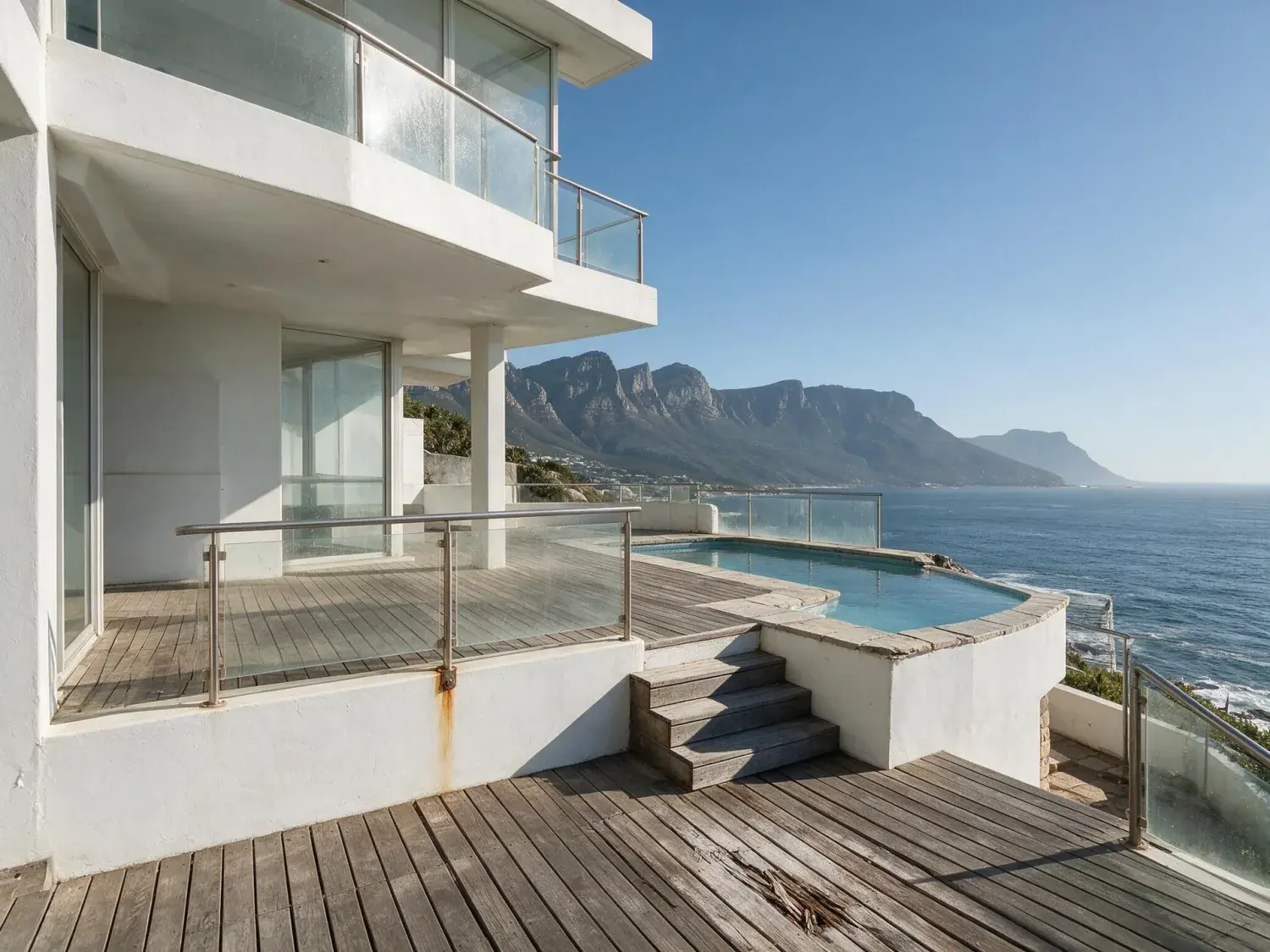
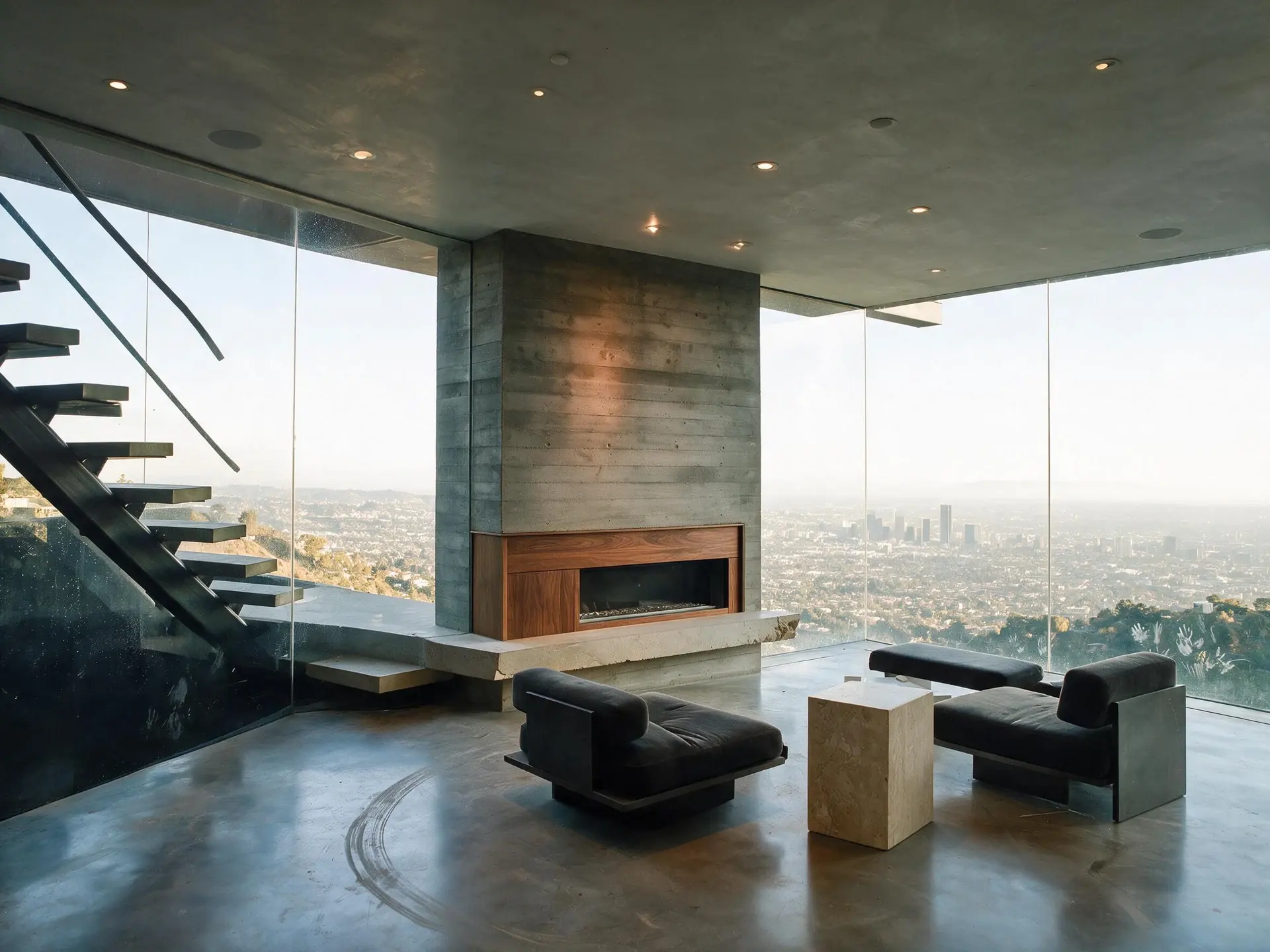
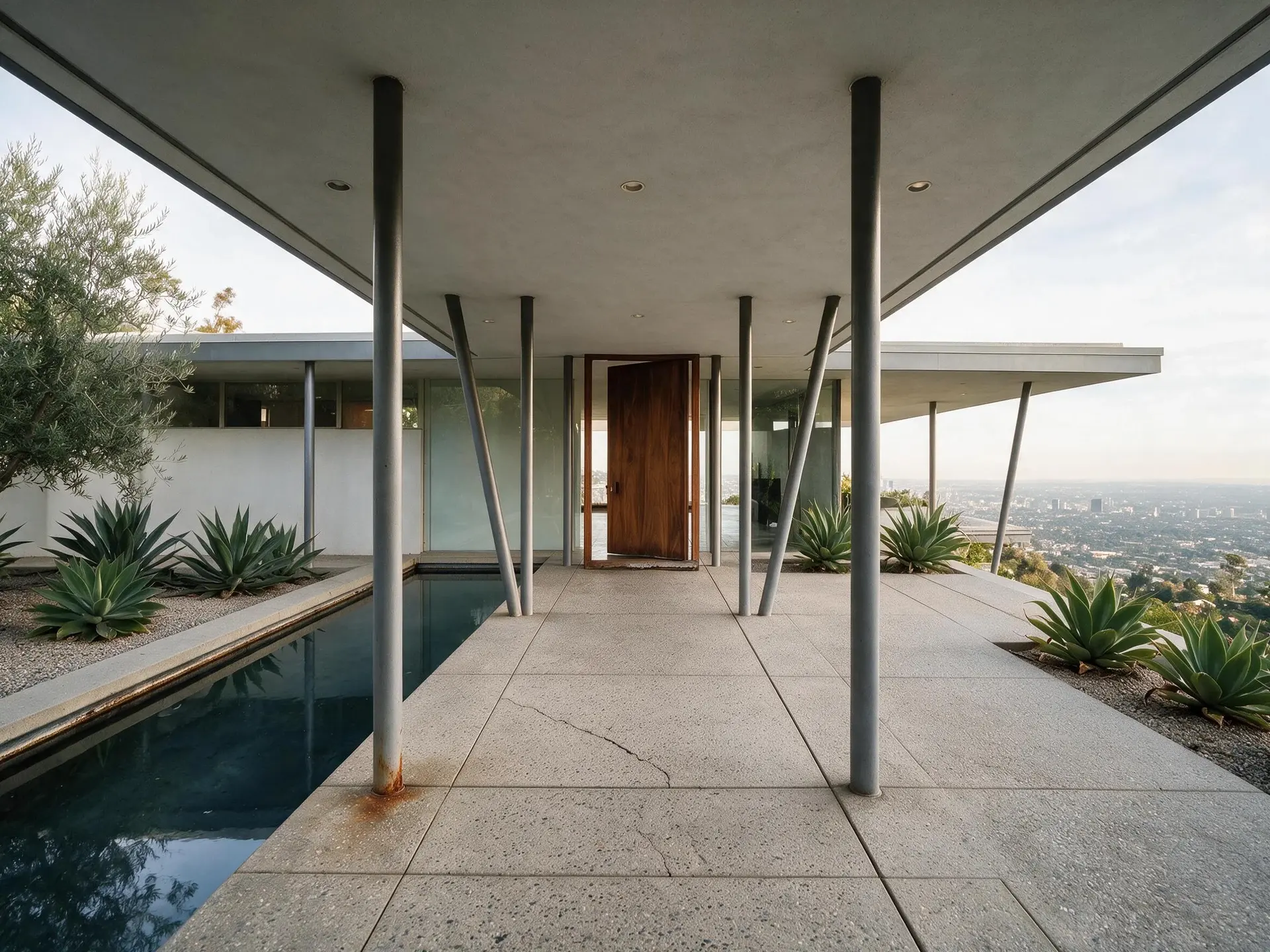
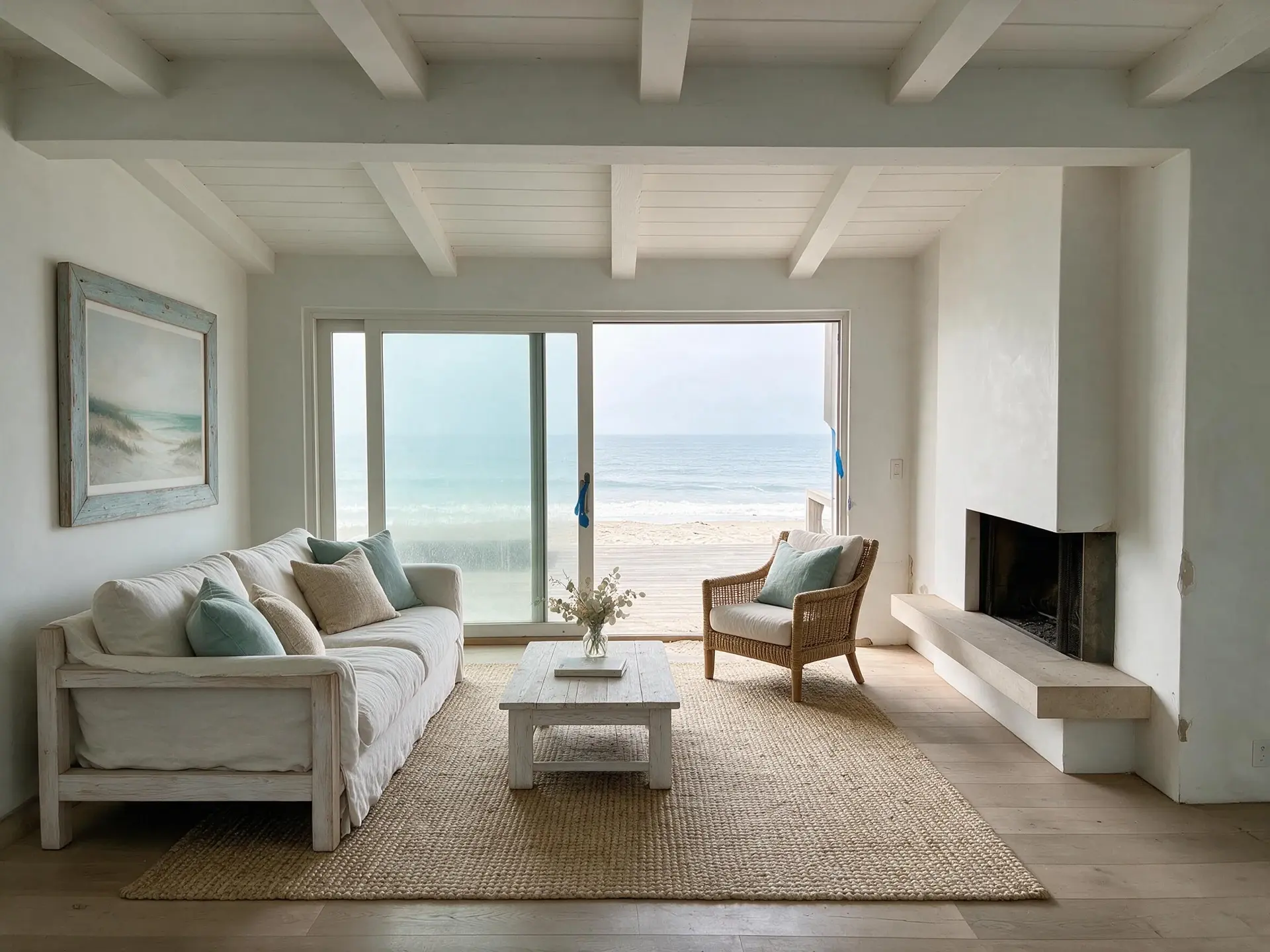
Virtual staging for interior designers is a different job than virtual staging for realtors — you're not selling a house that exists, you're selling a vision the client has to commission at six figures. ASID, BIID and NCIDQ-certified designers lose more margin to 'but I thought it would look like' conversations than to any other line item. Plotpane lets you photograph the client's empty room and generate five style directions — European Classic, Japandi, Mediterranean, Luxury, Scandinavian — in about ten minutes and five credits, at about 2.4K, clean of any watermark on a paid plan, pitch-book ready. Upstream of SketchUp, Chief Architect and Revit: narrow direction in meeting one, commit to 3D spatial modelling once the client has signed.
Why interior designers use virtual staging differently than realtors
A realtor stages a house to sell it at market. An interior designer stages to sell a direction before the install begins — before fabric is ordered, before the plaster contractor is booked, before the $40k joinery deposit goes out. The painful part of the design-client relationship is meetings two through four: the client has seen ten Pinterest boards, can't describe what they want in words, and every SketchUp mock-up takes three days of studio time to prep. Plotpane collapses that loop into the meeting itself. 'Virtual interior design' gets 2,400 US / 110 UK monthly searches (Semrush Apr 2026) and 'interior design mood board' gets 1,600 US / 590 UK — but almost all of it is aimed at homeowners DIYing with RoomGPT or Interior AI. The professional-designer use case — client-commissioned work with ASID / BIID / NCIDQ standards on deliverable quality — is underserved.
02
Client-proposal mock-ups: sell the vision before you commission it
The first pitch meeting after the site survey is where 80% of misalignment either gets caught or baked in. Traditional workflow is a mood board on Milanote plus two SketchUp elevations — total prep time three to five studio days, and the output still doesn't feel like a photograph of the client's actual room. Plotpane turns the same empty-room survey shot into five photorealistic directions in one sitting — five credits, about ten minutes. The client reacts to actual images of their actual hallway, not to stock-photo vignettes. The argument for working this way is simple: change orders after kickoff are where margin leaks on residential projects at the $150k-$600k scope, and a photograph of the client's own hallway settles an argument a mood board cannot.
Five style directions on one photo — five credits, about ten minutes
Ten built-in styles and six room types; no custom style to build, none to save
JPEG at quality 92 and about 2.4K, clean of any watermark on a paid plan
XMP disclosure metadata in every export, plus an optional visible 'Virtually Staged' label
ZIP download of the finished set on Pro and Agency, in batches of 50 and 150
03
Portfolio builders for installs that have been dismantled
Eight months after install, the client redecorates for Christmas, repaints the dining room, sells the house. The designer's portfolio loses its hero photograph to an album on the client's phone. Plotpane can restage the room from the original empty-room survey photograph, in whichever of the ten built-in styles sits closest to what you actually installed. There is no way to upload a reference image, a moodboard or a SketchUp view to teach it your scheme — one photograph goes in, one JPEG comes back — so treat the result as an approximation of the commission and caption it as a reconstruction rather than a photograph. Archifolio, Wix, Elementor and Journo Portfolio all weight visual consistency heavily; a portfolio with ten photo-grade finished-room shots converts significantly better than one with six photographs and four SketchUp exports. 'Interior design portfolio' draws 1,600 US / 590 UK monthly searches — a designer-facing keyword cluster the major virtual-staging tools (Stuccco, RoomStaging, VirtualStagingAI) are not writing for.
04
SketchUp, AutoCAD, Chief Architect and Revit: upstream, not replacement
Plotpane sits in front of the 3D pipeline, not beside it. Workflow: (1) survey-photograph the room, (2) run Plotpane to narrow from ten possible directions to two in the client meeting, (3) once the client commits, rebuild the committed direction in SketchUp or Chief Architect for true spatial modelling, (4) export the SketchUp camera to reference-match against the Plotpane image so the final render preserves the mood of the sold pitch. 'SketchUp interior design' gets 880 US / 90 UK monthly searches — Plotpane's role is to kill the three days of SketchUp prep work spent on directions the client will reject anyway. For architect-adjacent designers on Revit, export a paraline view from Revit, photograph the empty shell, and use Plotpane to test material palettes before specifying fabrics.
05
The real estate stager-designer hybrid: flips and developer spec
A specific subset of designers run a second book working with home flippers, boutique developers and spec-build firms. The flipper needs a staged listing to sell the refurb; the designer needs a portfolio asset showing before/after. Plotpane does both jobs from one upload — XMP AI-disclosure metadata baked into the export keeps a dated record of the edit, and since ARMLS, Bright MLS, CRMLS and Rightmove all re-encode on upload and strip it, the disclosure line in the listing text is what actually satisfies their rules, while the same file doubles as a portfolio before/after. 'Before and after interior design' gets 140 US monthly searches and every designer portfolio audit (Designtastemaker, IDI USA, Foyr) rates before/after pairs as the single highest-converting portfolio element.
06
Editorial-grade output that doesn't look AI-generated
The difference between a Plotpane output and a RoomGPT export (8,100 US monthly searches — the consumer-facing benchmark) is editorial fidelity. Designer pitch work demands correct cornice profile, correct tread-nosing on stairs, correct architrave proportion — the stuff clients specifying a period London property or an Edwardian brownstone will notice immediately. Plotpane preserves room geometry, cornice lines, fireplace proportions and floor direction exactly; the AI model only changes what you tell it to change (furnishings, paint, soft finishes). Output is a JPEG at quality 92 and about 2.4K with embedded XMP disclosure metadata, clean of any watermark on a paid plan, which drops into Milanote, Notion, Canva, Basecamp or a printed pitch book like any other photograph.
For this region
Local questions, answered
Is Plotpane ASID or BIID compliant for client-facing deliverables?+
Plotpane is a tool, not a professional body, so 'compliance' applies to the deliverable rather than the software. ASID and BIID both require disclosure of digitally-generated imagery on client proposals and portfolio submissions. Plotpane embeds XMP AI-disclosure metadata on every export and offers an optional visible 'Virtually Staged' label you can switch on — both meet the disclosure standard BIID's Professional Code and ASID's ethics guidelines expect on pitch deliverables.
Does this replace SketchUp, AutoCAD, Chief Architect or Revit?+
No. Plotpane is upstream of the 3D pipeline. Use Plotpane in meetings one and two to narrow from ten directions to two; once the client commits to a direction, move to SketchUp or Chief Architect for true 3D spatial modelling, construction drawings and specification schedules. There is no Revit integration — Plotpane has no integrations of any kind — but the pattern that works for architect-designer hybrids is to export a paraline view, photograph the empty shell, and run Plotpane on material-palette tests before specifying fabric.
Can I use Plotpane outputs in my NCIDQ-submitted portfolio or a BIID Registered Interior Designer portfolio review?+
Yes for client-work context, with correct disclosure. The BIID Registered Interior Designer portfolio review and NCIDQ examination portfolios both accept AI-assisted visualisations when clearly labelled as such. Plotpane's XMP metadata, plus the optional visible label if you want it on the face of the image, satisfy both bodies' disclosure expectations. Do not present Plotpane outputs as photographs of completed installs — present them as pitch renders or reconstruction renders of dismantled installs.
How is this different from RoomGPT, Interior AI, Spacely, ArchiVinci or Collov?+
Those tools are aimed at homeowners DIYing a redecoration idea — consumer-grade output, inconsistent architectural fidelity, no commercial-rights licensing at the free tier. Plotpane is built for fee-earning designers: the same ~2.4K output on every plan, full commercial rights including printed pitch books and paid proposals, XMP disclosure metadata in every file, and editorial-grade preservation of cornice, architrave and fireplace proportions.
Can I rebuild a portfolio piece from an install that has been dismantled?+
Partly, and it is worth being precise about how. Plotpane takes one photograph — the original empty-room survey shot, as JPEG, PNG, WebP or HEIC — and restages it in one of ten built-in styles. You cannot upload your SketchUp or AutoCAD reference, or a moodboard, to teach it the scheme you actually installed, and there is no way to save a scheme for reuse. So what you get is the closest built-in style to the original commission, not a faithful rebuild of it. Disclose in your portfolio caption that the image is a reconstruction render rather than a photograph of the completed install — both ASID and BIID require this.
Do I own the commercial rights to outputs for a paid client proposal?+
Yes. Every Plotpane plan grants full commercial rights on outputs, including printed pitch books, paid proposals, portfolio submissions, Instagram case studies and press-facing features. Unlike RoomGPT or Interior AI free tiers which restrict commercial use, Plotpane is licensed for fee-earning studio work from the Starter plan upward.
What file dimensions does Plotpane export for a pitch deck?+
One size: a JPEG at quality 92, around 2.4K on the long edge, or roughly 4.7K if you spend a second credit on the same image. There are no per-destination export sizes and no pitch-book template — you crop for the Milanote card, the Notion banner or the 16:9 Canva slide in whatever you already build decks in, the same as you would with a photograph. On Pro and Agency you can download a finished set as a single ZIP.
Pricing
One credit per image. Every tool, every plan.
Three plans. Every tool unlocked on all of them. Every render unmarked, standard or high resolution, cancel anytime.
Every plan starts with 3 free renders. No card until you subscribe.
Starter
For the solo agent shooting their own listings.
$39/month
billed yearly
100 credits monthly
100 images per month — 1 credit each, whichever tool you use
No Plotpane mark on any render
Every tool, no tier gating
Standard output ~2.4K, or ~4.7K for a second credit
XMP disclosure metadata written into every export
Download a finished listing as a ZIP
Free vertical listing reel from your finished photos
Cinematic clips from a single photo — 1 credit per second of video
That is the whole pricing model. No per-tool rates, no seat maths, nothing to negotiate. We are not SOC 2 certified and there is no SSO, private deployment or API — if you need those to buy, better you know now than after a call.
Starter
4
listings a month
Pro
8
listings a month
Agency
24
listings a month
Questions
The usual questions, answered directly.
No. Midjourney and DALL-E invent scenes from text prompts — beautiful for art, disqualifying for a listing. Plotpane is a structure-preserving pipeline: your room geometry, windows, and floor plan stay exact. We stage, re-light, swap skies, declutter, and enhance your actual photo. No hallucinated architecture, no invented rooms.
BoxBrownie and Styldod are human-edit services: you upload, a retoucher works overnight, you get a result in 24–48 hours at $2–$32 per image per treatment. They also sell things we do not have at all — floor plans, renderings, item removal by a person who can ask you what you meant. Plotpane is one machine pass: you pick one of seven tools, and the image comes back in about two minutes for one credit, whichever tool you picked, on a flat monthly subscription. Stacking two treatments on one photo means running it twice.
Yes, when disclosed. NAR guidelines, California AB 723, and REBNY Rule 3.3 all allow virtually staged photos provided the listing discloses them. Every Plotpane export embeds invisible XMP disclosure metadata so the staging record travels with the file. You still handle the listing-remarks disclosure in your MLS portal — that's the part only you can do.
Every render is sent with a preserve list as well as an instruction. It names one operation and forbids the rest: do not touch windows, doors, walls, ceilings, floors, cabinetry or fixtures unless the instruction names them; do not remove or conceal a defect, stain or crack; do not change what is visible through glass, and never invent a view. Furniture is added to empty rooms; named objects are removed from furnished ones; sky and light are re-graded. If you do see something invented, that is a bug — report the render in the app and the credit comes back.
Yes — one click in the Stripe billing portal from your dashboard. Billing stops immediately, remaining credits stay usable through the end of the billing period, and there's no cancellation fee.
Yes — any AI-generated or AI-modified image is considered an edit requiring disclosure under NAR's standards. That's why every Plotpane export writes invisible XMP disclosure metadata by default. The flag is machine-readable by MLS tooling and survives Lightroom round-trips. You still add the disclosure line to your listing remarks; we make sure the image itself is self-describing.
The toolkit
Seven tools. One credit each.
Every one is a single structure-preserving pass: it changes what you asked for and leaves the building alone.