Real Estate Photo Editor for Atlanta lawn and pool listings
Real Estate Photo Editor for Atlanta is a specific fight: Bermuda and zoysia go bronze-dormant from late October through March, pine pollen coats everything yellow-green for three weeks in March, and the year-round Southern pool season means algae shows up on Dunwoody and Sandy Springs listings every time the pump stumbles. Plotpane revives both at about 2.4K — lawn-greening capped at 50% of native saturation so Harry Norman, Atlanta Fine Homes Sotheby's, Dorsey Alston, Ansley Real Estate, Berkshire Hathaway HomeServices GA and Compass Atlanta editors can ship FMLS-compliant hero frames without the $300 reshoot, the $450 lawn-paint truck, or a GREC Rule 520-1-.09 misrepresentation letter in the file.
Built for Real Estate Photo Editor workflows: the Atlanta lawn and pool problem
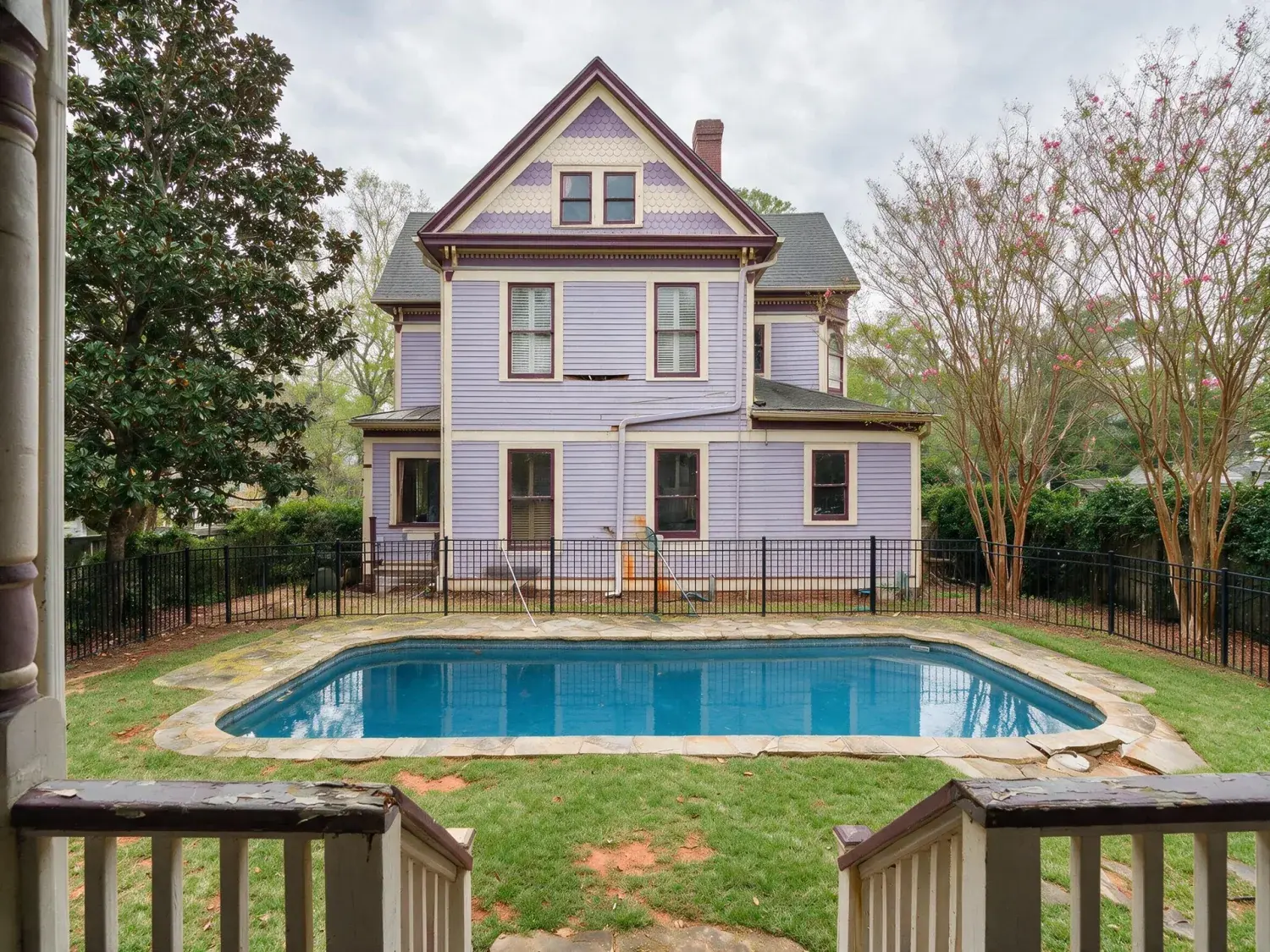
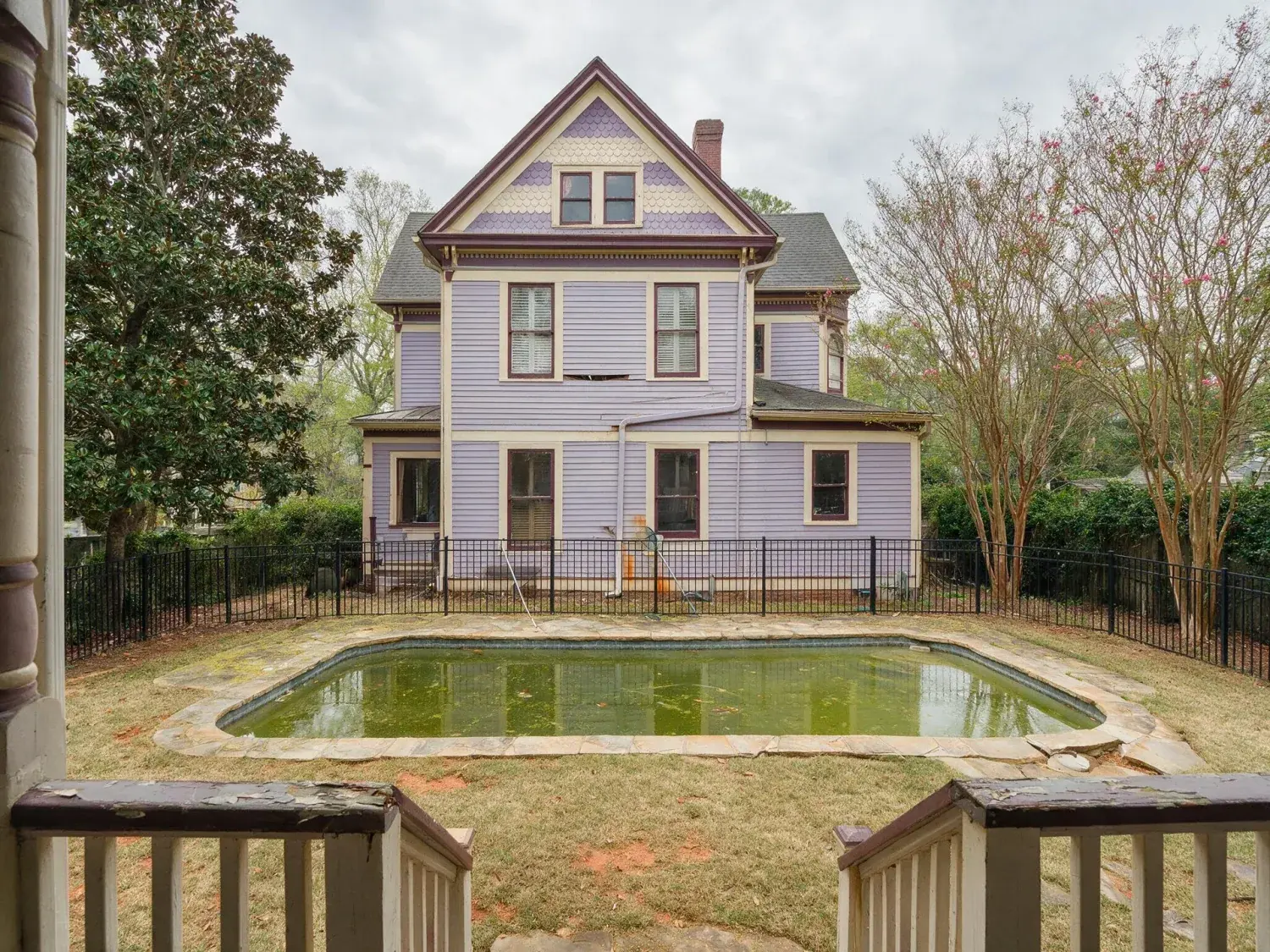
A Real Estate Photo Editor in Atlanta inherits two market-specific listing-killers that don't exist in Los Angeles, Phoenix or Miami. First, Bermuda grass — the default turf on 70% of Buckhead, Morningside, Virginia-Highland, Brookhaven, Sandy Springs, Dunwoody, Alpharetta, Milton and Roswell single-family yards — goes full bronze-dormant from the first Atlanta frost (usually Nov 5-15) through last frost in late March. Zoysia, the second-most-common warm-season turf in Ansley Park and Buckhead, dormants a week earlier and greens back two weeks later. That's a five-month window on FMLS where every standing shot reads 'dead yard' to a buyer who has never seen Piedmont turf cycles. Second, Atlanta's year-round pool season — winter averages 52 degrees, not freeze — means pools stay uncovered on luxury listings 12 months a year, and a three-day chlorine lapse in the humid May-September stretch lands every >$1.5M Buckhead, Tuxedo Park or Chastain listing on FMLS with visibly green water. Plotpane's Lawn & Pool Revive greens dormant Bermuda and zoysia to a realistic Piedmont spring register, clarifies pool water to true turquoise-to-cobalt, and leaves algae where it is rather than quietly erasing it — that is a maintenance defect, not a photo defect.
Bermuda + zoysia dormancy: Oct-Mar bronze rendered to Piedmont spring green
Pine pollen yellow-green cast neutralized across late-March listings
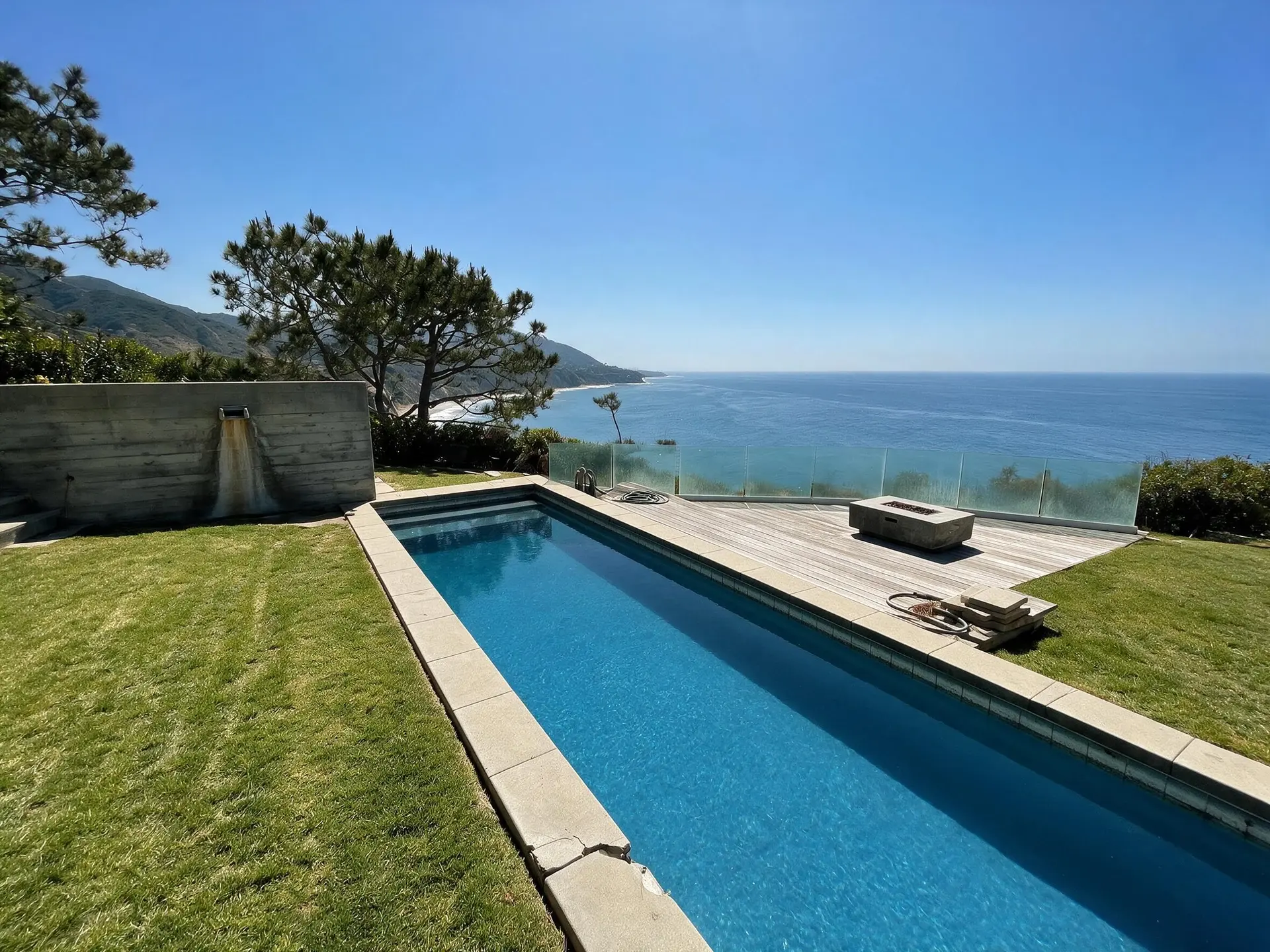
Pool water clarified — turquoise on white plaster, cobalt on dark-bottom pebbletec
Leaf + skimmer-debris cleanup on patio and deck (Atlanta oak + magnolia litter)
Algae left visible, never silently erased — disclose it and fix the pool
02
Lawn-greening capped at 50% — why ethical beats golf-course green on FMLS
The single largest Real Estate Photo Editor failure mode in the Southeast is generic AI lawn-greening that paints a February Bermuda yard to a June PGA-tournament register. A Buckhead buyer has seen Bermuda dormancy their entire life and reads cartoon-green as a lie in under half a second — it triggers skepticism on every other photo in the listing and drops time-on-page to nothing. Plotpane's ethical cap holds lawn-greening to a maximum 50% lift over the native frame, which lands a dormant Morningside or Alpharetta yard on an early-April green register — believable, photogenic, honest — rather than a July-irrigated register that doesn't exist in the neighborhood that week. The same cap protects against fake-greening pine-straw beds, crepe myrtle litter under the tree, or decomposed-granite paths in xeriscape-influenced modern yards on the Milton and Alpharetta side. FMLS Rule 6.8 and GREC Rule 520-1-.09 (False Advertising) both treat material misrepresentation as the violation bar; a capped, realistic green stays inside editorial practice, while a faked golf-course register is documented in Georgia broker-complaint files as the kind of thing that earns a sanction letter.
03
Pool water clarification, algae disclosure, and the Southern-pool year-round reality
Atlanta's mild winters mean luxury pool listings — roughly 55% of Buckhead, Tuxedo Park and Chastain Park inventory over $1.5M; 70% in Sandy Springs, Dunwoody and East Cobb above $1.2M; nearly universal on new-build Milton and Alpharetta estates above $2M — stay uncovered all twelve months. That's 12 months of algae risk, 12 months of leaf-on-water shots, 12 months of pool-vacuum-is-on-the-deck frames. Lawn & Pool Revive handles the easy wins: surface leaf and oak-tassel removal, water-color correction to liner-appropriate turquoise (white plaster), deep cobalt (dark-bottom pebbletec), or stone-shadowed blue (travertine and flagstone Buckhead coping). The hard case is green-algae water, which is a maintenance defect, not a photo defect — and Plotpane treats it as such. It will not scrub the algae out for you: fix the pool chemistry and reshoot, or leave it visible on the listing and say so. Silently erasing algae on a $2M Ansley Park listing is how GREC Rule 520-1-.09 complaints start, and how O.C.G.A. §43-40-25 (broker license suspension) ends.
Surface debris — oak tassels, magnolia leaves, pine straw — removed cleanly
Water color matched to liner: plaster / pebbletec / vinyl / dark-bottom
Flagstone, travertine and bluestone coping color held true to the source
Algae left visible, never hidden — a maintenance defect, not a retouch target
Pool equipment sheds, cover reels and skimmer lids preserved as visible features
04
FMLS Rule 6.8, GREC Rule 520-1-.09, and O.C.G.A. §43-40-25 — the Georgia compliance line
Three documents govern what a Real Estate Photo Editor can ship on an Atlanta listing. FMLS Rule 6.8 requires that photos accurately represent the property and explicitly prohibits removing or adding material features; lawn greening and pool water correction are editorial finishes and sit alongside HDR and sky replacement, but algae erasure, visible-damage removal, or pool-addition cross the material-feature line. GREC Rule 520-1-.09 (False and Misleading Advertising) extends this to anything 'calculated to deceive,' which Georgia complaint boards have applied to obviously-faked golf-course-green lawns on listings photographed in January. O.C.G.A. §43-40-25(b)(2) and (b)(3) then give the Georgia Real Estate Commission the statutory authority to suspend or revoke a broker license for false advertising — the enforcement teeth behind the rules. Plotpane stays inside this line by default: lawn-greening capped at 50%, algae left visible rather than erased, equipment kept in frame, and XMP disclosure metadata written into the file you download. It stops there: the FMLS feed and the brokerage systems behind Harry Norman REALTORS, Atlanta Fine Homes Sotheby's International Realty, Dorsey Alston REALTORS, Ansley Real Estate | Christie's International Real Estate, Berkshire Hathaway HomeServices Georgia Properties and Compass Atlanta all re-encode on upload and drop the packet, so treat the export as your own dated record and put what the buyer needs to read in the listing remarks.
For this region
Local questions, answered
Does FMLS allow lawn greening and pool water enhancement on an Atlanta listing?+
Yes, within limits. FMLS Rule 6.8 treats lawn greening and pool water color correction as editorial enhancement — the same category as HDR, exposure, white-balance and sky replacement — provided no material property feature is added, removed or misrepresented. Plotpane's Lawn & Pool Revive sits inside those limits by default: lawn-greening capped at 50% of native saturation (realistic Piedmont spring, not cartoon July green), pool water clarified to liner-accurate color, pool equipment and visible defects preserved, algae left visible rather than silently erased. GREC Rule 520-1-.09 and O.C.G.A. §43-40-25 add the misleading-advertising and license-suspension teeth behind the rule.
How do you handle Bermuda and zoysia dormancy on Oct-March Atlanta listings?+
Lawn & Pool Revive takes a dormant bronze lawn to an early-April register, never a mid-June one — which is the right answer for Piedmont warm-season turf, Bermuda and zoysia alike, and for the handful of St. Augustine yards on Atlanta's south side. That's a roughly 35-50% lift over the native frame, capped at 50%. A Buckhead, Morningside or Alpharetta buyer has seen Bermuda dormancy every winter of their life; a realistic early-spring green reads as a well-kept listing photographed in transition, while a saturated neon green reads as a lie and drops trust on the entire listing.
What happens if the pool is algae-green when I upload the shot?+
Algae is treated as a maintenance defect, not a retouch target. Lawn & Pool Revive clears leaves and corrects water color, but it will not scrub green algae out of the pool for you — the right answer is to fix the pool chemistry and reshoot, or leave the algae visible and disclose it. Silently erasing algae on a $2M Ansley Park, Buckhead or Tuxedo Park listing is exactly the pattern GREC Rule 520-1-.09 complaints cite, and O.C.G.A. §43-40-25(b)(2)/(b)(3) gives the commission the authority to suspend broker license over it. Plotpane won't ship the erasure.
How does the pool water correction handle dark-bottom pebbletec and stone coping?+
Liner-aware. A dark-bottom pebbletec pool — common on Buckhead, Tuxedo Park and new-build Milton estates — should read deep cobalt at midday, not generic turquoise. A white-plaster pool reads turquoise. Travertine and flagstone Buckhead coping casts stone-shadowed blue. Plotpane reads liner and coping color from the source frame and lands the pool water on the register that matches what a luxury retoucher working for Harry Norman or Atlanta Fine Homes Sotheby's would ship manually at $40-75 per image.
What does a lawn-paint truck or pool reshoot actually cost in Atlanta?+
Lawn painting — LawnLift, Endurant, and the Atlanta-area turf-colorant crews — runs $300-$600 per front yard for a mid-size Morningside or Brookhaven lot, $800-$1,500 for a Buckhead or Tuxedo Park estate, and requires a 48-hour dry window that Atlanta's humid spring rarely gives you. A dedicated pool reshoot from Curb Appeal Photography, Estate Exposure or Local Real Estate Photography runs $175-$300 plus a $50-$75 trip fee, with weather cancellation around 30% in the Nov-Mar luxury peak. Plotpane's Starter plan is $49/mo — $39 billed annually — for 100 images, one credit each whichever tool you use. The math is obvious for a one-agent shop, and Agency's 600 images a month is decisive for a 40-listing monthly Compass or Berkshire Hathaway HomeServices Georgia pipeline.
Pricing
One credit per image. Every tool, every plan.
Three plans. Every tool unlocked on all of them. Every render unmarked, standard or high resolution, cancel anytime.
Every plan starts with 3 free renders. No card until you subscribe.
Starter
For the solo agent shooting their own listings.
$39/month
billed yearly
100 credits monthly
100 images per month — 1 credit each, whichever tool you use
No Plotpane mark on any render
Every tool, no tier gating
Standard output ~2.4K, or ~4.7K for a second credit
XMP disclosure metadata written into every export
Download a finished listing as a ZIP
Free vertical listing reel from your finished photos
Cinematic clips from a single photo — 1 credit per second of video
That is the whole pricing model. No per-tool rates, no seat maths, nothing to negotiate. We are not SOC 2 certified and there is no SSO, private deployment or API — if you need those to buy, better you know now than after a call.
Starter
4
listings a month
Pro
8
listings a month
Agency
24
listings a month
Questions
The usual questions, answered directly.
No. Midjourney and DALL-E invent scenes from text prompts — beautiful for art, disqualifying for a listing. Plotpane is a structure-preserving pipeline: your room geometry, windows, and floor plan stay exact. We stage, re-light, swap skies, declutter, and enhance your actual photo. No hallucinated architecture, no invented rooms.
BoxBrownie and Styldod are human-edit services: you upload, a retoucher works overnight, you get a result in 24–48 hours at $2–$32 per image per treatment. They also sell things we do not have at all — floor plans, renderings, item removal by a person who can ask you what you meant. Plotpane is one machine pass: you pick one of seven tools, and the image comes back in about two minutes for one credit, whichever tool you picked, on a flat monthly subscription. Stacking two treatments on one photo means running it twice.
Yes, when disclosed. NAR guidelines, California AB 723, and REBNY Rule 3.3 all allow virtually staged photos provided the listing discloses them. Every Plotpane export embeds invisible XMP disclosure metadata so the staging record travels with the file. You still handle the listing-remarks disclosure in your MLS portal — that's the part only you can do.
Every render is sent with a preserve list as well as an instruction. It names one operation and forbids the rest: do not touch windows, doors, walls, ceilings, floors, cabinetry or fixtures unless the instruction names them; do not remove or conceal a defect, stain or crack; do not change what is visible through glass, and never invent a view. Furniture is added to empty rooms; named objects are removed from furnished ones; sky and light are re-graded. If you do see something invented, that is a bug — report the render in the app and the credit comes back.
Yes — one click in the Stripe billing portal from your dashboard. Billing stops immediately, remaining credits stay usable through the end of the billing period, and there's no cancellation fee.
Yes — any AI-generated or AI-modified image is considered an edit requiring disclosure under NAR's standards. That's why every Plotpane export writes invisible XMP disclosure metadata by default. The flag is machine-readable by MLS tooling and survives Lightroom round-trips. You still add the disclosure line to your listing remarks; we make sure the image itself is self-describing.
The toolkit
Seven tools. One credit each.
Every one is a single structure-preserving pass: it changes what you asked for and leaves the building alone.