Hotel photography: what the shoot covers, and what you can fix afterwards
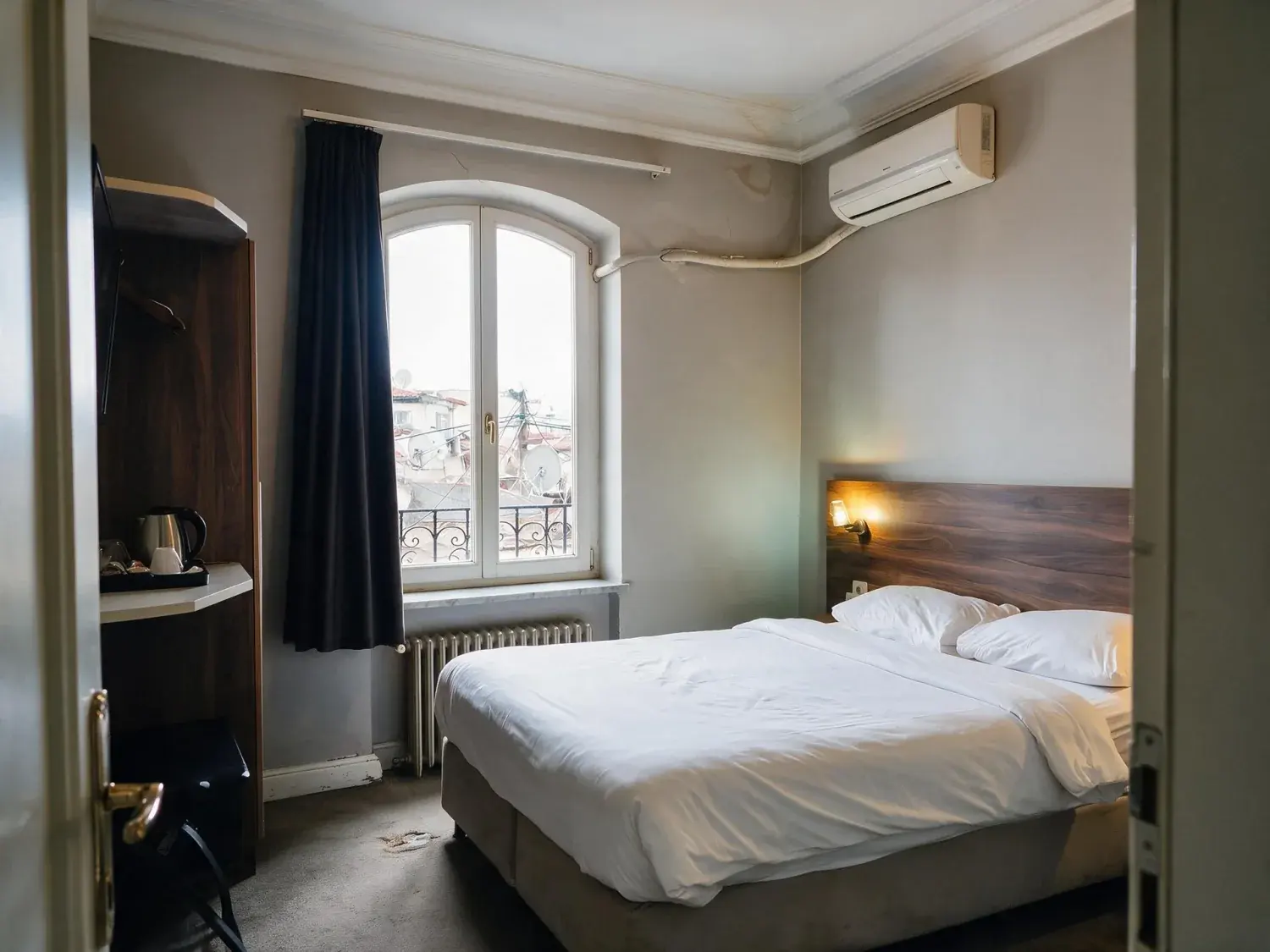
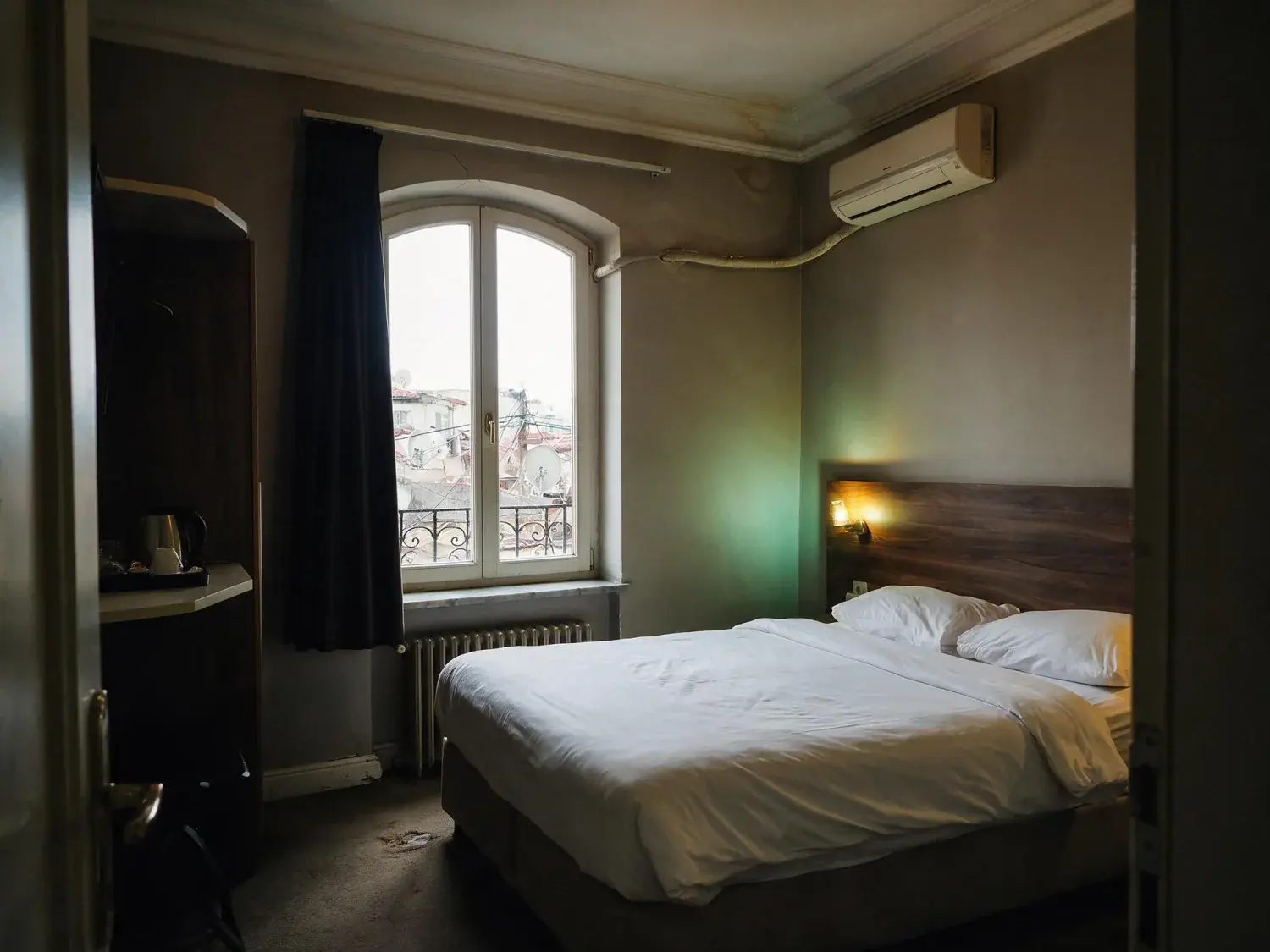
A hotel shoot is a production, not a photo session. There is a shot list that runs from the approach to the last room type, a room taken out of inventory for the day, F&B dressed twice because breakfast and dinner are different rooms, and a return call at a fixed hour for the twilight exterior. This page is about the part that comes after — which of a shoot's ordinary failures you can correct in the file, and which of them need the photographer back on site. Overcast on the one exterior day. A facade that went flat at three in the afternoon. A room the duty manager shot on a phone with the verticals leaning. A housekeeping caddy standing in the lobby frame. Plotpane fixes those. It does not shoot hotels, and this page is not going to pretend otherwise.
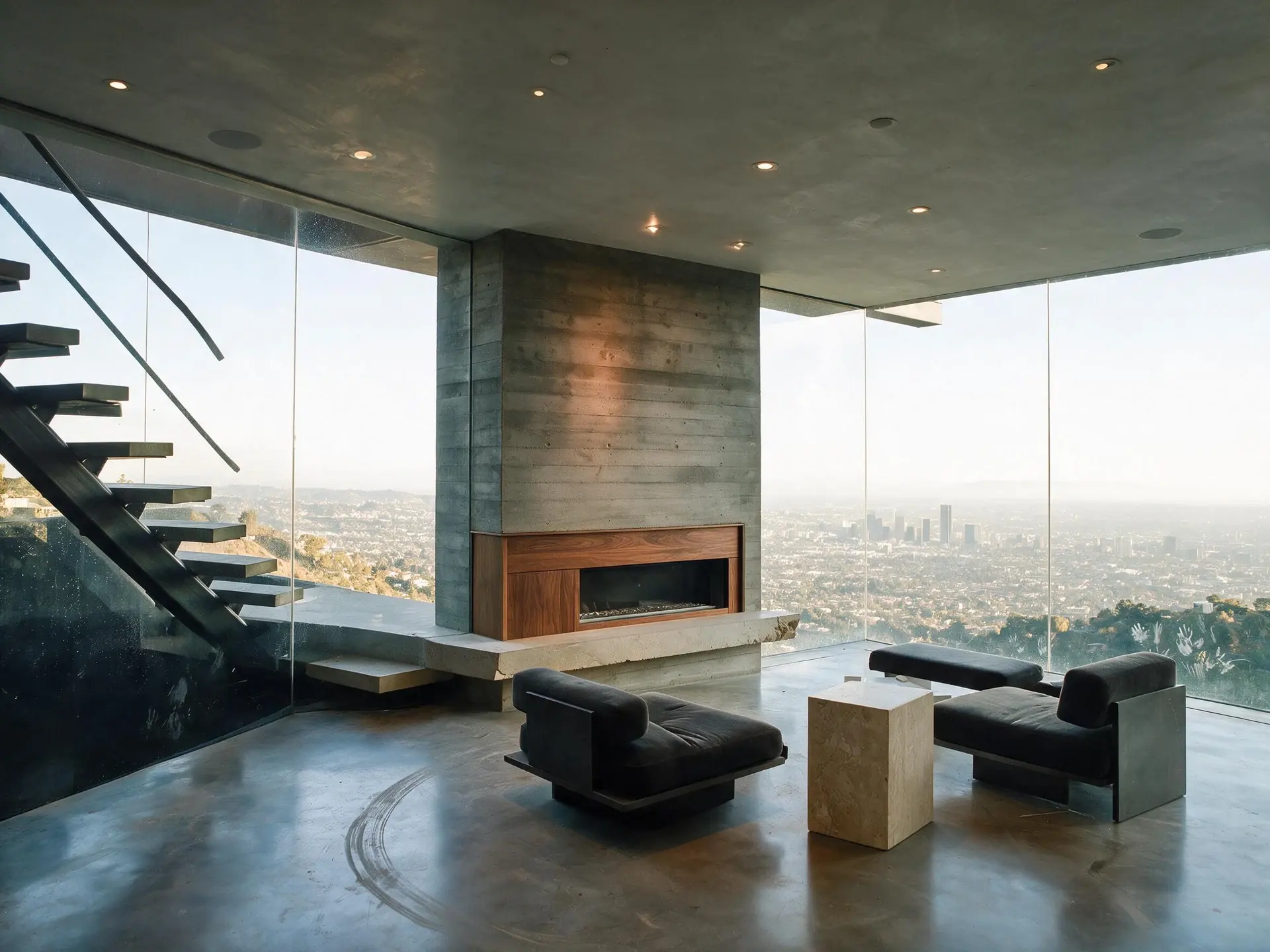
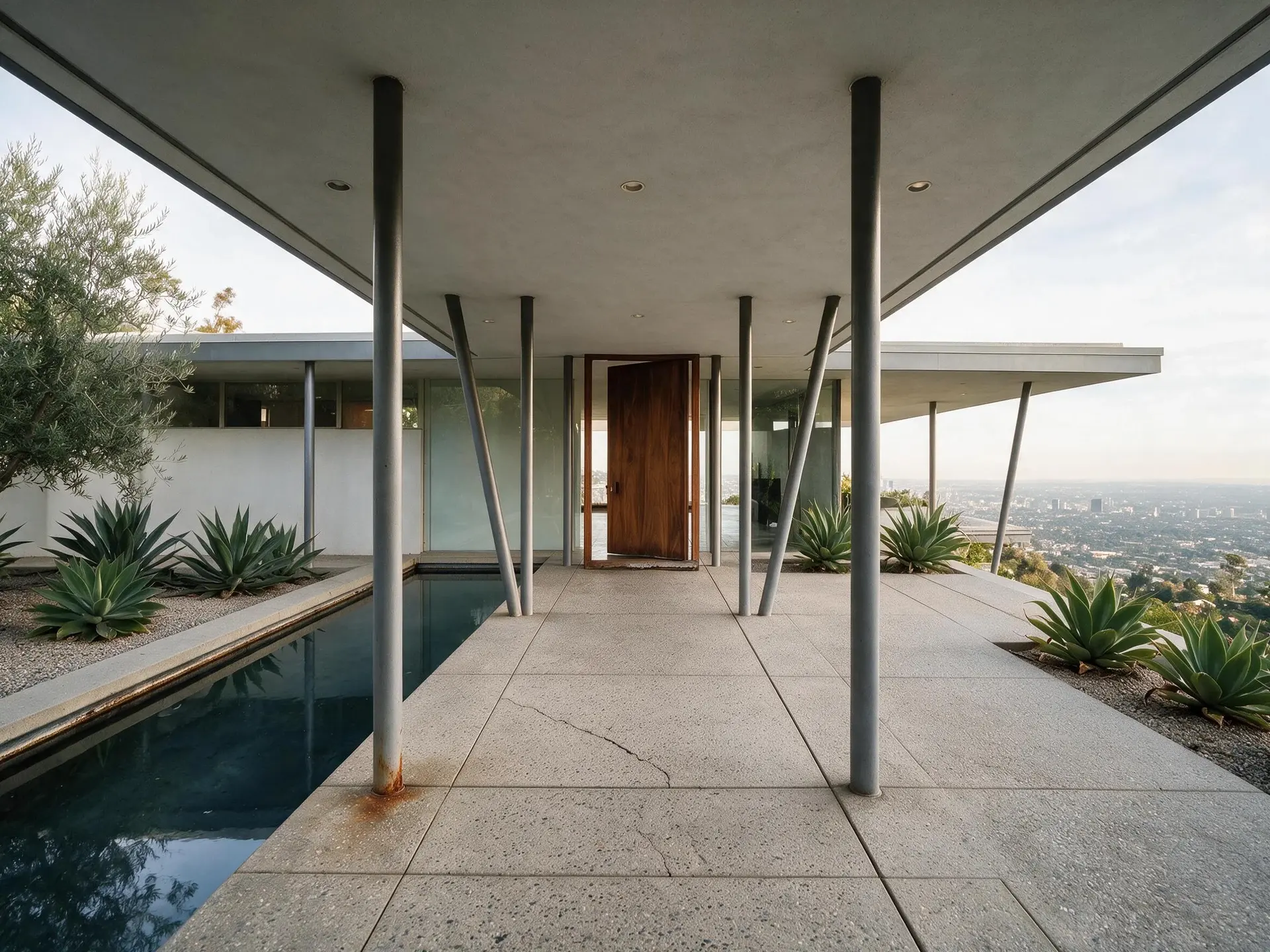
Scope and price a hotel shoot from the deliverable list, because the list is what decides how many days you are on site. A standard set is the approach and the porte-cochère, the lobby and reception, one representative frame of every room type you sell — king, twin or double-double, the suite, and the accessible room — a bathroom for each of those, the F&B outlets dressed twice because breakfast and dinner are different rooms, the pool, spa and gym, and meeting or event space in at least two setups, usually banquet and theatre. Then detail frames: turndown, minibar, amenity tray, whatever the property is known for. Lifestyle frames with talent are a separate line with model releases attached. Every room on the list is a room you cannot sell that night, so the shot list is a conversation with the front office as much as with the photographer. Access is the other constraint: housekeeping has to release rooms in sequence, the restaurant is shot between services or not at all, and the twilight exterior is a second call at an hour nobody can move. Settle licensing before the shoot rather than after — portal terms require you to hold distribution rights in every image you upload, and a photographer's default grant is often narrower than that.
02
Which failures you can fix in the file, and which you cannot
Five of the seven tools map onto ordinary hotel-shoot failures, and each has a hard edge worth knowing before you spend a credit. Sky Swap replaces the sky region on an exterior and matches the light on the building to it. It will not add mountains, a skyline or a landmark that was not in the original frame, and it cannot undo rain: a soaked forecourt and hard-diffused shadows still read as a grey day underneath a blue sky, so it works on flat overcast and not on weather. Day to Dusk moves a flat afternoon facade to golden hour, warms the interior window light to roughly 2700K so the building reads as lit from within, and switches on exterior fittings already visible in the frame. It will not add a fitting, invent landscape uplighting, or paint traffic trails into the driveway. Perspective Fix straightens converging verticals in a room shot handheld and levels the horizon, cropping minimally to square the frame — and it deliberately changes nothing else, so a leaning room that is also underexposed is two renders. Clutter Removal takes out exactly what you name and reconstructs the surface behind it. Lawn & Pool Revive greens grass inside its existing boundary and clears cloudy water; it cannot fill a drained pool or plant an empty bed.
Sky Swap: flat overcast, yes. Rain, wet ground and the light that came with it, no.
Day to Dusk: lights the windows and the fittings that are there. Adds nothing that isn't.
Perspective Fix: geometry only — no exposure or colour change, so bad light is a second render.
Clutter Removal: removes what you name, keeps what you don't, even if it looks like clutter.
Lawn & Pool Revive: existing lawn and existing water, within their existing shape.
03
What the file has to be, from the card to the extranet
Input accepts JPEG, PNG, WebP, HEIC and camera raw. Raw is a narrower case than a photographer means by the word: it is not developed, and what Plotpane works from is the full-size JPEG the camera already wrote inside the file. That matters for the way most hotel interiors are actually captured — the bracket set or the flambient blend on a suite with a window in it still happens in Lightroom or Capture One, because Plotpane takes one frame per render and merges nothing, and it picks up the exported JPEG afterwards. Output is a JPEG at quality 92, at one fixed size — around 2.4K as standard, around 4.7K for a second credit. There is no other export format and no layered file, so the brand asset library, the direct-booking site and the portals all get the same kind of file. Booking.com, Expedia Partner Central and Google all reject images carrying watermarks, added text, logos, borders or collage layouts, and all of them re-encode and resize on upload for their own galleries. Two things follow. Send the largest clean JPEG you have and let their pipeline do the reduction, and check each portal's current minimum in its own help pages rather than trusting a number printed in an article, this one included. And because re-encoding usually discards metadata, the XMP packet Plotpane writes into every export — operation, engine, timestamp — will survive in your own archive but very probably will not survive the trip through an OTA.
04
Disclosure, accessibility, and the frames you must not clean up
No US rule regulates hotel photo retouching by name. What applies is the general one: Section 5 of the FTC Act prohibits deceptive advertising, and a listing photograph is advertising. The FTC's fee-transparency rule for short-term lodging, in force since 2025, governs how you display a price and not how you edit an image — do not let anyone conflate them. Portals carry their own accuracy terms, but the enforcement that actually bites is a guest arriving, finding a different room, and writing it down where the next thousand shoppers read it. Two hotel-specific lines matter more than the rest. The Department of Justice's rule on reservations at places of lodging, 28 CFR 36.302(e), requires you to identify and describe accessible features in enough detail that a guest can judge independently whether the room works for them; retouching grab bars, a shower seat or a roll-in threshold out of an accessible room's photographs runs straight at that obligation. And Clutter Removal removes what you name, including a condition rather than clutter — the stained ceiling tile under the riser, the peeling sill, the lifted carpet seam. It will do it if you ask. The metadata records that something was removed. It does not record whether removing it was honest. That judgement stays with you.
05
The credit arithmetic on a hotel set
Every render costs exactly one credit, whichever of the seven tools you run, and a render takes about two minutes, measured. Budget by operations rather than by photographs: an exterior that needs the sky replaced and then the verticals straightened is two renders and two credits. On sixty delivered frames from a mid-size property, the ones that usually earn a credit are the two or three exteriors, the lobby with the working clutter still standing in it, and whichever room types got shot in the wrong light — call it twenty to thirty operations, not sixty. Starter is $49 a month for 100 credits, Pro $99 for 220, Agency $249 for 600; billed annually those are $39, $79 and $199 a month. Batches run 10 photos at once on Starter, 50 on Pro and 150 on Agency, with ZIP download on Pro and Agency. Subscription credits reset at the start of each billing period and do not roll over, so size the plan against a normal month rather than a refit month. There is no API, no DAM connector, no team seats, no shared brand presets, no priority queue and no white-label. One login, files in and out through a browser.
1 credit per render, any tool; about two minutes each, measured
Starter $49/100, Pro $99/220, Agency $249/600 — annually $39, $79, $199 a month
Batch 10, 50 or 150 photos at once; ZIP download on Pro and Agency
Credits reset each billing period and do not roll over
No API, no DAM connector, no team seats, no brand presets, no white-label
06
If you are the photographer reading this, not the hotel
Search around this phrase and most of the questions belong to photographers rather than to hoteliers — how to get into hotel work, how to find clients, what to charge. So it is worth being direct: this is not a tool that replaces you, and a page claiming otherwise would be lying to the people most likely to read it. It does not travel, negotiate access, wait for housekeeping to release a room, choose the lens, light a suite, or sit with a marketing director working out what the brand wants the property to look like. What it changes is one line on your quote. If you blend exposures by hand on every frame, running a set through Perspective Fix and Auto Enhance first and finishing by hand beats starting from zero — though the blend itself still happens in your raw editor, because Plotpane merges nothing, returns no layers, and reads a raw file's embedded JPEG rather than developing it. If you bill retouching as its own line, it now has a checkable marginal cost behind it: one credit an image, about 45 cents on the Pro plan. What it will not do is win back a job you lost on price, and buying it will not make anyone a hotel photographer.
For this region
Local questions, answered
How do you photograph hotel rooms?+
On a tripod, camera level, lens between roughly 20mm and 24mm full-frame equivalent — wider than that and the room stops looking like the room the guest walks into. Square to the back wall for the main frame, verticals plumb, camera height around chest level so the bed does not tower. Then most of the work is dressing: bed made and crisp, one wrinkle at most, curtains open to whatever view you are selling, toilet lid down and bathroom door positioned deliberately, TV off or on the brand loop, do-not-disturb card and rate card off the desk, kettle lead coiled, room-service tray gone, luggage rack squared. Mixed light is the recurring problem — 2700K bedside lamps against cold daylight through the window — so either kill the practicals and correct in post, or gel them. Perspective Fix will square a room that ended up leaning, and Auto Enhance will neutralise a mixed-light cast and lift dark corners, but neither one will make a badly dressed room look styled.
How do you photograph hotel interiors when the window is blown out?+
You expose for it at capture. The standard approaches are a bracket set merged afterwards, or a flambient-style blend of an ambient frame with a flashed frame, both of which happen in your raw editor before anything reaches Plotpane. A raw file will upload, and Plotpane reads the full-size JPEG the camera embedded in it — but that preview is the camera's own single-exposure rendering, so it is no substitute for the blend. Auto Enhance can recover detail in a blown window so that what is already there reads clearly, and lift dark corners so the room is legible. The word doing the work in that sentence is 'already'. If the window went to featureless white on capture, the harbour, the Galata rooftops or whatever else you were selling does not come back, because the engine is explicitly forbidden to invent scenery beyond glass. That constraint exists for a reason: a view is often the single most expensive thing on the rate card, and a guest checking into a room whose view was manufactured is a review you will read for a year.
How much does it cost to photograph a hotel?+
There is no defensible published average, and most figures circulating online are residential real-estate rates with a zero added. Build the number from lines that price independently: days on site, which tracks the room-type count and the number of F&B outlets rather than the key count; whether lifestyle frames with talent are in scope, since that adds casting, releases and usually a stylist; a return call for the twilight exterior; aerials, which need a Part 107 remote pilot certificate and LAANC authorisation where the property sits under controlled airspace; and the post-production pass. Then add the two costs that sit on your side of the ledger rather than the photographer's: rooms taken out of inventory for the shoot, and the licensing term you are buying. A shoot licensed for two years of OTA and website use is not the same purchase as one licensed in perpetuity across paid media, and that difference can be larger than the day rate.
How do I find a hotel photographer?+
Start from properties like yours rather than from a directory. Open the OTA galleries of three comparable hotels whose photography you envy and find out who shot them; hospitality is a small enough field that the credit is usually one email away. If you are flagged, ask the brand for its approved photographer list before you shortlist, because a shoot that misses brand standards gets re-shot at your cost. Then ask each candidate for a full set from one property, not a highlight reel — forty frames that hold one register across suites, corridors, the restaurant at breakfast and the same restaurant at dinner is the actual job, and a portfolio of ten heroes tells you nothing about it. Confirm they carry liability insurance and will issue a certificate for your risk team, and put the licensing term, territory and media in the contract rather than leaving it implied.
How much should I charge for hotel photography?+
Price the day and the licence, not the photograph. Hotel work is scoped by shot list, so build your quote from the number of room types, F&B outlets and event spaces, then add the return call for twilight, aerials if you hold the Part 107 certificate, and lifestyle if talent is involved. Licensing is a separate negotiation and it is where hospitality differs most from residential: a set used across a brand's global campaign is a different sale from one used on the property's own site and OTA listings. Name your add-ons individually so a client trimming a budget drops something specific instead of grinding the total. Take a deposit, write down what counts as a reshoot at your cost versus theirs, and put post-production on the quote as a visible line. If you run that pass through Plotpane, the line has a real number behind it — one credit an image, about 45 cents on the Pro plan — rather than a guess.
Can you take professional photography at hotels?+
If you mean shooting a hotel for the hotel, yes, and it is arranged through their marketing team with a scheduled shot list. If you mean using a hotel as a location for someone else's commercial shoot, that is a different transaction and the answer is yes with permission and usually a fee. Most properties of any size have a location policy: a venue fee, a location agreement, a certificate of insurance naming the hotel, and often a security or engineering escort if you are lighting a public space or putting a tripod in a lobby. Guest privacy is the constraint that catches people out — you cannot shoot recognisable guests in public areas without releases, and many properties will close a space rather than manage it. Shooting a hotel's interiors without permission and then using them commercially is a problem regardless of where you stood, because the property's design and trade dress are theirs, not the public's.
Why does hotel photography matter so much?+
Because rate parity means most shoppers are comparing rooms they cannot inspect, at prices that are nearly the same, and the gallery is doing the work a showroom would do anywhere else. The first frame decides the click on a results page full of near-identical prices, the room-type frames decide which rate someone books once they are inside the listing, and then accuracy comes back around as review text about whether the room matched. That last loop is why editing an image and misrepresenting a property are not the same act and should not be treated as one. Correcting an overcast sky, straightening a leaning wall or removing a housekeeping caddy changes how well the photograph describes the property. Adding a view, erasing a defect or retouching accessible fixtures out of a frame changes what the photograph says the property is. Only one of those two is a photo-editing decision.
Pricing
One credit per image. Every tool, every plan.
Three plans. Every tool unlocked on all of them. Every render unmarked, standard or high resolution, cancel anytime.
Every plan starts with 3 free renders. No card until you subscribe.
Starter
For the solo agent shooting their own listings.
$39/month
billed yearly
100 credits monthly
100 images per month — 1 credit each, whichever tool you use
No Plotpane mark on any render
Every tool, no tier gating
Standard output ~2.4K, or ~4.7K for a second credit
XMP disclosure metadata written into every export
Download a finished listing as a ZIP
Free vertical listing reel from your finished photos
Cinematic clips from a single photo — 1 credit per second of video
That is the whole pricing model. No per-tool rates, no seat maths, nothing to negotiate. We are not SOC 2 certified and there is no SSO, private deployment or API — if you need those to buy, better you know now than after a call.
Starter
4
listings a month
Pro
8
listings a month
Agency
24
listings a month
Questions
The usual questions, answered directly.
No. Midjourney and DALL-E invent scenes from text prompts — beautiful for art, disqualifying for a listing. Plotpane is a structure-preserving pipeline: your room geometry, windows, and floor plan stay exact. We stage, re-light, swap skies, declutter, and enhance your actual photo. No hallucinated architecture, no invented rooms.
BoxBrownie and Styldod are human-edit services: you upload, a retoucher works overnight, you get a result in 24–48 hours at $2–$32 per image per treatment. They also sell things we do not have at all — floor plans, renderings, item removal by a person who can ask you what you meant. Plotpane is one machine pass: you pick one of seven tools, and the image comes back in about two minutes for one credit, whichever tool you picked, on a flat monthly subscription. Stacking two treatments on one photo means running it twice.
Yes, when disclosed. NAR guidelines, California AB 723, and REBNY Rule 3.3 all allow virtually staged photos provided the listing discloses them. Every Plotpane export embeds invisible XMP disclosure metadata so the staging record travels with the file. You still handle the listing-remarks disclosure in your MLS portal — that's the part only you can do.
Every render is sent with a preserve list as well as an instruction. It names one operation and forbids the rest: do not touch windows, doors, walls, ceilings, floors, cabinetry or fixtures unless the instruction names them; do not remove or conceal a defect, stain or crack; do not change what is visible through glass, and never invent a view. Furniture is added to empty rooms; named objects are removed from furnished ones; sky and light are re-graded. If you do see something invented, that is a bug — report the render in the app and the credit comes back.
Yes — one click in the Stripe billing portal from your dashboard. Billing stops immediately, remaining credits stay usable through the end of the billing period, and there's no cancellation fee.
Yes — any AI-generated or AI-modified image is considered an edit requiring disclosure under NAR's standards. That's why every Plotpane export writes invisible XMP disclosure metadata by default. The flag is machine-readable by MLS tooling and survives Lightroom round-trips. You still add the disclosure line to your listing remarks; we make sure the image itself is self-describing.
The toolkit
Seven tools. One credit each.
Every one is a single structure-preserving pass: it changes what you asked for and leaves the building alone.